
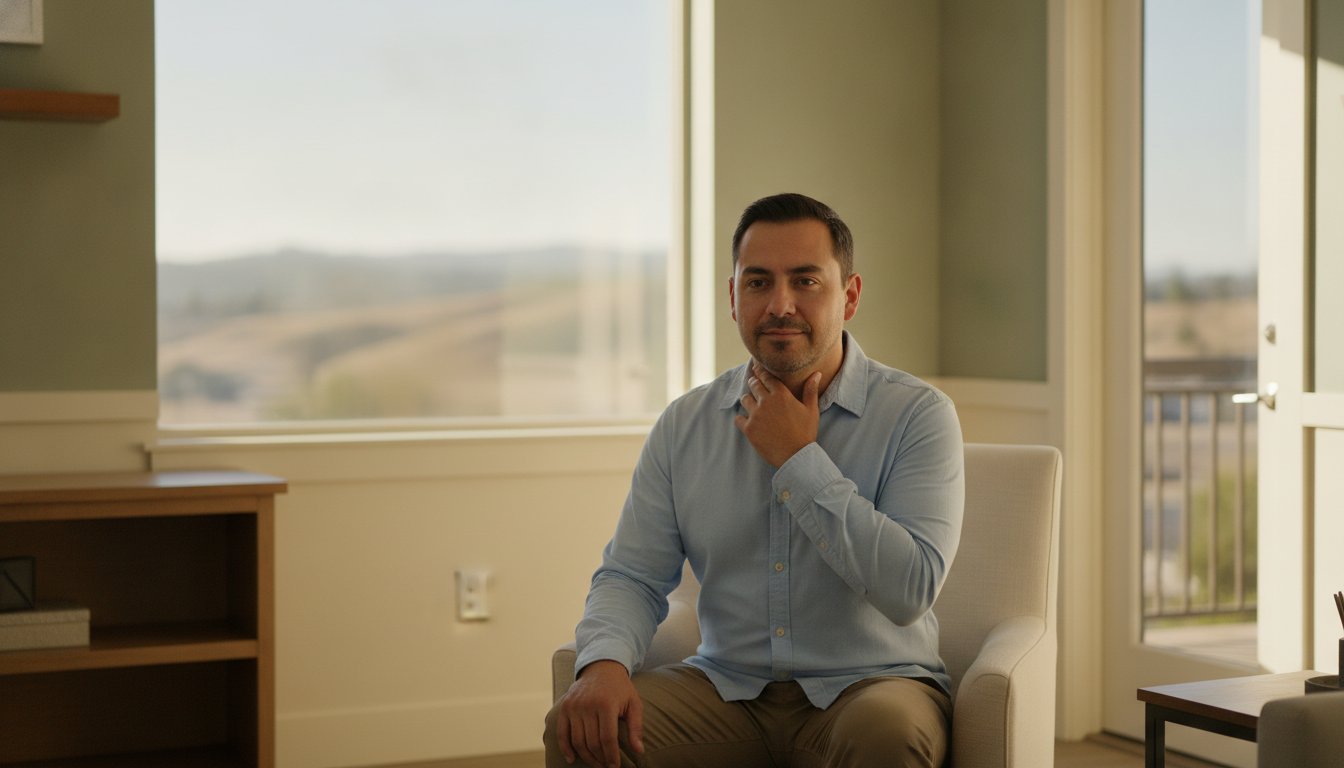
You wake up, reach for your phone, and a sharp, electric sting shoots through your neck. It isn’t just general soreness; it’s nagging, localized **left-side neck pain **that makes even simple movements like checking your blind spot feel impossible. You’ve probably tried rubbing the muscle or using a heating pad, but that stubborn "kink" just won’t budge. It’s exhausting to live with a body that feels out of balance, especially when a dull ache starts radiating into your left shoulder.
You aren’t looking for a temporary fix; you want to know why this is happening and how to stop it for good. If you are struggling with persistent left-side neck pain, this article will help you discover the exact reasons behind this localized discomfort and provide the steps to find lasting, non-invasive relief. We’ll explore the common causes of asymmetrical pain, how to restore your full range of motion, and why understanding the root cause of your **left-sided neck pain **is key to getting back to your best self. It’s time to stop guessing about your health and start a clear, structured path toward feeling like yourself again.
Key Takeaways
- Learn why side neck pain on the left side is often a sign of a structural misalignment known as a subluxation rather than just a simple muscle strain.
- Identify the specific differences between muscle tension, pinched nerves, and disc issues to help you address the root cause of your discomfort.
- Master effective at-home relief strategies, including the correct way to use ice and heat to reduce localized inflammation and stiffness.
- Discover why old injuries, such as a past minor fender-bender, might be the hidden reason you still wake up with a persistent “kink” in your neck.
- Understand how a comprehensive diagnostic assessment and a customized care plan can provide a lasting path to recovery without invasive procedures.
Why Does the Left Side of Your Neck Hurt?
Localized pain is uniquely frustrating. It isn’t just a general tightness; it’s a specific, sharp reminder that something is off. When you feel left-side neck pain, it changes how you move through your day in Visalia. You might find yourself turning your whole body just to look at someone speaking to you or struggling to check your blind spot while driving down Mooney Boulevard. This kind of asymmetry is often more distracting than general stiffness because it signals a very specific structural imbalance. Research shows that Neck pain is one of the most common reasons people seek professional care, yet many wait until the pain becomes unbearable before looking for answers.
Many of our neighbors describe what we call the "Alarm Clock" effect. You go to sleep feeling perfectly fine, only to wake up with a neck that feels locked in place. This happens because your body spends hours in a static position. If your pillow doesn’t support the natural curve of your neck, or if you’ve spent the previous day straining one side, the muscles and joints on the left can become inflamed overnight. It’s a sign that your body’s internal alignment is struggling to maintain its balance.
The Daily Habits Straining Your Left Side
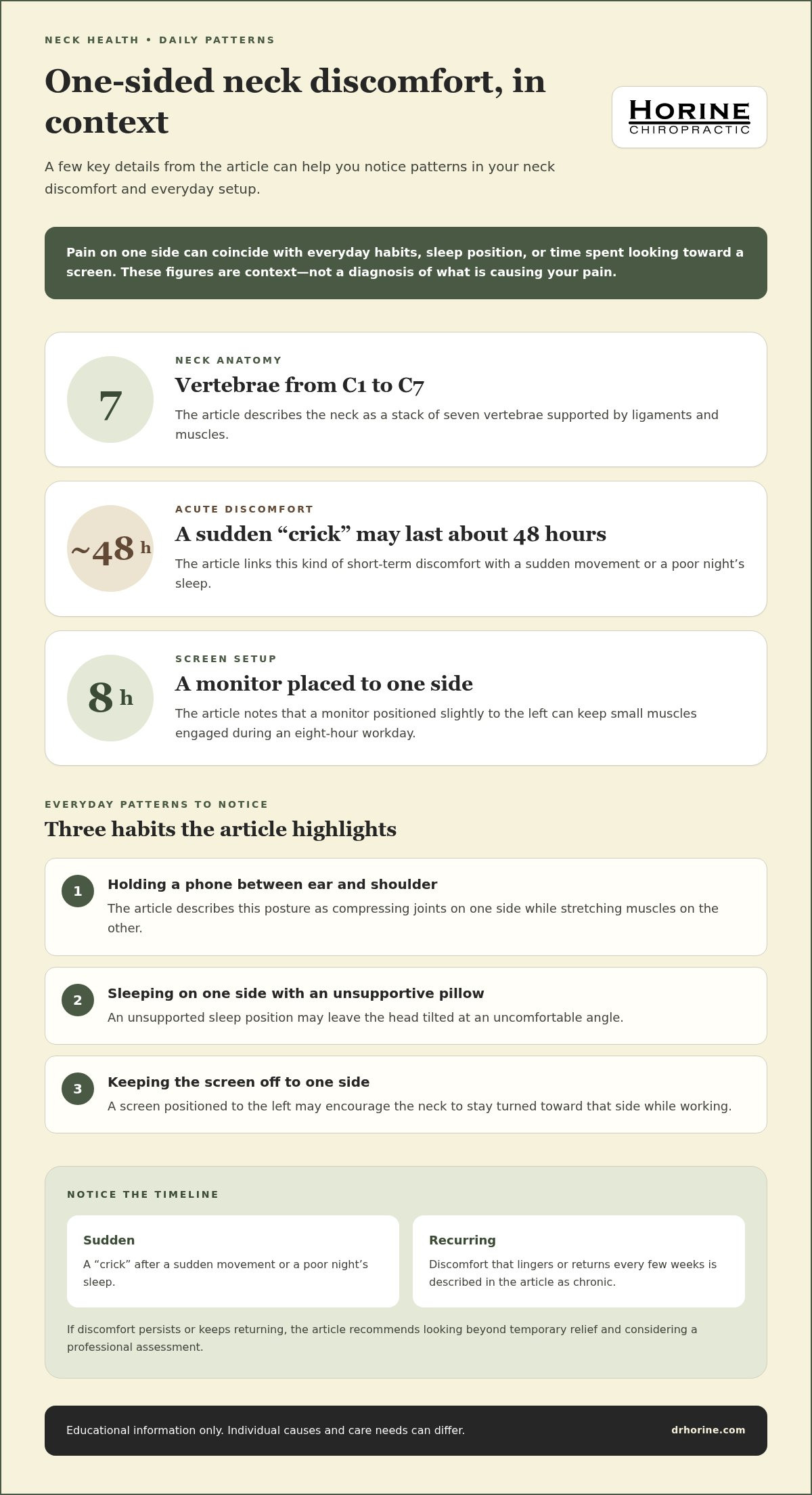
Small habits lead to big problems over time. Cradling a phone between your left ear and shoulder is a common culprit. Even a few minutes of this posture compresses the joints on the left while overstretching the muscles on the right. If you sleep exclusively on your left side with an unsupportive pillow, your head tilts at an unnatural angle all night. Your workstation matters too. If your computer monitor is even slightly to the left, those tiny muscles stay engaged for eight hours a day. This leads to a "silent" strain that eventually results in a painful flare-up.
Acute vs. Chronic Left-Sided Discomfort
It’s helpful to understand the timeline of your discomfort. Acute pain is often that sudden "crick" that lasts about 48 hours. It’s usually the result of a sudden movement or one bad night’s sleep. However, when side neck pain on the left side lingers or keeps returning every few weeks, it has become chronic. Waiting it out rarely works because the body creates compensation patterns. Your muscles tighten to protect the area, which leads to more inflammation and more stiffness. Addressing the root cause early prevents a temporary ache from becoming a permanent part of your life. If you find yourself stuck in this recurring cycle, a structured approach to alleviating chronic neck stiffness can help you break free from the pattern before it becomes a long-term problem.
The Anatomy of One-Sided Pain: Structural vs. Muscular
Understanding the Anatomy of the neck helps explain why your discomfort isn’t symmetrical. While your neck feels like a single unit, it’s actually a complex stack of seven vertebrae, known as C1 through C7, supported by an intricate web of ligaments and muscles. When you experience left-sided neck pain, the root cause is often a vertebral subluxation. This happens when a spinal bone shifts slightly out of its ideal position. This shift creates friction and irritates the delicate nerves that exit the spinal column. Because these nerves branch out to specific areas, a shift toward the left will only affect that side of your body.
Vertebral Subluxation and Nerve Irritation
A tiny shift in your vertebrae can have a massive impact on your daily comfort. These bones protect your spinal cord, which is the main highway for your nervous system. If a vertebra in the upper neck moves even a fraction of an inch, it can compress a nerve root. This often results in a sharp, electric, or "burning" sensation that stays localized. Dr. Horine uses a thorough diagnostic process to pinpoint these structural shifts rather than just treating the surface-level ache. If you’re tired of temporary fixes, a personalized neck pain treatment plan can help address these misalignments at the source.
Muscular Guarding: Your Body’s Natural Defense
Have you noticed that the left side of your neck feels like a hard rock, while the right side feels soft and pliable? This isn’t a coincidence. It’s a process called muscular guarding. Muscular guarding is the body’s attempt to stabilize a weak spinal segment. When a joint is misaligned and unstable, your brain sends a signal to the surrounding muscles to tighten up and "splint" the area to prevent further injury. It’s a protective mechanism that, unfortunately, causes its own set of problems.
This creates a frustrating cycle of pain. The misalignment causes a spasm, and that spasm pulls the bone even further out of place. Over time, this constant tension can lead to referred pain. This is why a problem in your neck can start to feel like a dull ache in your shoulder or even a tingling sensation down your arm. Breaking this cycle requires more than a massage. It requires restoring the structural integrity of the spine so your muscles can finally let go of that defensive grip.
Identifying the Source: Common Causes vs. Warning Signs
Identifying why your neck hurts only on one side is the first step toward a solution. While we’ve discussed the structural shifts that cause side neck pain on the left side, understanding the specific condition behind the ache helps us tailor your care. Not every pain feels the same. A muscle strain feels vastly different from a disc issue, and knowing the difference can save you weeks of frustration. Use the comparison below to help categorize what you’re feeling.
| Condition | Typical Sensation | Key Indicator |
|---|---|---|
| Muscle Strain | Dull, aching, or tight | Pain increases with specific movements. |
| Pinched Nerve | Sharp, electric, or shooting | Tingling or "pins and needles" in the arm. |
| Disc Issue | Deep, constant, or throbbing | Pain worsens when coughing or sneezing. |
Old injuries often hide in the background. You might have had a minor fender-bender years ago right here in Visalia that didn’t seem like much at the time. However, whiplash can cause long-term damage to the ligaments that stabilize your spine. If those ligaments healed poorly, your neck may have developed a permanent tilt or a structural weakness on the left. Similarly, cervical disc degeneration doesn’t always happen evenly. If the "shock absorbers" between your vertebrae wear down more on the left, it creates a constant, localized pressure. Modern life adds to this with "Text Neck." When you look down at your phone, you rarely hold it perfectly centered. Tilting your head even slightly to the left significantly increases the load on those specific muscles and joints.
The Most Common Left-Side Triggers
Facet joint syndrome is a frequent culprit for localized pain. These are the small, gliding joints that allow you to turn your head. If the joints on the left become inflamed, every turn to that side feels like friction. You might also have myofascial trigger points, which are essentially "knots" that stay chronically contracted. Even your daily habits, like carrying a heavy laptop bag exclusively on your left shoulder, can create a postural imbalance that keeps the left-sided neck pain active.
Additionally, dental conditions such as bruxism or jaw misalignment can often be the hidden cause of localized neck strain. Consulting with experts like Sai Oral & Dental Care Centre can help determine if your dental health is impacting your cervical alignment and overall comfort.
Red Flags: When Left-Sided Neck Pain Needs Urgent Attention
Most discomfort is mechanical, but some symptoms require a faster response. While most cases are manageable, it’s vital to recognize serious causes of neck pain that require immediate professional intervention. If you experience numbness or a "pins and needles" sensation traveling down your left arm to your fingers, it suggests significant nerve involvement. Loss of strength in your left hand, such as difficulty gripping objects, is a major warning sign. If your neck stiffness is accompanied by severe headaches or unexplained dizziness, don’t wait to seek an expert opinion.
At-Home Relief Strategies and Ergonomic Adjustments
Managing **left-sided neck pain **starts with small, intentional changes in your daily environment. While we’ve established that structural issues often require professional care, these at-home steps help calm inflammation and support your recovery process. One of the most common questions our neighbors in Visalia ask is whether to use ice or heat. If you’ve just woken up with a sharp "kink" or a new injury, reach for the ice. Cold therapy constricts blood vessels and numbs the area, which is essential for reducing acute inflammation. For a dull, chronic ache that has lingered for weeks, heat is often more effective as it relaxes tight muscles and improves circulation to the area. For a more comprehensive approach to managing ongoing tension, our ultimate checklist for alleviating chronic neck stiffness walks you through every step from ergonomic adjustments to structural care.
Your workstation setup is another critical factor. If you’ve been working from a home office, take a moment to conduct an ergonomic audit. Your monitor should be directly in front of you at eye level. If it’s even slightly to the left, you’re forcing those muscles to stay in a state of contraction for hours. Ensure your chair provides enough support so you aren’t slouching forward, as this "forward head posture" significantly increases the weight and strain on your cervical spine. If your symptoms persist despite these changes, you can schedule a personalized neck pain treatment consultation to identify the underlying structural cause.
Safe Stretches for Left-Sided Stiffness
Gentle movement is better than total rest for most cases of left-sided neck pain. The Levator Scapulae stretch is particularly helpful for localized tension. To perform this, sit tall and turn your head 45 degrees to the right. Look down toward your right armpit and gently use your right hand to guide your head into a deeper stretch. You should feel a pull along the back and side of your neck. We also recommend taking "micro-breaks" every 30 minutes. Simply standing up and performing a few "Chin Tucks" by pulling your head straight back to create a double chin can reset your spinal alignment. A word of caution: never try to "crack" or "pop" your own neck. This self-manipulation can damage delicate ligaments and actually make your instability worse over time.
Optimizing Your Sleeping Environment
The way you rest at night determines how you feel in the morning. If you’re a side sleeper, your pillow must be thick enough to keep your head neutral, filling the entire gap between your ear and the mattress. Back sleepers, on the other hand, need a contour pillow that supports the natural curve of the neck without pushing the head too far forward. Many people find relief by using a body pillow to prevent their torso from twisting, which keeps the spine in a neutral position throughout the night. Sleep posture is the #1 factor in morning neck stiffness.
How Dr. Horine Chiropractic Resolves Left-Sided Neck Pain in Visalia
Finding a practitioner who actually listens is the first step toward true healing. Since 1987, Dr. Horine Chiropractic has provided honest, non-invasive care to our Visalia neighbors. We don’t believe in generic solutions because your left-side neck pain is unique to your body’s history and daily habits. When you walk into our office, you aren’t just another appointment on a screen; you’re a person who deserves clarity and a clear path back to comfort. We’ve spent over three decades building a reputation based on transparency and results.
Your first visit centers on a comprehensive diagnostic exam. This isn’t a rushed five-minute conversation. We take the time to investigate the structural shifts we’ve discussed, looking for the specific vertebral subluxations that are irritating your nerves. By identifying exactly where the misalignment sits, we can create a plan that focuses on restoring balance to your cervical spine. The goal of a manual adjustment is to restore proper alignment and remove nerve pressure. It’s important to understand that the "cracking" sound sometimes heard isn’t the goal itself. That sound is simply a release of gas from the joint space. The real work is the gentle, targeted correction that allows your nervous system to function without interference.
A Personalized Path to Relief
No two spines are identical, which is why we avoid "one-size-fits-all" treatments. Dr. Horine investigates your history to find the source of your left-side neck pain, looking for clues in past injuries or your current work habits. We know you want to get back to your Visalia routine, whether that’s walking through Mooney Boulevard Park or working at your desk without distraction. Our focus is on providing quick relief while addressing the root cause so the pain doesn’t simply return a few days later. We act as your partner in the journey toward better health.
Long-Term Wellness and Prevention
True recovery goes beyond the adjustment table. We provide posture coaching and lifestyle advice to help you maintain your progress at home. Regular check-ups are a proactive way to prevent the "big kinks" from returning, catching minor shifts before they become painful emergencies. By maintaining your spinal health, you ensure that your body remains resilient against the stresses of daily life. We’re here to help you move from a state of pain to a state of long-term wellness.
Ready to find relief? Schedule your Visalia consultation with Dr. Horine today.
Restore Your Balance and Move Without Pain
Living with persistent side neck pain on the left side is exhausting, but it doesn’t have to be your permanent reality. You’ve learned that this localized discomfort is often your body’s way of signaling a structural shift that needs a gentle, professional touch to correct. By addressing these misalignments through non-invasive care, you can finally break the cycle of muscle guarding and inflammation that keeps you stiff. Since 1987, our practice has been a trusted neighbor for Visalia residents looking for honest answers and lasting wellness.
We specialize in personalized diagnostic exams that look past the surface symptoms to find the genuine root cause of your physical stress. Our approach focuses on gentle adjustments that restore your natural range of motion so you can move through your day with confidence. You deserve to wake up feeling refreshed and ready for your routine without the distraction of a nagging ache. We’re here to listen, investigate, and partner with you on your journey toward recovery. Schedule Your Neck Pain Assessment in Visalia to begin your path back to comfort and clarity. Better health is within your reach, and we look forward to helping you feel like yourself again.
Frequently Asked Questions
Why does my neck only hurt on the left side when I wake up?
This localized pain is often due to sleeping in a position that strains the left-side muscles or joints, often combined with a pre-existing structural misalignment. If your head is tilted or twisted for hours, the left-side tissues become inflamed and tight. This "Alarm Clock" effect is a common sign that your body isn’t compensating well for structural stress while you rest. It’s your body’s way of asking for a reset.
Can left-sided neck pain be a sign of something serious?
While most cases are mechanical, left-sided pain can be serious if it’s accompanied by red flags like numbness, loss of hand strength, or severe dizziness. It’s vital to differentiate between a simple muscle pull and a nerve compression issue. If your pain follows a trauma or includes radiating symptoms down the arm, a professional diagnostic exam is necessary to rule out more complex conditions and ensure your safety.
How long does it take for a "crick" in the neck to go away?
A minor "crick" or acute strain typically resolves within 48 to 72 hours with proper rest and gentle home care. However, if the discomfort lingers beyond a few days, it suggests that the underlying structural issue hasn’t been addressed. When side neck pain on the left side becomes a recurring problem, it’s a sign that your body is stuck in a cycle of inflammation and guarding that requires expert attention.
Should I use heat or ice for pain on the side of my neck?
Use ice for sudden, sharp pain and heat for dull, chronic stiffness that feels like a persistent ache. Ice is best during the first 48 hours of a flare-up because it reduces localized swelling and numbs irritated nerves. Once the initial inflammation subsides, heat helps by relaxing the "rock-hard" muscles and increasing blood flow to the area to support the natural healing process.
Can a chiropractor help with a pinched nerve on the left side?
Yes, chiropractors specialize in removing the structural pressure that causes a pinched nerve through gentle, targeted adjustments. By restoring the proper alignment of the vertebrae, we take the physical stress off the nerve root. This approach doesn’t just mask the pain with medication; it addresses the mechanical cause of the irritation to provide lasting relief and restore your full range of motion.
What is the best sleeping position for neck pain relief?
Sleeping on your back or your side with a supportive pillow is generally the best way to maintain spinal health. Back sleepers should use a pillow that supports the natural curve of the neck, while side sleepers need a thicker pillow to keep the head level. Avoid sleeping on your stomach at all costs, as this forces your neck into a twisted position for hours every night.
Why does my left-sided neck pain also cause a headache?
This happens because the nerves in the upper part of your neck share pathways with the nerves that signal pain in your head. When the joints or muscles on the left side of your neck are inflamed, they can trigger what we call cervicogenic headaches. These headaches often feel like a dull ache that starts at the base of the skull and wraps around to the temple.
How many chiropractic sessions will I need for neck pain?
The number of sessions varies based on the severity of your neck pain and how long the condition has been present. Some patients feel significant relief after just one or two visits, while chronic issues may require a structured plan over several weeks. Our goal is always to get you back to your Visalia routine as quickly and safely as possible through honest care.
Article by
Dr. Russell Horine, DC Chiropractor
Horine Chiropractic has established a strong reputation for delivering exceptional results in treating complex back and neck pain cases. Their primary objective is to serve patients efficiently and compassionately, aiding them in their journey to wellness. Horine Chiropractic uses a comprehensive, groundbreaking approach to treating stubborn back and neck pain. They have been helping Visalia’s backs, necks, and everything in between for a combined 45 years. They create a comprehensive approach to help their patients meet their health needs. Horine Chiropractic customizes treatment plans to meet each patient's unique health needs. The clinic is accepting new patients and providing compassionate care to those in need.
Medical Disclaimer
This content is provided for general educational and informational purposes only and is not intended as medical advice, diagnosis, or treatment. Individual conditions and treatment needs vary. Please consult a qualified healthcare professional regarding your specific symptoms and treatment options.