

What if that sharp, electric jolt in your calf actually has nothing to do with your leg muscles? It’s exhausting to live with sudden shocks that wake you up at night or make a simple walk feel like a gamble. You might worry that surgery is your only path forward or feel frustrated because stretching your hamstrings hasn’t offered any real shooting pain in leg relief. We understand how unsettling it is when your body stops following the rules. You deserve a clear answer that doesn’t involve cold, clinical jargon or high-pressure tactics.
In this guide, we’ll help you understand exactly why these sensations happen and how you can find a way back to comfort without invasive procedures. We’ll explore the common nerve-related causes of these symptoms, identify when your pain requires urgent medical attention, and outline the gentle, non-surgical steps that lead to lasting recovery and a return to your normal, active routine. Our goal is to provide the clarity you need to move forward with confidence and peace of mind.
Key Takeaways
- Learn to identify the “electric shock” and “lightning bolt” sensations that often signal nerve irritation rather than a simple muscle strain.
- Discover why finding shooting pain in leg relief often starts with investigating the lower back and spinal alignment rather than just treating the leg itself.
- Understand the difference between temporary fixes like ice and the long-term benefits of addressing the root cause through gentle, manual adjustments.
- Gain clarity on specific “red flag” symptoms that require immediate attention, ensuring you know exactly when your pain is a medical priority.
- See how a comprehensive, patient-centered exam can remove the fear of the unknown by creating a clear, structured path toward your recovery.
What Does Shooting Pain in the Leg Feel Like?
Imagine you’re walking across the room when a sudden, white-hot bolt of lightning strikes from your hip down to your ankle. It isn’t the dull, heavy throb you feel after a long day of yard work. This is something sharper. Many of our patients describe it as an electric zap or searing heat that seems to follow a specific track through the body. Because this sensation is so distinct, finding shooting pain in leg relief requires us to look past the muscles and focus on the communication lines of your body: the nerves.
Understanding What is Sciatica? is often the first step in demystifying this experience. This condition involves the sciatic nerve, the longest nerve in your body, which runs from your lower back through your hips and down each leg. When this nerve is pinched or irritated, the pain doesn’t stay in one spot. It travels. You might feel a “zing” when you cough, sneeze, or sit for too long, as these actions increase pressure on the spine and aggravate the sensitive nerve roots.
The Sensation of Nerve Irritation
Nerves are designed to carry signals, but when they’re compressed, those signals become distorted. This is why you feel “pins and needles” or a buzzing sensation rather than just a simple ache. These zaps can be intermittent, appearing out of nowhere, or they can settle into a constant, radiating heat. Unlike a muscle strain that feels better with a bit of movement, nerve pain often reacts poorly to certain positions, making it difficult to find a comfortable way to sit or sleep without a sudden jolt interrupting your rest.
When the Pain Becomes Disruptive
This isn’t just a physical issue; it’s a mental one too. Living with the constant fear of the next shock makes it hard to focus on your job or enjoy time with your family. You might start walking differently to avoid the pain, which often leads to new aches in your opposite hip or lower back. We see many people who try to “tough it out” for months, only to find that their world has shrunk because they’re afraid to drive or walk through the grocery store. Recognizing that this isn’t a normal part of aging is the first step toward getting back to the life you love.
Addressing these symptoms early is the key to finding shooting pain in leg relief before the body starts creating these compensatory patterns. By identifying the specific path of the pain, we can begin to uncover exactly where the nerve is being pinched.
The Most Common Causes of Radiating Leg Pain
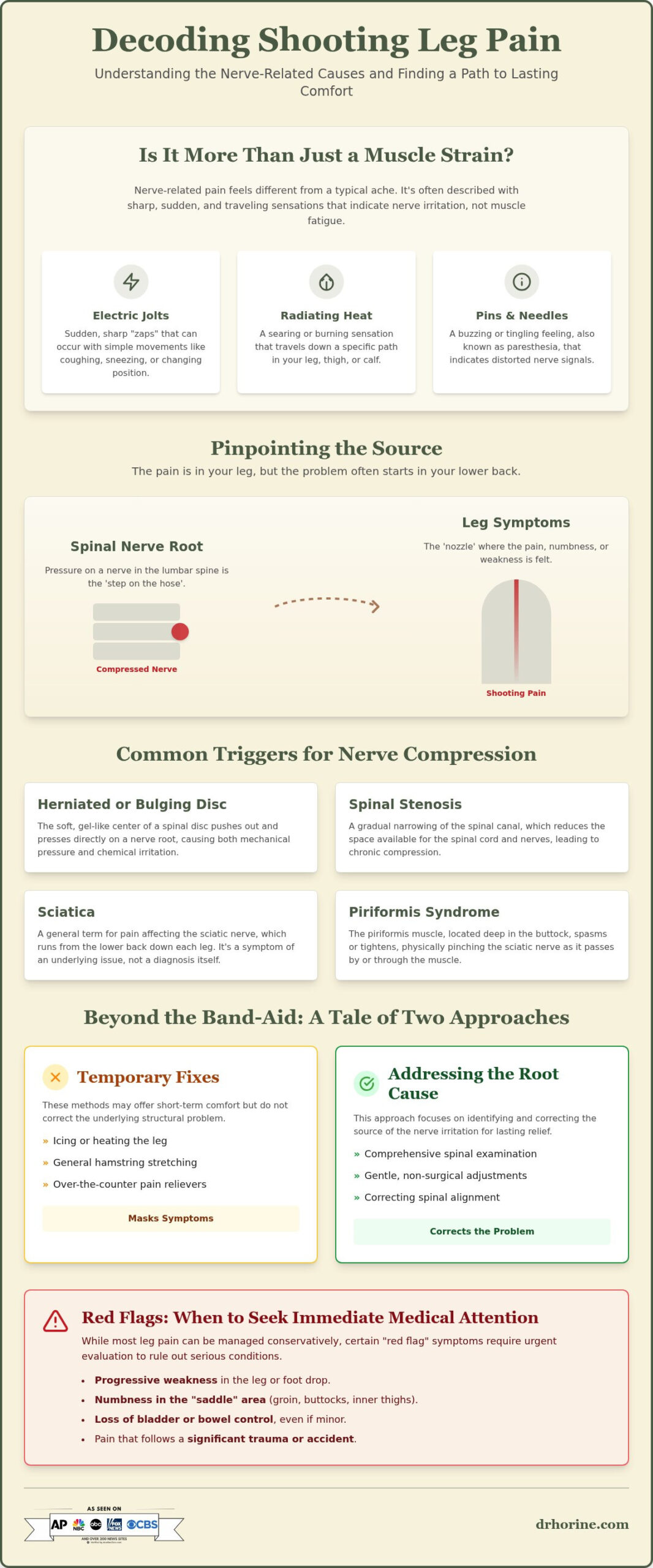
When you’re searching for shooting pain in leg relief, it helps to realize that the source of your discomfort is rarely where you feel it most. Think of your nerves like a garden hose. If someone steps on that hose in the backyard, you won’t get any water at the nozzle in the front. Your leg is the nozzle, but the pressure is usually happening at the source: your spine. Understanding why this happens is the first step toward getting your life back and removing the uncertainty that often accompanies these sharp sensations.
Understanding Sciatica and the Sciatic Nerve
Sciatica is perhaps the most well known reason for leg pain. The sciatic nerve starts in your lower back, runs through your hips, and branches down each leg. If anything interferes with this path, the brain interprets the signal as pain in the calf, thigh, or even the foot. For many, the problem is a structural misalignment in the lumbar spine that requires a specialized approach like sciatica treatment in Visalia. You can find authoritative information on sciatica through national health resources, which confirm that this condition is a symptom of an underlying issue rather than a standalone disease.
Disc Changes and Nerve Compression
Your spinal discs act as the body’s shock absorbers, providing a cushion between your vertebrae. Over time, or due to a sudden injury, these discs can change shape. A disc bulge happens when the outer rim of the disc extends further than it should, often nudging against a nerve. A herniated disc is a primary trigger for leg pain that occurs when the soft inner material of the disc escapes its outer shell and presses directly against a nerve root. This creates both mechanical pressure and chemical irritation, leading to those electric shocks you’ve been feeling. Learning how chiropractic for nerve compression addresses this mechanical pressure at its source can help you understand why a structural approach often produces more lasting results than medication alone.
Other common causes include:
- Piriformis Syndrome: This happens when a small muscle deep in your hip becomes tight or spasms, physically trapping the sciatic nerve against the pelvic bone. Because the hip and spine function as a single interconnected unit, it’s worth understanding how hip problems can cause lower back pain and how to tell the difference between the two sources of discomfort.
- Spinal Stenosis: This is a gradual narrowing of the spaces within your spine, which can put slow, steady pressure on the nerves as they exit the spinal column.
If you’re tired of guessing which of these issues is causing your distress, a comprehensive exam can help pin down the exact source of your discomfort. Finding the right path to shooting pain in leg relief starts with an honest look at your spinal health and how it’s affecting your daily movement.
Temporary Relief vs. Addressing the Root Cause
When an electric jolt travels down your leg, your first instinct is likely to reach for the medicine cabinet. While over the counter anti inflammatories can provide a few hours of quiet, they don’t address the physical pressure on your nerve. It’s like turning off a fire alarm while the kitchen is still smoky; you’ve silenced the warning signal, but the heat remains. True shooting pain in leg relief requires moving beyond masking the symptoms and looking at the structural alignment of your spine.
Many people find that their pain becomes a “frequent visitor” because they only treat the inflammation. You might find temporary comfort using ice packs to numbs the area or specialized stretches you found online. However, if a spinal disc is bulging or a vertebrae is slightly out of place, those stretches can sometimes pull the nerve taut like a guitar string, causing even more irritation. For a deeper look at how medical professionals categorize these issues, the American Academy of Orthopaedic Surgeons provides detailed insights into sciatica causes and treatments.
At-Home Comfort Measures
If you’re currently in the middle of a flare up, focus on positions that decompress the spine. One of the most effective methods is the “90/90” position. Lie on your back on a firm surface and rest your lower legs on a chair or ottoman so your hips and knees are both at 90 degree angles. This position flattens your lower back against the floor and takes the mechanical weight off your discs. When it comes to temperature, use ice for the first 48 hours to reduce swelling around the nerve root. Save the heating pad for later, as heat can sometimes increase blood flow to an already inflamed area, potentially worsening the pressure.
Why the Pain Keeps Coming Back
It’s frustrating when you feel better for a few days only to have the lightning bolts return the moment you lift a grocery bag or sit at your desk. This often happens because of recurring lower back pain patterns. Minor misalignments in your spine can create a cycle of “micro-irritation” where the nerve never fully heals. Without a personalized plan to restore proper structural balance, your body remains in a state of compensation. We focus on breaking this cycle by gently removing the source of the pressure, allowing your nervous system to finally settle down and stay that way.
When to Seek Professional Help in Visalia
Many people try to push through the discomfort, hoping that a few extra rest days will finally bring the shooting pain in leg relief they need. While some minor irritations do settle on their own, there’s a point where toughing it out becomes a risk to your long term mobility. If your pain has shifted from an occasional annoyance to a constant companion that dictates whether you can finish your shift at work or enjoy a weekend walk at Mooney Grove Park, it’s time to stop guessing and start investigating. We’ve found that early intervention is the most effective way to prevent temporary nerve irritation from becoming a chronic, life altering issue.
Identifying Serious Symptoms
It’s important to distinguish between a sharp zap and a loss of function. There are specific red flag symptoms that signal a more urgent situation. If you experience sudden weakness in your leg, meaning your foot feels heavy or you can’t stand on your toes, your nerves are struggling to send vital motor signals. Even more critical is any loss of bowel or bladder control or numbness in the saddle area, which are the parts of your body that would touch a saddle. These can be signs of Cauda Equina Syndrome, a rare but serious medical emergency. Persistent numbness, that dead feeling in your skin that doesn’t go away, should also never be ignored. It indicates that the nerve isn’t just irritated; it’s being silenced. Understanding your options for chiropractic for nerve compression early in this process can help you avoid the progression from temporary irritation to lasting functional loss.
The Value of a Local Consultation
When you visit a local clinic that has stood the test of time, you’re getting more than just a treatment; you’re getting a partnership. Dr. Horine has served the Visalia community since 1987, providing a seasoned perspective that only comes from decades of listening to patients. We take the time to understand how your pain started and how it’s affecting your specific daily routine here in the Central Valley. A diagnostic assessment in our office removes the guesswork by physically testing your range of motion and nerve response. This methodical approach builds trust and eliminates the fear of the unknown that often keeps people from seeking the care they deserve.
If you’re ready to move past the unpredictable shocks and find a clear path to recovery, we invite you to request a comprehensive exam. Finding shooting pain in leg relief starts with an honest conversation and a thorough investigation into the structural source of your symptoms.
How Dr. Horine Chiropractic Approaches Leg Pain Relief
At Dr. Horine Chiropractic, we believe that you shouldn’t have to live in fear of the next lightning bolt in your leg. Our approach to shooting pain in leg relief is built on a foundation of honest, thorough investigation and personalized care. Since 1987, we’ve helped our Visalia neighbors move past the frustration of temporary fixes and find lasting solutions that respect their health. We don’t use high-pressure tactics or complicated jargon; we simply focus on getting you back to the activities you love as quickly and safely as possible.
Your First Visit: The Investigation
We start every new relationship with a comprehensive diagnostic exam. This isn’t a quick check-up; it’s a detailed investigation into your physical history and current symptoms. We’ll ask you to describe exactly where the pain travels and what movements trigger those electric sensations. By testing your reflexes, range of motion, and spinal alignment, we can determine if your leg pain is actually a communication error coming from your lower back. Listening to your concerns is the most important part of this process, ensuring that we treat you as a person rather than just a set of symptoms.
Targeted Chiropractic Care for Sciatica
Once we’ve identified the source of the nerve irritation, we use gentle, manual spinal adjustments to restore proper movement to your lumbar spine. These targeted movements are designed to take the mechanical pressure off the sensitive nerve roots. As the spine returns to its natural alignment, the surrounding inflammation begins to subside, which is the key to achieving shooting pain in leg relief. Our goal isn’t just to stop the zaps for a few days. We want to encourage a return to long-term wellness and activity. By restoring the structural integrity of your spine, we empower your body to heal itself and stay resilient against future injuries.
This patient-centered guide to recovery is about more than just physical improvement; it’s about clarity. We want you to leave our office with a clear understanding of why you were hurting and a structured plan for how to stay well. Whether your goal is to get back to gardening, walking the dog, or simply sleeping through the night without a sudden jolt, we’re here to act as your partner in health. You can expect a pragmatic, result-oriented environment where your comfort and return to a normal state of being are our primary concerns.
Take the First Step Toward Lasting Comfort
You don’t have to stay trapped in a cycle of unpredictable shocks and limited mobility. We’ve explored how these electric sensations are often your body’s way of signaling a structural issue in your spine rather than a simple leg cramp. By focusing on the root cause of nerve compression and choosing long-term wellness over temporary masking, you can reclaim the comfort you’ve been missing. Understanding the difference between a muscle strain and a nerve zap is the first step toward finding lasting shooting pain in leg relief.
Since 1987, we’ve provided the Visalia community with an honest, patient-centered approach to healthcare. Our specialized care for sciatica and nerve compression is designed to remove the uncertainty from your recovery journey. We’re here to listen to your story and create a clear, methodical path back to your normal routine. Don’t let fear or confusion keep you from the relief you deserve. Schedule your comprehensive exam with Dr. Horine in Visalia today. You’ve taken the time to learn about your symptoms; now it’s time to take the next step toward feeling like yourself again.
Frequently Asked Questions
Is shooting pain in the leg always sciatica?
No, it isn’t always sciatica. While irritation of the sciatic nerve is the most frequent culprit, other conditions like piriformis syndrome or spinal stenosis can mimic those symptoms. It’s important to have a professional check whether the pressure is coming from your spine or a tight muscle in your hip. Getting an accurate diagnosis is the first step toward finding a plan that actually works for your specific situation.
Can a chiropractor help with shooting pain in my leg?
Yes, chiropractic care is specifically designed to address the structural misalignments that cause nerve pressure. By using gentle manual adjustments, we can help move the vertebrae back into their proper positions. This reduces the mechanical stress on the nerve root, which is a key part of finding long term shooting pain in leg relief without relying on temporary fixes or invasive procedures.
How long does it take for a pinched nerve in the leg to heal?
Healing times depend on how long the nerve has been under pressure and the extent of the irritation. Many patients notice a difference within a few weeks of starting a structured care plan. However, nerves heal slowly. It can take several months of consistent care to fully resolve the inflammation and restore normal function, especially if the issue has been ignored for a long time.
What is the fastest way to relieve shooting leg pain at home?
For immediate comfort at home, try using ice on your lower back and resting in a position that decompresses your spine. Lying on your back with your legs elevated on a chair can take the weight off your discs. Avoid the temptation to do heavy hamstring stretches, as these can often pull on an already inflamed nerve and make the electric shocks feel much worse than before.
Why does my leg pain feel like an electric shock?
That sensation happens because your nerves act like the electrical wiring of your body. When a nerve is pinched, it sends a frantic “error” signal to your brain, which interprets it as a sharp zap or a bolt of lightning. It’s a very different signal than the dull throb of a sore muscle. This unique feeling is a helpful clue that the source of your pain is likely nerve related.
Can dehydration cause shooting pains in the legs?
Dehydration usually causes dull muscle cramps rather than sharp, electric shooting pains. While it doesn’t directly cause a pinched nerve, being dehydrated can make your spinal discs less effective at absorbing shock. This might make an existing structural problem feel more sensitive. Staying hydrated is great for your overall health, but it’s rarely the “magic fix” for a true nerve compression issue.
When should I worry about sharp pain in my thigh?
You should seek a consultation if the pain is accompanied by leg weakness or a loss of sensation. If you find yourself tripping over your own feet or if your leg feels “heavy” and unresponsive, it’s a sign that the nerve is struggling to function. Don’t ignore persistent numbness either. These symptoms indicate that the pressure on the nerve is significant and requires a professional structural investigation.
Does walking help or hurt shooting leg pain?
Gentle movement is usually beneficial, but the type of walking matters. Short walks on flat ground can help keep your joints mobile and improve blood flow. However, walking too far or on hills can sometimes put extra strain on a pinched nerve. If you feel a “zing” with every step, it’s better to rest and focus on gentle decompression until the initial inflammation has settled down.