

A recommendation for back surgery doesn’t automatically mean surgery is the only option. For some people, chiropractic care may help avoid back surgery when conservative treatment suits the underlying condition; for others, surgery may still be necessary. The right choice depends on what is causing the pain and whether serious nerve-related problems are present.
It’s understandable to want a clearer picture before making a decision that can involve significant recovery and surgical risks. This article explains how chiropractic care may fit into conservative treatment, what research on workers’ surgery rates suggests, and when a closer medical assessment is needed.
You’ll also learn what back surgery recovery may involve and why the right choice depends on the condition being treated, not just the pain. The goal is to help you understand the options and have a more informed conversation about your next step.
Key Takeaways
- Chiropractic care may be a nonsurgical option for some back conditions, but it can’t replace surgery when a condition requires surgical treatment.
- Learn how conservative care, including chiropractic adjustments or spinal decompression, may fit into a treatment plan before surgery.
- Understand which symptoms call for prompt medical assessment and what to weigh when considering surgery, including possible risks and recovery.
Can Chiropractic Care Prevent Surgery?
For patients experiencing back pain, exploring conservative treatment options may be an appropriate step before considering surgery, depending on their diagnosis and symptoms.
Treatment options may include chiropractic care, physical therapy, exercise, and other approaches recommended by a healthcare professional. The effectiveness of each treatment depends on the underlying condition and the patient’s individual needs.
Some spinal conditions require prompt medical or surgical evaluation. A qualified healthcare professional can help determine whether conservative care is appropriate or whether additional treatment is necessary.
Chiropractic care may address back pain by improving spinal movement and easing pressure on irritated nerves. Care may include adjustments, while spinal decompression uses gentle, motorized traction. The right approach depends on the source of pain and your symptoms. Persistent or worsening weakness, for example, calls for a different level of medical attention than back discomfort without those changes.
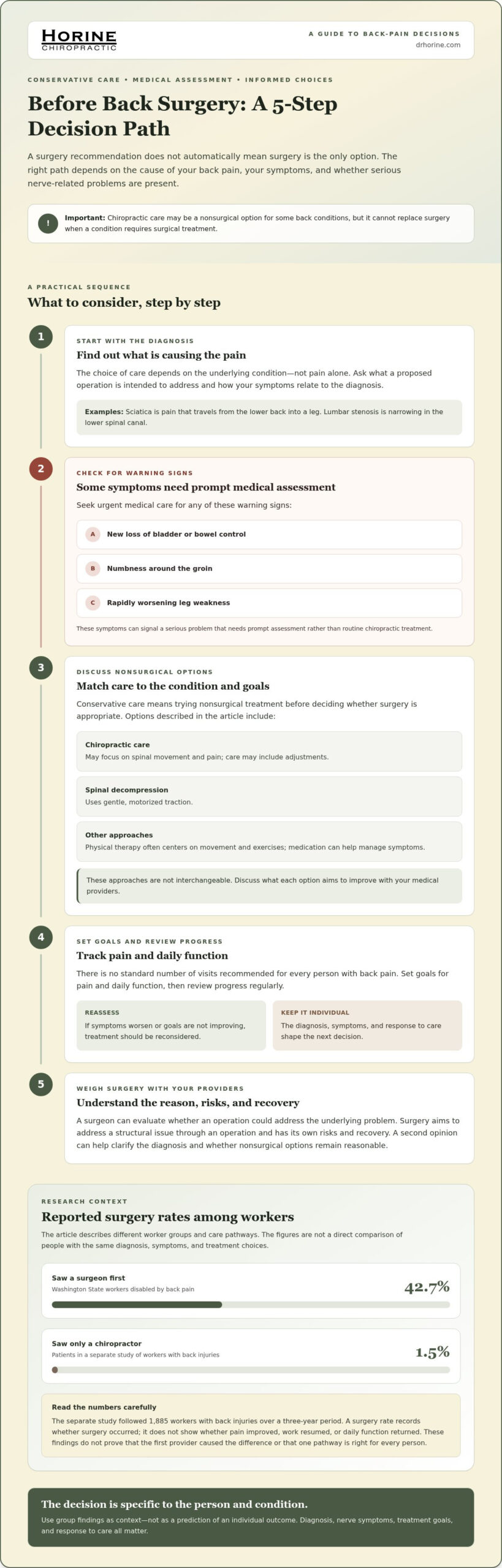
Seek urgent medical care for warning signs such as new loss of bladder or bowel control, numbness around the groin, or rapidly worsening leg weakness. These symptoms can signal a serious problem that needs prompt assessment rather than routine chiropractic treatment.
In the United States, insurance coverage for chiropractic care depends on your plan’s benefits and rules, including network status, deductibles, and visit limits. There is no single national cost: what you pay varies with coverage and the type and amount of care received.
There is no standard number of visits recommended for every person with back pain. Set goals for pain and daily function, then review progress regularly. Reconsider treatment if symptoms worsen or those goals are not improving.
Chiropractic care as conservative treatment before back surgery
Conservative care offers nonsurgical options to consider before an operation. The right path depends on the diagnosis, symptoms, and treatment goals.
Treatment Before Surgical Decisions
Conservative treatment means trying nonsurgical care before deciding whether back surgery is appropriate. Chiropractic care may focus on spinal movement and pain, while a surgeon evaluates whether an operation could address the underlying problem. Discuss what each approach aims to improve with your medical providers. A second opinion can help clarify the diagnosis and whether nonsurgical options remain reasonable.
Care for Sciatica and Lumbar Stenosis
Sciatica describes pain that travels from the lower back into the leg, while lumbar spinal stenosis involves narrowing of the spinal canal. Some patients may benefit from conservative treatment, including chiropractic care, depending on their diagnosis and symptoms. However, chiropractic care is not appropriate for every spinal condition. Patients experiencing progressive weakness or other serious neurological symptoms should seek prompt medical evaluation. Treatment decisions should be based on an individual’s condition and medical needs.
Conditions That May Respond or Need Surgery
Back pain related to a herniated disc may improve without surgery, and most herniated discs reabsorb naturally over time. Chiropractic care may help some people manage symptoms, but surgery may still be necessary, especially when significant neurological problems are involved. An example involving months of chiropractic therapy for frozen shoulder does not establish what is suitable for a spinal condition. The diagnosis matters.
Comparing Chiropractic With Other Treatments
Physical therapy often centers on movement and exercises; medication can help manage symptoms, while chiropractic care may use adjustments or spinal decompression. Surgery is different: it aims to address a structural problem through an operation and has its own risks and recovery. These approaches are not interchangeable. You and your medical providers can weigh the diagnosis, nerve symptoms, goals, and response to care when discussing treatment.
For a careful conversation about nonsurgical options and back symptoms, schedule an evaluation.
Understanding Your Nonsurgical Back Pain Treatment Options
For patients experiencing back pain, exploring conservative treatment options may be an appropriate step before considering surgery, depending on their diagnosis and symptoms.
Treatment options may include chiropractic care, physical therapy, exercise, and other approaches recommended by a healthcare professional. The effectiveness of each treatment depends on the underlying condition and the patient’s individual needs.
Some spinal conditions require prompt medical or surgical evaluation. A qualified healthcare professional can help determine whether conservative care is appropriate or whether additional treatment is necessary.
Which back conditions may respond to chiropractic care, and which require surgery?
Back pain can result from several spinal conditions, including herniated discs, sciatica, and lumbar spinal stenosis. Some patients may benefit from conservative treatments, including chiropractic care, depending on their diagnosis and symptoms. However, certain conditions may require surgical evaluation, particularly when progressive weakness or other serious neurological symptoms are present. A thorough medical assessment is essential to determine the most appropriate treatment.
A herniated disc is one example where surgery may not be the only option: most herniated discs reabsorb naturally over time. Chiropractic care may be considered for symptoms linked to some disc problems, but the condition’s effect on nerves matters. Significant neurological deficits change the picture and call for careful medical assessment, rather than assuming the same approach suits everyone.
Sciatica involves pain traveling from the lower back into the leg; lumbar stenosis is narrowing in the lower spinal canal. Both conditions appear in research comparing chiropractic and surgical outcomes, especially when significant neurological deficits are absent. This comparison does not mean chiropractic treatment is appropriate for every case of stenosis or sciatica. The underlying cause, symptom pattern, and neurological findings help distinguish when a conservative approach is appropriate versus when surgery should be considered.
Surgery may still be necessary for some people, even when they receive chiropractic care. Spinal instability is one reason for caution: spinal manipulation could be dangerous if unstable vertebrae shift and contact the spinal cord or nerve roots. Surgery also carries risks, including infection, nerve damage, persistent or worsening pain, and additional surgery at nearby spinal levels. Recovery can take months, so weighing the reason for surgery against these risks is part of an informed decision.
For back or leg symptoms, a focused evaluation can help clarify whether chiropractic care is appropriate. REQUEST AN APPOINTMENT
Dr. Horine Chiropractic: Neck Pain Treatment
Dr. Horine Chiropractic provides care for musculoskeletal concerns, including lower back pain, sciatica, and neck pain. If back or leg pain affects your daily activities, an evaluation can help clarify whether chiropractic care may suit your needs. The practice explains its recommendations and costs clearly, with no surprise bills.
For neck discomfort, Dr. Horine Chiropractic also offers neck pain treatment. Share relevant symptoms and prior medical recommendations so the evaluation can take your situation and goals into account.
If you’re in Visalia and would like to discuss your symptoms, contact Dr. Horine Chiropractic or visit DrHorine.com.
Choose a Next Step That Fits Your Needs
Whether you can avoid back surgery with chiropractic care depends on the cause of your symptoms and whether conservative treatment suits your situation. Before deciding, consider what you hope to regain, such as comfortable movement or a return to everyday activities. These goals can keep treatment discussions focused on what matters in your daily life.
Discuss nonsurgical options alongside any surgical recommendation, and bring details from prior evaluations to the conversation. Dr. Horine Chiropractic can discuss your musculoskeletal symptoms and whether an evaluation is a reasonable next step. If surgery has been proposed, make sure you understand its purpose and how other care options fit your circumstances.
Taking time to understand your options can help you move forward with greater clarity.
Frequently Asked Questions
What is Spinal Decompression?
Spinal decompression is a nonsurgical treatment that uses gentle, motorized traction to apply a controlled pulling force to the spine. During treatment, you lie on a table with harnesses fitted around your pelvis and upper body. The traction creates negative pressure in the spinal column, which may help retract a bulging or herniated disc and ease pressure on nearby nerves. Suitability depends on the spinal condition.
Can chiropractic care help avoid back surgery?
Chiropractic care may be a nonsurgical option for some people experiencing back pain. Depending on the underlying condition, conservative treatments may help manage symptoms and improve mobility without surgery.
However, chiropractic treatment cannot guarantee that surgery will be avoided. Whether surgery is necessary depends on the diagnosis, symptom severity, neurological findings, and response to appropriate conservative treatment. Patients should discuss their options with qualified healthcare professionals before making treatment decisions.
What does research say about chiropractic treatment for back pain and surgery rates?
Research reports different surgery rates among workers who first saw surgeons and those who saw only chiropractors. Those rates describe treatment patterns, not proof that chiropractic care itself prevented an operation. Surgery rates also don’t capture every outcome patients care about, such as pain, mobility, or ability to work. Use the findings as context, not as a prediction of your own treatment result.
What are the risks of chiropractic spinal manipulation for back pain?
Spinal manipulation requires particular caution when spinal instability is present, because shifting vertebrae could contact the spinal cord or nerve roots. Tell the practitioner about known instability, previous spinal surgery, or other relevant diagnoses before treatment begins. This context helps the clinician consider whether manipulation is appropriate and which approach fits your situation. New or worsening neurological symptoms call for medical assessment.
What nonsurgical treatments should be tried before back surgery?
Options can include chiropractic care, physical therapy, medication, or spinal decompression, depending on the diagnosis and treatment goals. These approaches work differently: therapy may focus on movement, medication on symptom management, and decompression on gentle traction. They are not a mandatory checklist, and not every option suits every condition. A coordinated plan can clarify what has been tried and how symptoms respond.
How can patients evaluate a chiropractor and coordinate care with a spine surgeon?
Look for a clear explanation of the evaluation, proposed treatment, and how progress will be reviewed. Before care, share relevant diagnoses, prior procedures, and the spine surgeon’s recommendations. Keep a concise record of symptoms and changes in daily activities, then communicate that information across your care team. Coordination helps each professional understand what has been considered and whether the plan should change.

Article by
Dr. Russell Horine, DC, Chiropractor
Horine Chiropractic has established a strong reputation for delivering exceptional results in treating complex back and neck pain cases. Their primary objective is to serve patients efficiently and compassionately, aiding them in their journey to wellness. Horine Chiropractic uses a comprehensive, groundbreaking approach to treating stubborn back and neck pain. They have been helping Visalia’s backs, necks, and everything in between for a combined 45 years. They create a comprehensive approach to help their patients meet their health needs. Horine Chiropractic customizes treatment plans to meet each patient’s unique health needs. The clinic is accepting new patients and providing compassionate care to those in need.
Medical Disclaimer
This content is provided for general educational and informational purposes only and is not intended as medical advice, diagnosis, or treatment. Individual conditions and treatment needs vary. Please consult a qualified healthcare professional regarding your specific symptoms and treatment options.