
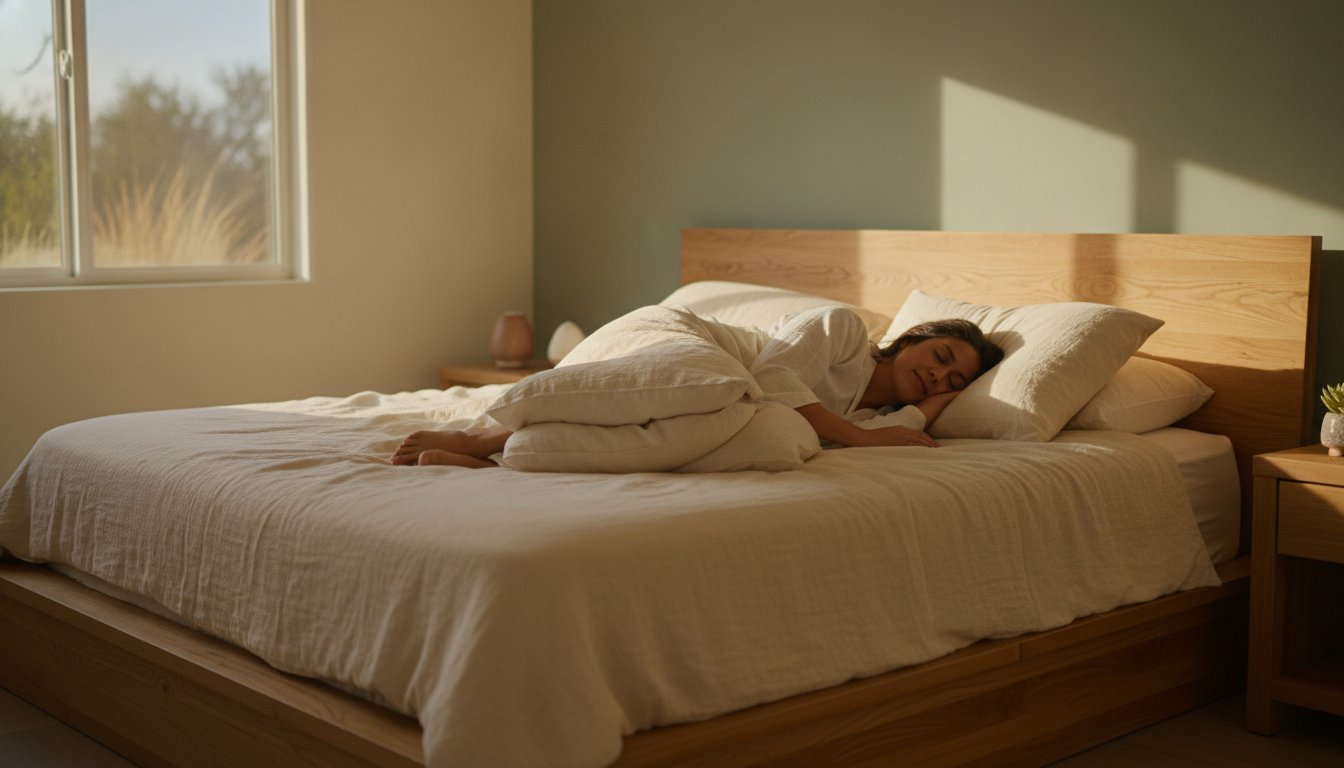
Did you know that nearly 39% of U.S. adults have struggled with lower back pain in just the last three months? If you are part of that group, you know the frustration of watching the clock at 2:00 AM while trying to find a position that does not throb. It is exhausting to wake up with “locked” muscles that make getting out of bed feel like a chore. You deserve a night of rest that actually restores your body. Finding the best way to sleep for lower back pain is often the first step toward reclaiming your mornings and your mobility.
We understand how isolating chronic pain can feel, especially when you have tried different pillows or mattresses without success. The good news is that small, science-backed adjustments to your posture can offer immediate relief from morning stiffness. This guide will walk you through the most effective sleeping positions for your specific type of pain. We will also clarify which pillows actually provide support and help you recognize when your sleep struggles might require a professional evaluation to get you back on track.
Key Takeaways
- Discover how to use specific side-sleeping and back-sleeping adjustments to neutralize spinal pressure and prevent “locked” muscles in the morning.
- Learn why finding the best way to sleep for lower back pain involves maintaining your natural lumbar curve rather than just sleeping on an extra-firm surface.
- Identify the specific pillow types and placements that offload stress from your discs and psoas muscles while you rest.
- Master a gentle bedtime decompression routine and the “Log Roll” technique to protect your spine when getting in and out of bed.
- Recognize the clinical “red flags” that indicate when your sleep issues require a professional diagnostic exam to address underlying misalignments.
Why Your Sleeping Position Dictates Your Morning Back Pain
Sleep is meant to be a restorative period for your spine, but for many, it becomes a source of physical stress. During the day, your spinal discs lose water and compress under the weight of your body and the pull of gravity. At night, these discs need to rehydrate and decompress to maintain their health. If your body is twisted or unsupported for eight hours, that natural recovery process is interrupted. Finding the best way to sleep for lower back pain is not just about comfort; it is about providing the right environment for your spine to heal.
When you stay in a poor position for several hours, your body experiences “micro-strains.” These are tiny amounts of tension in your ligaments and muscles that accumulate over time. By the time your alarm goes off, your nervous system has been dealing with this low-level stress all night, resulting in that “locked” feeling in your muscles. This mechanical stress is a leading contributor to low back pain, turning what should be a restful night into a cycle of morning stiffness and fatigue.
The Spine-Sleep Connection Explained
Achieving neutral alignment is the secret to a pain-free morning. This means keeping your ears, shoulders, and hips in a relatively straight line, regardless of whether you are on your back or your side. When this line is broken, gravity pulls on your vertebrae unevenly. For instance, if your mattress is too soft and your hips sink, your lower back bows into an unnatural curve. Spinal neutral alignment is the primary goal of sleep ergonomics because it allows your joints and discs to rest without being pulled or pinched by gravity. Without this balance, your muscles must stay partially contracted all night to protect your spine, which prevents deep, restorative rest.
Identifying Sleep-Induced Back Stiffness
It can be difficult to tell if your pain is coming from a structural injury or just a bad habit. One major clue is the timing of your symptoms. If you wake up feeling like your back is “frozen” but the pain vanishes after thirty minutes of moving around, your sleeping position is likely the culprit. In these cases, the stiffness is often caused by muscular fatigue rather than permanent damage. However, if you find yourself tossing and turning constantly, it is usually a sign that your body cannot find a neutral position. This restlessness is a symptom of discomfort, and the lack of deep sleep actually lowers your pain threshold, making existing inflammation feel much worse. Learning the best way to sleep for lower back pain helps break this cycle by reducing the nocturnal triggers that keep your nervous system on high alert.
The 3 Best Sleeping Positions for Lower Back Pain Relief
Finding the best way to sleep for lower back pain often involves a few simple props and a shift in perspective. Your goal is to keep your spine in a neutral position so your muscles don’t have to work overtime while you rest. When you align your body correctly, you allow your discs to decompress and your nervous system to relax. If you’ve been struggling to find comfort, these three positions offer a structured path toward better mornings.
Side Sleeping with Correct Support
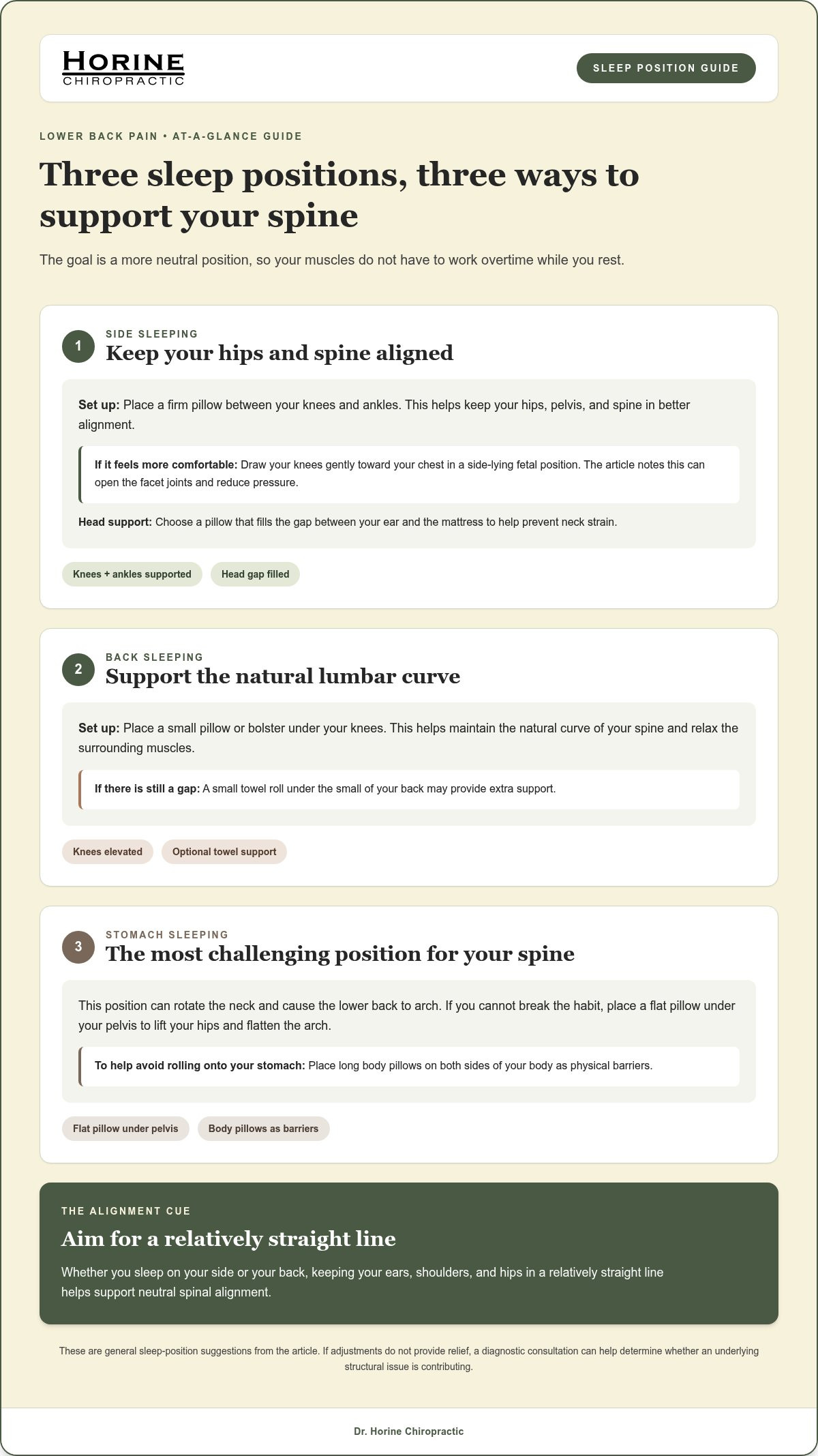
Side sleeping is the most common choice, but it can lead to trouble if your top leg slides forward and rotates your pelvis. This twisting motion puts a constant strain on your lower back. To fix this, place a firm pillow between your knees and ankles. This keeps your hips, pelvis, and spine in better alignment. For those dealing with disc issues, the “Side-Lying Fetal” position is often the most comfortable. By drawing your knees gently toward your chest, you open up the facet joints in your spine and reduce pressure. Following MedlinePlus home care guidelines, you should also ensure your head pillow fills the gap between your ear and the mattress to prevent neck strain from traveling down your back.
Back Sleeping: Maintaining the Natural Lumbar Curve
Sleeping on your back is frequently cited as the best way to sleep for lower back pain because it distributes your weight evenly. However, lying completely flat can pull on your psoas muscle, which then arches your lower back and causes discomfort. Placing a small pillow or bolster under your knees keeps the natural curve of your spine intact and relaxes the surrounding muscles. If you still feel a gap between your back and the bed, a small towel roll under the small of your back can provide extra support. This position is particularly effective for those seeking sciatica treatment Visalia, as it helps offload pressure from the sciatic nerve roots during the night.
Why Stomach Sleeping is the “Red Zone” for Back Pain
Stomach sleeping is generally the hardest position on your spine. It forces your neck into a sharp, sustained rotation, which creates a “rotational strain” that affects your entire back. This posture also causes your lumbar spine to arch excessively, compressing your discs. If you can’t break the habit, place a flat pillow under your pelvis to lift your hips and flatten the arch. To train yourself to switch, try a “Pillow Bridge.” Place long body pillows on both sides of your body to act as physical barriers that prevent you from rolling onto your stomach. If these adjustments don’t provide the relief you need, a diagnostic consultation can help determine if a structural misalignment is the true cause of your pain.
Choosing the Right Mattress and Pillow for Your Spine
Even if you master the best way to sleep for lower back pain, your efforts can be undermined by a surface that doesn’t support your anatomy. Many people still believe the old myth that a rock-hard mattress is the only solution for back issues. However, clinical research from 2026 confirms that extra-firm surfaces often fail to contour to the body, leaving the lower back unsupported. A medium-firm mattress provides the best balance of support and comfort for lower back pain, as it allows the shoulders and hips to sink just enough to keep the spine level.
Research published in The Lancet and other medical journals shows that patients using medium-firm surfaces—typically a 5 to 7 on the 10-point firmness scale—report a 48% reduction in pain. This level of support helps maintain the natural alignment of your vertebrae throughout the night. When evaluating sleep positions for spinal health, it’s clear that your mattress must act as a foundation that fills the gaps in your body’s silhouette rather than fighting against it.
Firm vs. Soft: Finding Your Ideal Mattress Support
A mattress that is too soft will cause your pelvis to “hammock,” which overstretches the ligaments in your lower back. Conversely, a mattress that is too firm creates high-pressure points on your hips and shoulders, often leading to tossing and turning. You can test your current mattress with a “sag test” by placing a straight edge across the surface. If you see a dip of more than 1 to 1.5 inches where you usually sleep, the internal structure has likely failed. If you aren’t ready for a new purchase, adding a high-density foam topper can sometimes bridge the gap between a mattress that is too firm and the “sweet spot” of medium-firm support.
Ergonomic Pillow Selection for Different Sleepers
Pillows are not just for your head; they are tools for managing the loft of your entire spine. The height of your pillow should match your shoulder width to keep your neck from tilting. For side sleepers, memory foam or latex pillows are excellent because they provide consistent contouring that doesn’t go flat halfway through the night. Back sleepers should look for a lower loft or a cervical contour pillow that supports the natural curve of the neck without pushing the head forward. Body pillows are a secret weapon for side sleepers, as they provide a physical anchor that prevents you from rolling onto your stomach and causing rotational strain. Replace your pillows every 18 to 24 months to ensure they still provide the structural integrity your spine requires.
A Bedtime Routine to Decompress Your Spine
Even with the right mattress and pillows, your body carries the day’s physical stress into the bedroom. If your muscles are tight when you lay down, they will likely stay that way for hours. Developing a pre-sleep routine is often the best way to sleep for lower back pain because it prepares your tissues for a neutral state. Think of it as hitting the “reset” button on your spine before you ask it to rest for the night. This preparation helps your nervous system transition from a state of “muscle guarding” to a state of restorative relaxation.
Managing inflammation is a key part of this process. If you have had a long day on your feet, applying a cold pack for 15 minutes can settle acute inflammation. However, if your back feels “locked” or stiff, gentle heat is usually better for relaxing the paraspinal muscles. This relaxation prevents your body from staying tense to protect a perceived injury, which often leads to more pain by morning. Creating a calm environment with low lighting also helps reduce overall muscle tension, making it easier for your spine to settle into its natural curves.
Pre-Sleep Mobility for Lower Back Relief
You don’t need a full workout to decompress your spine. Just five minutes of targeted movement can prevent eight hours of nocturnal stiffness. Start with the “Knees-to-Chest” stretch while lying on your back. Gently pull one or both knees toward your chest until you feel a light stretch in your lower back. This helps reset the pelvis and flattens the lumbar curve. Follow this with a brief “Child’s Pose” on the mattress. Kneel and sit back on your heels, then fold forward with your arms extended. This position gently opens the intervertebral spaces, allowing for better hydration of the discs while you sleep.
The “Log Roll” Bed Entry and Exit
Many people injure their backs not while sleeping, but while getting into or out of bed. The traditional “sit-up” move when waking up puts immense pressure on your lumbar discs. Implementing these mechanics is the best way to sleep for lower back pain without risking a morning flare-up. Use the “Log Roll” technique to move your body as a single, protected unit.
- Sit on the edge of the bed and use your arms to lower your upper body onto your side while simultaneously swinging your legs up.
- Keep your knees together and your spine straight, rolling onto your back or side like a solid log.
- When waking up, reverse this process: roll onto your side, drop your feet off the edge, and push up with your arms to a seated position.
This simple habit protects your spine during its most vulnerable moments. If these movements still cause sharp pain, it may be time for a lower back pain diagnostic exam at our Visalia clinic to see if a structural issue is standing in the way of your recovery.
When Sleeping Positions Aren’t Enough: Seeking Professional Care
Adjusting your environment is a powerful first step, but sometimes the best way to sleep for lower back pain is to address the underlying mechanical issues first. Ergonomics and pillows can support a healthy spine, but they cannot move a misaligned vertebra back into its proper place. When your spine is physically out of alignment, even the most expensive orthopedic mattress cannot fully relieve the pressure on your nervous system. Seeking professional help ensures you aren’t just finding the best way to sleep for lower back pain, but actually fixing the reason the pain exists in the first place.
Choosing to ignore persistent nighttime discomfort often leads to a cycle of chronic nerve compression. Over time, the body adapts to pain by “guarding,” which means your muscles stay tight to prevent further injury. This constant tension makes it nearly impossible to relax into a deep sleep. If you have spent weeks swapping pillows and shifting positions without relief, it is a clear signal that your body needs a more thorough investigative approach to find lasting lower back pain relief in Visalia.
Signs of Structural Issues in the Spine
It is helpful to know when your pain has moved beyond a simple case of “sleeping wrong.” Structural issues often present with symptoms that don’t fade after you get out of bed and start moving. You should consider seeing a chiropractor Visalia CA if you experience any of the following:
- Radiating pain, numbness, or a “pins and needles” sensation that travels down into your legs or feet.
- A pinpointed, stabbing pain in the lumbar region that prevents you from falling asleep regardless of your position.
- Morning stiffness that lasts for several hours rather than fading within the first thirty minutes.
- Pain that wakes you up in the middle of the night when you try to roll over or change positions.
The Dr. Horine Approach to Sleep-Related Back Pain
At our clinic, we believe that effective care starts with a patient-centered diagnostic exam. We don’t just look at where it hurts; we look at why the pain is happening. Dr. Horine has served the Visalia community since 1987, focusing on honest, quick-relief care that respects your time and your health goals. By using gentle manual adjustments, we work to restore proper mobility to the joints in your lower back. This reduces the mechanical stress on your discs and nerves, allowing your body to finally accept the support of your mattress and pillows. Our goal is to create a personalized treatment plan that moves you away from “learning to live with it” and toward waking up feeling truly restored.
Take Control of Your Sleep and Your Spine
Finding the best way to sleep for lower back pain is a journey that combines the right environment with supportive habits. By prioritizing neutral spinal alignment and using strategic pillow placement, you can reduce the nocturnal stress that leads to morning stiffness. Whether you are adjusting your mattress or adopting a pre-sleep decompression routine, these small changes often result in significant relief for your body.
However, if you find that even the perfect sleeping position doesn’t stop the pain, it is time to look deeper. Since 1987, our clinic has provided the Visalia community with honest, patient-centered diagnostics to find the root cause of discomfort. We focus on creating personalized treatment plans that offer quick relief and long-term mobility. You don’t have to settle for restless nights or a “locked” back every morning. Schedule your lower back assessment with Dr. Horine today and take the first step toward waking up truly refreshed. Your journey to better health starts with being heard and understood.
Frequently Asked Questions
Is it better to sleep on a hard floor for lower back pain?
Sleeping on a hard floor is generally not recommended for long-term relief. While the firmness might feel supportive initially, a floor does not contour to your body’s natural curves. This creates excessive pressure on your hips and shoulders, which can actually worsen muscle tension and inflammation. Most Visalia patients find that a medium-firm mattress provides a much better balance of support and comfort for the lumbar spine.
Can a bad pillow cause lower back pain?
Yes, a poorly fitted pillow can indirectly trigger lower back issues by throwing your entire spinal alignment out of balance. If your head and neck are not properly supported, your mid-back and lower back often compensate by tensing up. Finding the best way to sleep for lower back pain usually involves matching your pillow loft to your shoulder width to ensure a straight line from your ears to your hips.
How do I stop sleeping on my stomach if I’ve done it my whole life?
Breaking a lifelong habit takes patience and the right physical barriers. You can use a long body pillow or a “pillow bridge” to prevent your body from rolling over during the night. Placing a tennis ball in the pocket of a t-shirt worn backward is another classic trick that makes stomach sleeping uncomfortable enough to wake you up. Over time, your nervous system will adapt to the side-sleeping position as the new standard for rest.
What is the best way to sleep for sciatica and lower back pain?
The best way to sleep for lower back pain and sciatica is often on your side with a firm pillow between your knees and ankles. This specific adjustment prevents your top leg from pulling your pelvis into a rotation that pinches the sciatic nerve. If you prefer sleeping on your back, place a bolster or two pillows under your knees to flatten the lumbar curve and reduce the pull on your lower spine and legs.
Should I use a heating pad while I sleep for back relief?
It is safer to use a heating pad for 15 to 20 minutes before you fall asleep rather than leaving it on all night. Sustained heat can lead to skin burns or even increased inflammation in some cases. If you are looking for relief in Visalia, try a warm bath or a short session with a heating pad as part of your bedtime routine to relax your muscles without the risks of overnight use.
How do I know if my mattress is causing my back pain?
Pay attention to when your pain feels the most intense. If you wake up with significant stiffness that clears up within 30 minutes of moving, your mattress is a likely culprit. You can also check for visible sagging or “valleys” in the surface that exceed an inch in depth. If your mattress is over eight years old, it probably lacks the structural integrity needed to support your lower back properly throughout the night.
Is it normal to have lower back pain every morning?
While morning back pain is common, it is certainly not a normal part of the aging process. Waking up in pain usually indicates that your spine is under mechanical stress during the night or that you have an underlying misalignment. If these symptoms persist despite changing your sleep habits, it is important to seek a professional diagnostic exam here in Visalia to address the root cause before the condition becomes a chronic issue.
Can chiropractic adjustments improve my sleep quality?
Chiropractic care can significantly improve your sleep quality by restoring proper alignment to your spinal joints. When your vertebrae move freely, the surrounding muscles can finally relax, and nerve pressure is reduced. Many of our Visalia patients report that they can fall asleep faster and stay asleep longer after their adjustments. This personalized approach addresses the physical barriers that prevent you from achieving a truly restorative night of rest and recovery.
Article by
Dr. Russell Horine, DC Chiropractor
Horine Chiropractic has established a strong reputation for delivering exceptional results in treating complex back and neck pain cases. Their primary objective is to serve patients efficiently and compassionately, aiding them in their journey to wellness. Horine Chiropractic uses a comprehensive, groundbreaking approach to treating stubborn back and neck pain. They have been helping Visalia’s backs, necks, and everything in between for a combined 45 years. They create a comprehensive approach to help their patients meet their health needs. Horine Chiropractic customizes treatment plans to meet each patient's unique health needs. The clinic is accepting new patients and providing compassionate care to those in need.
Medical Disclaimer
This content is provided for general educational and informational purposes only and is not intended as medical advice, diagnosis, or treatment. Individual conditions and treatment needs vary. Please consult a qualified healthcare professional regarding your specific symptoms and treatment options.