
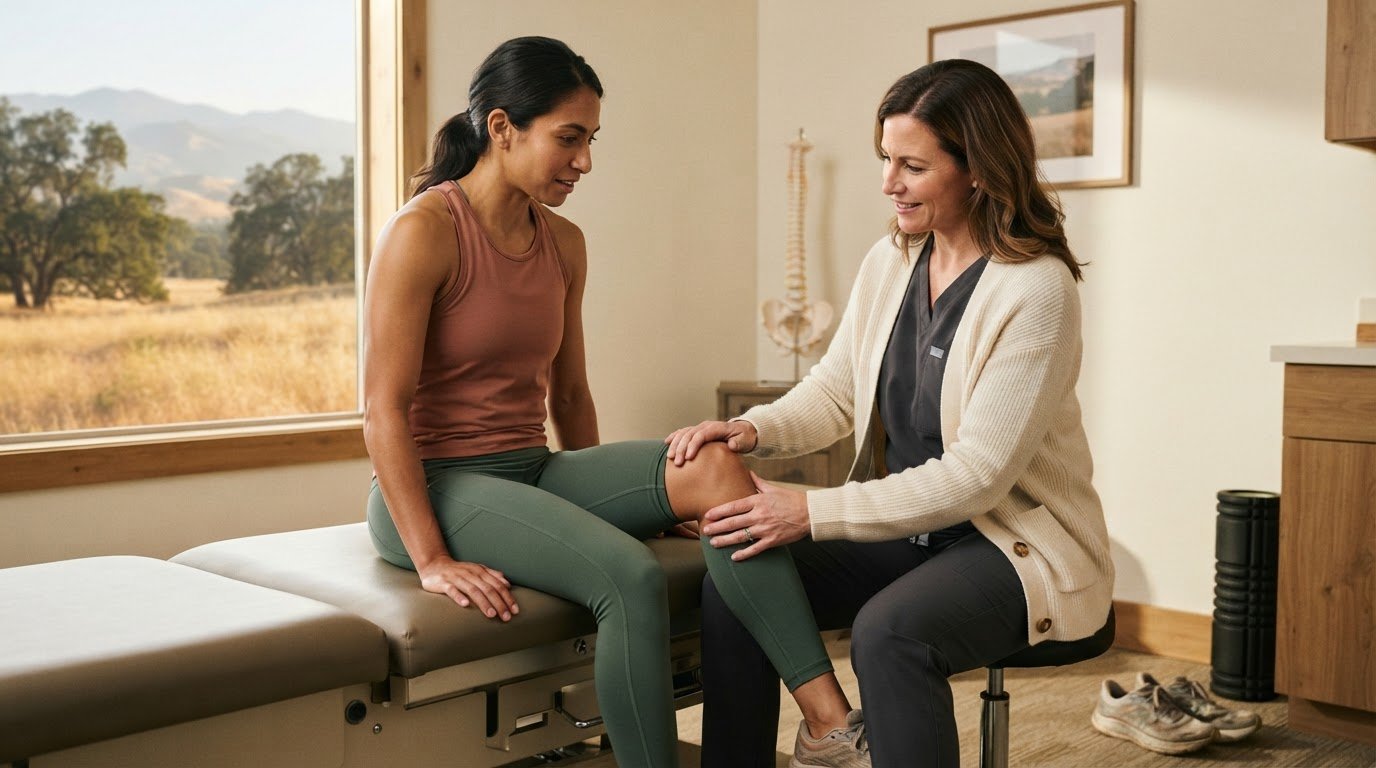
What if the sore spot isn’t the whole story? If you’re asking, can a chiropractor help with knee pain from running, the answer depends on what’s causing the pain. A sore knee can interrupt your runs, make a familiar distance feel harder, and leave you unsure whether the problem starts at the knee or somewhere nearby. It’s also reasonable to want clarity without putting off medical care you may need.
A chiropractic assessment may help explore musculoskeletal factors and whether chiropractic care could be an appropriate next step. It can’t establish every cause of knee pain or replace medical evaluation when symptoms call for it. A useful plan should reflect your symptoms, history, and goals rather than assume one treatment works for every runner.
This article explains what a knee-pain evaluation may cover, what it can and can’t clarify, and which symptoms deserve prompt medical attention. You’ll also find practical ways to prepare for an appointment and make a measured decision about care and returning to running.
Key Takeaways
- Whether can a chiropractor help with knee pain from running depends on the cause of your symptoms and what an assessment finds.
- Changes in training, footwear, or running surface are useful context to share, but they don’t identify the cause on their own.
- Note where the pain occurs, when it began, and whether you have swelling or difficulty bearing weight.
- Severe symptoms, a possible significant injury, or unclear findings may call for evaluation by another medical provider.
- Before running again, track your symptoms, ease back from activities that aggravate them, and follow individualized guidance rather than a universal timeline.
Can a chiropractor help with knee pain from running?
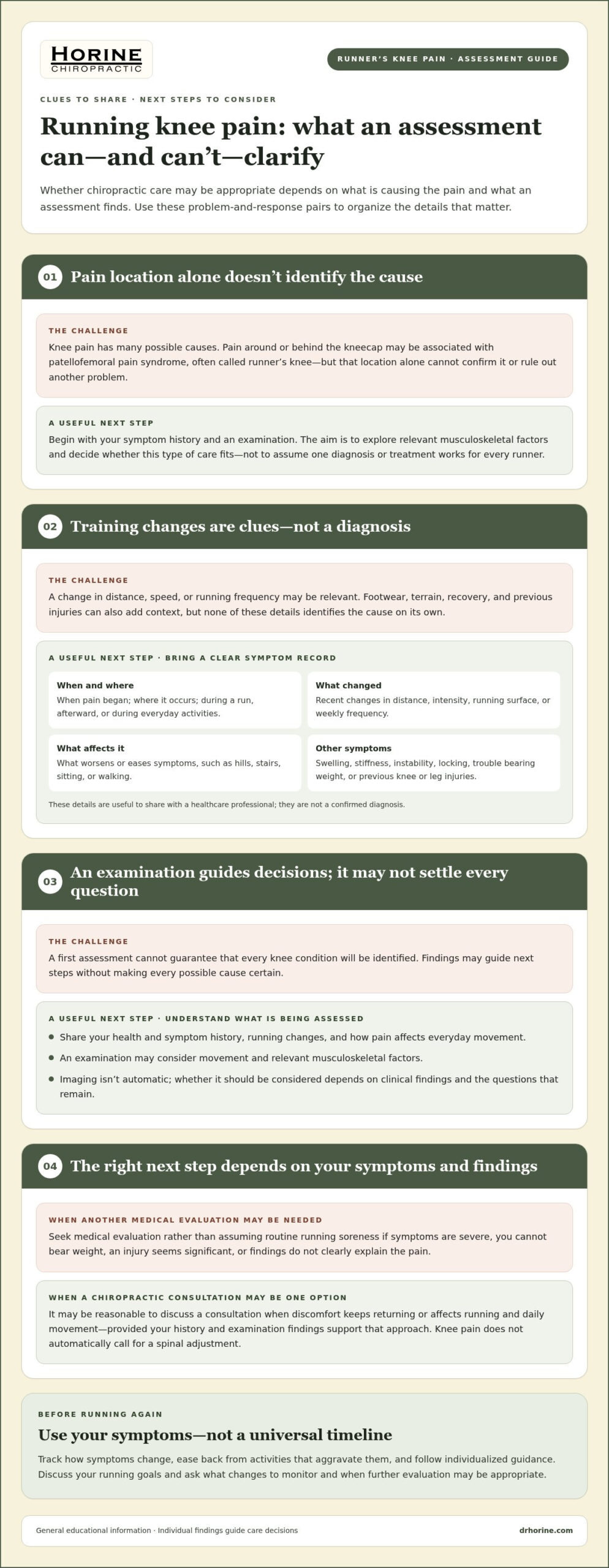
Possibly, depending on what’s causing the pain and what an assessment finds. Chiropractic care may be an option for some musculoskeletal complaints, but knee pain has many possible causes. Pain around or behind the kneecap, for example, may be associated with patellofemoral pain syndrome, often called runner’s knee. The location of pain alone can’t confirm that diagnosis or rule out another problem.
A chiropractic assessment may help explore whether musculoskeletal factors could be contributing to your discomfort and whether this type of care is appropriate. It should not be treated as a promise to heal damaged tissue, identify every injury, or address every possible cause. A chiropractic assessment may be a reasonable starting point when symptoms appear suitable for musculoskeletal evaluation and the findings support care without delaying other needed medical assessment.
What a chiropractor may assess when a runner reports knee pain
The first step is understanding your experience, not assuming the answer. A chiropractor may ask where the pain is, when it started, what activities bring it on, and whether your running routine has changed. They may also ask how symptoms affect everyday movements, such as walking, using stairs, or getting up from a chair.
An examination may consider movement and relevant musculoskeletal factors alongside your symptom history. These details can guide next steps, but they don’t automatically establish a specific injury. At Dr. Horine Chiropractic, a comprehensive first-visit examination and diagnostic assessment can inform a personalized plan, including whether another evaluation is more appropriate.
What chiropractic care cannot promise for a running injury
No single adjustment or examination can guarantee that every knee condition will be identified or resolved. Knee pain can have different causes, and the appropriate response depends on the individual findings. Supporting symptoms and confirming or healing a particular injury are not the same thing.
If an injury seems significant, symptoms are severe, or the findings don’t clearly explain your pain, assessment by another healthcare professional may be needed. A referral or different type of evaluation is not a setback; it can be the safer next step. Ask how the proposed plan relates to your assessment, what changes to monitor, and when to seek further care.
Why does running trigger knee pain, and how is it assessed?
Running repeats the same movement, so a change in training load may leave your knee sore or irritated. Increases in distance, speed, or running frequency can be relevant, as can footwear, terrain, recovery, and previous injuries. These details help shape an assessment, but none can diagnose the cause on its own. That distinction matters when asking can a chiropractor help with knee pain from running: first, clarify what your symptoms and examination suggest.
Which details about running pain should you track?
Before an appointment, note when the pain began and whether it appears during a run, afterward, or during everyday activities. Record recent changes in distance, intensity, surface, or weekly frequency. Describe where you feel discomfort and whether you’ve noticed swelling, stiffness, a feeling of instability, locking, or trouble bearing weight. These are clues to share, not a confirmed diagnosis.
Be specific about what worsens or eases the pain. For example, mention whether it changes with hills, stairs, sitting, or walking, and share any previous knee or leg injuries. Concrete details can help a healthcare professional decide what to ask and assess next.
What can a first assessment clarify?
A first assessment usually begins with your health and symptom history, followed by an examination guided by what you report. The location and timing of pain, swelling, and your ability to bear weight can help determine which movement or musculoskeletal factors to consider and whether further evaluation is appropriate. These findings guide next steps, but they don’t make every cause certain.
Imaging isn’t automatic. Whether it’s appropriate depends on the clinical findings and the questions that remain. A healthcare professional can advise whether another evaluation or imaging should be considered. If symptoms are severe, you can’t bear weight, or the findings don’t clearly explain the pain, seek medical evaluation rather than assuming it is routine running soreness.
For a consultation, bring your notes and explain your goals, including what you hope to return to doing. Dr. Horine Chiropractic offers comprehensive first-visit examinations and personalized treatment plans for knee pain in Visalia. You can also read this chiropractor guide to joint pain for more context. If you’d like to discuss whether an assessment may fit your situation, learn about knee pain assessment.
Chiropractic care or another provider: how should runners compare options?
Where to start depends on your symptoms, health history, and what an examination suggests. Chiropractic care may be reasonable for some persistent or recurring musculoskeletal discomfort, but it isn’t necessary or suitable for every runner. Knee pain doesn’t automatically begin in the spine, and it doesn’t automatically call for a spinal adjustment. The aim is to match the evaluation and care to the likely problem.
When might a chiropractic consultation be reasonable?
A consultation may be one option if discomfort keeps returning or affects running and daily movement, provided the findings support that approach. A clinician should consider your history, examination results, and goals, then explain whether care seems appropriate or another evaluation would be a better next step. Guidance should fit the suspected condition. For example, the 2019 clinical practice guideline for patellofemoral pain focuses on that condition, not a blanket recommendation for chiropractic treatment of all running-related knee pain.
| Care option | Possible role |
|---|---|
| Chiropractic assessment | Explore whether musculoskeletal factors may be contributing and whether chiropractic care fits the findings. |
| Medical evaluation | Assess symptoms that suggest a significant injury, require further investigation, or remain unclear. |
| Physical therapy evaluation | Assess movement and function and discuss rehabilitation options appropriate to the findings. |
The 2019 patellofemoral pain clinical practice guideline is specific to that diagnosis. It doesn’t prove one profession is best for every runner. Ask how a proposed plan relates to the suspected cause and what would prompt a different evaluation.
When should knee pain be evaluated elsewhere promptly?
Seek prompt medical advice after major trauma, if you can’t bear weight, or if the knee is markedly swollen or visibly deformed. A hot, red joint with fever, or symptoms that worsen rapidly, also warrant prompt medical attention. Don’t wait for a routine appointment if these signs are present.
Leg swelling with breathing difficulty can signal a medical emergency. Contact emergency services immediately. For less urgent but persistent symptoms, choose a qualified healthcare professional who can assess the situation and direct you to appropriate care. A careful referral is part of making a sound plan, not a failure of treatment.
What to do before running again with knee pain?
There’s no single rest period or return-to-running schedule that fits every knee problem. Instead, take a measured approach: track what you feel, ease back from activities that clearly aggravate it, and seek an assessment if symptoms persist, recur, or interfere with everyday movement. Then use guidance tailored to your situation. Pain easing or returning is useful information, but it can’t confirm that an injury has healed or that your knee is ready to run.
How to prepare for an appointment about running knee pain
A clear history makes the conversation more useful. Before your visit, jot down:
- When the pain began, where you feel it, and whether it happens during a run, afterward, or at rest.
- Any recent changes in mileage, pace, frequency, footwear, or running surface.
- Changes in daily movement, such as discomfort on stairs, stiffness, swelling, or difficulty bearing weight.
- Relevant health history, previous injuries, and what seems to ease or worsen the symptoms.
Bring questions, too. Ask what the assessment findings suggest, which care options fit those findings, and what signs would change the plan or prompt a referral. If you’re wondering, “can a chiropractor help with knee pain from running,” these details can help the clinician consider whether chiropractic care is appropriate or another evaluation may be a better next step.
How to think about activity while symptoms are present
Until you have suitable advice, avoid or scale back activities that clearly make the pain worse. That doesn’t mean every runner needs complete rest. The right adjustment depends on your symptoms and their cause, so discuss activity decisions with an appropriate clinician if discomfort continues or returns.
Ask how to approach a gradual return, what changes to monitor during and after activity, and what should prompt you to stop and check in. Don’t rely on a fixed timetable or a single pain-free run as proof of readiness. Your response to activity is one piece of information, not a diagnosis or confirmation of tissue healing.
If knee pain is affecting your running, you can discuss your symptoms and next steps with Dr. Horine Chiropractic in Visalia. A conversation about your goals and an individualized assessment can help clarify whether the practice’s knee-pain care fits your situation.
What to expect from a knee-pain consultation in Visalia
A first visit should give you space to explain what’s happening and understand the next steps. At Dr. Horine Chiropractic, the process includes a comprehensive first-visit examination and a discussion of your symptoms. The practice has served Visalia since 1987 and offers knee-pain treatment, but care should be based on your individual findings, not a preselected adjustment or guaranteed outcome.
Your goals matter, too. Tell the clinician what you’d like to return to, whether that’s comfortable daily movement or running, and what you’ve already tried. The assessment can help shape a personalized plan or indicate that another evaluation is more appropriate. Asking how the findings connect to the plan can help you decide whether it feels right for you.
Questions to ask before choosing a care plan
Clear answers can help you understand both the possibilities and the limits of care. Consider asking:
- What does the assessment suggest, and what remains uncertain?
- Which options fit the findings and my goals?
- What outcomes are realistic, and how will we review progress?
- What symptoms or changes would mean I should seek another evaluation?
These questions are especially useful if you’re trying to decide, “can a chiropractor help with knee pain from running?” The answer should reflect your examination and health history, rather than a general promise about running injuries.
How to take the next step with Dr. Horine Chiropractic
If you’re considering an assessment, contact the practice to ask about an appointment and explain that your knee pain is affecting your running. Use the conversation to discuss your symptoms, goals, and what the first visit involves. Confirm current booking options directly with the practice before making plans.
For additional context, read the practice’s joint pain treatment guide. If your discomfort travels from your back into your leg, the sciatica treatment guide may also help you understand that topic. Neither article can determine the cause of your symptoms; an appropriate assessment can help clarify which next step fits.
Make your next running decision with more clarity
So, can a chiropractor help with knee pain from running? Chiropractic care may be an option for some musculoskeletal complaints, but the right next step depends on your symptoms and assessment findings. Running changes and pain patterns can offer useful clues, though they don’t confirm a diagnosis. Severe symptoms, a suspected significant injury, or unclear findings may call for medical evaluation instead.
You don’t have to guess your way back to running. Track what you’re experiencing, avoid activities that clearly aggravate it, and ask a qualified clinician for guidance if the pain persists or returns. A plan should reflect your individual needs and goals, not promise a particular result or return date.
Dr. Horine Chiropractic has served the Visalia community since 1987 and offers comprehensive first-visit examinations and personalized treatment plans. If you’d like to talk through your knee pain and possible next steps, contact Dr. Horine Chiropractic about your knee pain. A thoughtful conversation can help you choose a measured way forward and move toward your running goals with greater confidence.
Frequently Asked Questions
Should I see a chiropractor or a doctor for runner’s knee?
The right starting point depends on the severity of your symptoms, your injury history, and what an assessment finds. Chiropractic care may be an option for some musculoskeletal concerns, while a medical professional may be better suited to evaluate a significant injury or symptoms that need further investigation. Seek prompt medical advice after major trauma, if you can’t bear weight, with substantial swelling, or if pain is rapidly worsening.
Can a chiropractor adjust my knee?
Don’t assume an adjustment is appropriate for every knee complaint. A clinician should first consider your symptoms, health history, examination findings, and whether the proposed care fits your situation. Ask what a recommended technique is intended to address, what alternatives are available, and when another provider should be involved. Treatment choices vary by individual. A discussion about knee-pain care doesn’t mean a particular technique is offered or right for you.
Should I keep running if my knee hurts?
If running clearly worsens your knee pain, consider pausing or reducing that aggravating activity while you seek appropriate advice. There’s no universal mileage rule or fixed rest period that works for every cause of pain. Persistent symptoms or limits on normal movement deserve an assessment. Swelling, instability, locking, or difficulty bearing weight are important signs to discuss with a healthcare professional rather than push through.
How long does it take for running-related knee pain to improve?
There’s no reliable timeline for every runner. Progress depends on the cause of the pain, its severity, and individual circumstances, so a set number of visits or a return-to-running date shouldn’t be promised before assessment. Ask how progress will be reviewed, which changes should prompt reassessment, and whether referral or further evaluation may be appropriate. Let the findings guide expectations and activity decisions.
When is knee pain from running serious enough to seek urgent care?
Seek prompt medical evaluation after significant trauma, if you can’t bear weight, or if your knee is markedly swollen or visibly deformed. A hot, red joint with fever or rapidly worsening symptoms also needs timely medical attention. Leg swelling together with breathing difficulty can signal an emergency; contact emergency services. Don’t rely on a routine chiropractic appointment to assess emergency symptoms.
Can knee pain from running come from the hip or back?
Pain around the knee can occur alongside issues elsewhere, but its location alone can’t identify the source. A clinician may ask about your back, hip, and leg as part of the history and examination. If pain travels from your back down your leg, describe that pattern and ask whether it changes the next steps. Avoid self-diagnosing based on one symptom; an assessment can help clarify what evaluation may be appropriate.

Article by
Dr. Russell Horine, DC Chiropractor
Horine Chiropractic has established a strong reputation for delivering exceptional results in treating complex back and neck pain cases. Their primary objective is to serve patients efficiently and compassionately, aiding them in their journey to wellness. Horine Chiropractic uses a comprehensive, groundbreaking approach to treating stubborn back and neck pain. They have been helping Visalia’s backs, necks, and everything in between for a combined 45 years. They create a comprehensive approach to help their patients meet their health needs. Horine Chiropractic customizes treatment plans to meet each patient's unique health needs. The clinic is accepting new patients and providing compassionate care to those in need.
Medical Disclaimer
This content is provided for general educational and informational purposes only and is not intended as medical advice, diagnosis, or treatment. Individual conditions and treatment needs vary. Please consult a qualified healthcare professional regarding your specific symptoms and treatment options.