
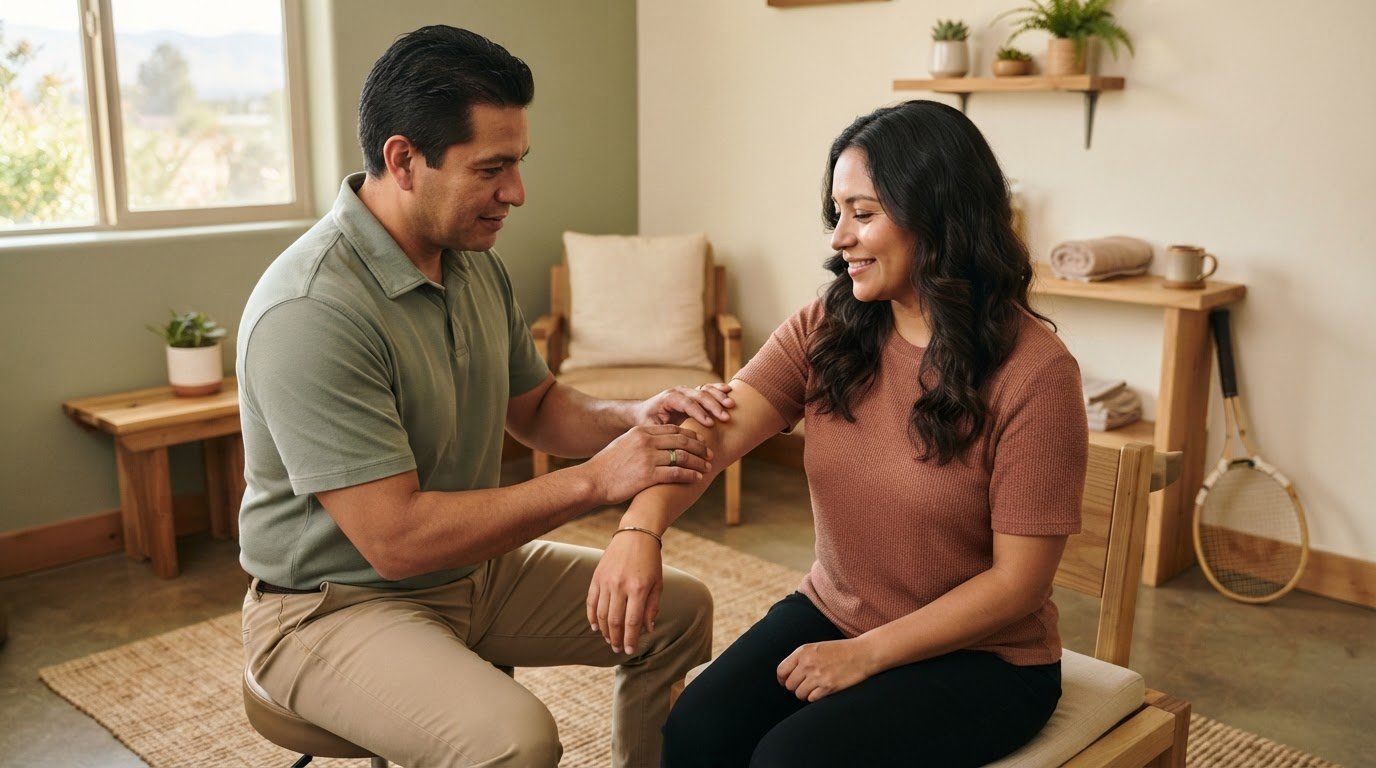
Could the sore spot on the outside of your elbow be only part of the story? If gripping a mug, lifting at work, or swinging a racket brings on pain, it’s understandable to want relief and a clear answer. Chiropractic care for tennis elbow Visalia may be one conservative option to explore, but elbow pain can have different causes, and chiropractic care isn’t right for everyone.
A useful first step is understanding what may be contributing to your symptoms before discussing care. At Dr. Horine Chiropractic, a comprehensive first-visit examination can help clarify your concerns, daily demands, and goals, then guide a personalized conversation about appropriate next steps. You don’t need to arrive certain that you have tennis elbow.
This article covers common causes of outer-elbow pain, what an individualized assessment may involve, and questions to consider when deciding whether to seek care in Visalia. Dr. Horine Chiropractic has served the community since 1987 and provides care for shoulder and elbow pain. The goal is to help you understand your options without pressure.
Key Takeaways
- Outer-elbow pain can fit a tennis-elbow pattern even if you’ve never played tennis, but other causes can feel similar.
- Repeated or increased demands on the arm may contribute to irritation near the elbow. No single activity explains every case.
- Whether chiropractic care for tennis elbow Visalia is suitable depends on your symptoms, assessment, and likely cause.
- Before an appointment, note when the pain began, what brings it on, which tasks are harder, and what care you’ve already tried.
- A thoughtful assessment can clarify your concerns and support a personalized discussion about appropriate next steps.
What tennis elbow feels like, and when elbow pain needs a closer look
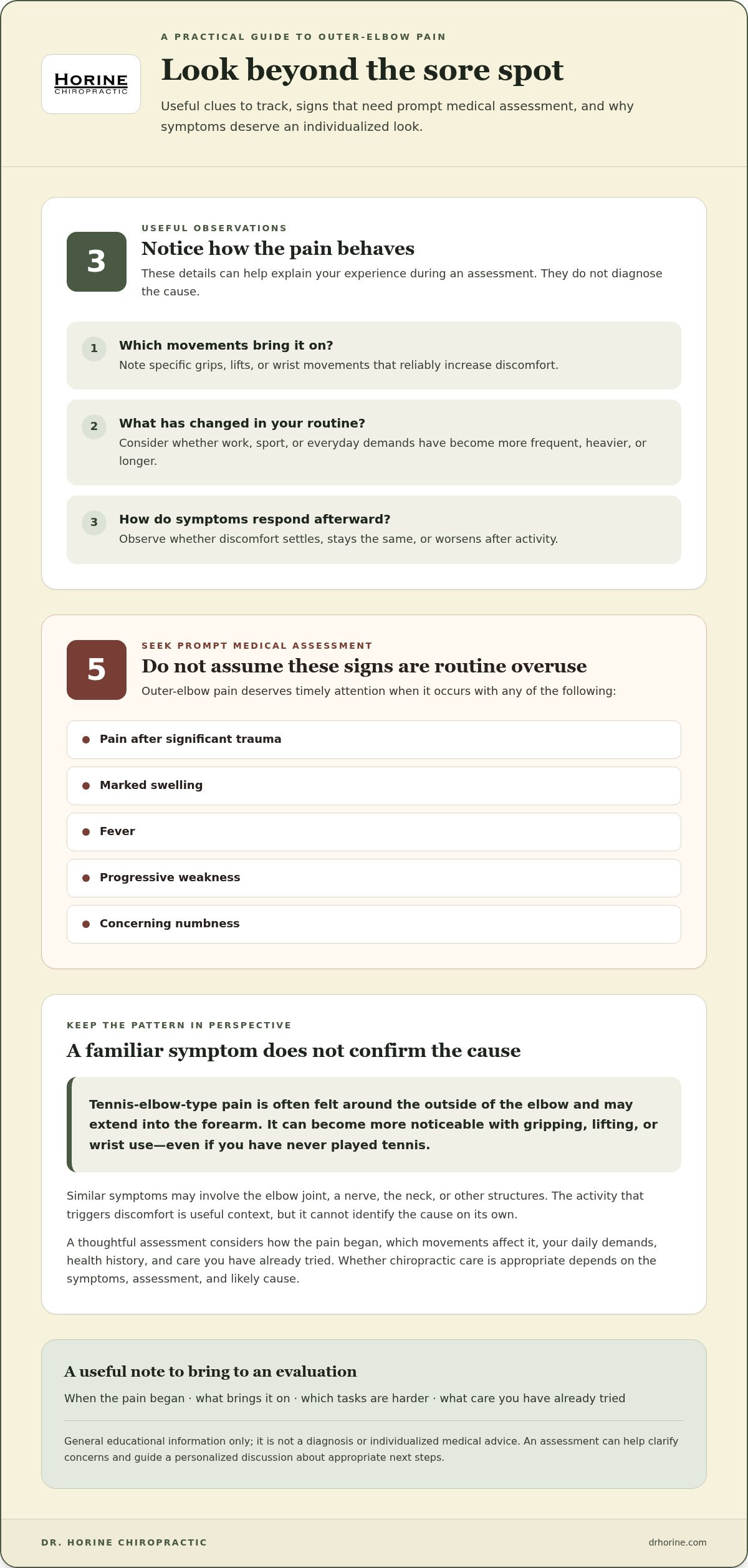
“Tennis elbow” is a common name for pain around the outside of the elbow that may extend into the forearm. The phrase describes a symptom pattern, not proof of a specific diagnosis. Tennis elbow, also known as lateral epicondylitis, is often associated with discomfort that worsens when the wrist or hand is working. Other conditions can cause similar pain.
You don’t have to play tennis to notice this pattern. Repeated gripping, lifting, racquet use, or wrist movements at work or during everyday tasks may bring on or aggravate outer-elbow discomfort. The activity that triggers pain is useful context, but it cannot identify the cause on its own.
What does tennis elbow pain usually feel like?
People often describe an ache or tenderness near the bony outer part of the elbow. Pain may become more noticeable when gripping a tool, carrying a bag, lifting a pan, or using the wrist. You may find these tasks uncomfortable or harder to manage than usual.
Symptoms vary in location and intensity. One person may mainly notice pain while gripping; another may feel it during wrist movement or lifting. These experiences can fit a tennis-elbow pattern, but a symptom checklist cannot confirm a diagnosis. An assessment considers the full picture, including how the pain began and which movements affect it.
When could outer-elbow pain be something else?
Similar arm symptoms may involve the elbow joint, a nerve, the neck, or other structures. That’s one reason not to assume every sore outer elbow is tennis elbow or that the same care suits everyone. If you’re considering chiropractic care for tennis elbow Visalia, an assessment can help clarify whether your symptoms fit a concern the practice addresses and what next steps may be appropriate.
Seek prompt medical assessment for outer-elbow pain after significant trauma, or when it comes with marked swelling, fever, progressive weakness, or concerning numbness. These signs deserve timely attention rather than an assumption that the pain is a routine overuse issue. For a wider overview of related musculoskeletal concerns, see the joint pain treatment guide.
Why tennis elbow develops: tendon loading, daily habits, and recovery
The tissues around the outer elbow can become irritated when demands on the arm repeatedly exceed what they’re ready to handle. The load may build gradually through familiar routines or increase after a change, such as taking on extra work, practicing more, or returning to a task after a break. The Johns Hopkins Medicine overview discusses repetitive stress and describes swelling of the tendons in connection with tennis elbow.
Repeated arm loading may contribute to an outer-elbow pain pattern, but it doesn’t confirm the cause of any one person’s symptoms. Activities, health history, and individual responses all matter. The same task can affect people differently.
How repeated gripping and wrist use can contribute
Racquet sports are one possible source of repeated arm demand, but they’re not the only one. Using hand tools, carrying or lifting objects, and doing work that involves frequent gripping or wrist movement can also place recurring demands on the area. The movement is only one part of the picture. The frequency, intensity, and overall pattern of activity matter too.
Changes in workload can offer useful clues. A task may have become more frequent, heavier, or longer, or several demanding activities may now happen close together. Long-standing habits may play a role as well, but they don’t automatically explain new pain.
What can keep elbow symptoms irritated?
If a movement repeatedly brings on pain, continuing it at the same intensity without changing how often or how heavily you do it may keep the area aggravated. That doesn’t mean you need to stop all activity. Notice what reliably increases discomfort and consider whether you can modify the task while seeking guidance.
- Notice which motions trigger symptoms, such as a particular grip, lift, or wrist movement.
- Keep track of recent changes in work, sport, or everyday demands.
- Observe whether symptoms settle, stay the same, or worsen after activity.
These observations can help explain your experience during an assessment, but they can’t establish a diagnosis by themselves. Persistent or worsening elbow pain deserves professional assessment, especially if it interferes with daily tasks. If you’re exploring chiropractic care for tennis elbow Visalia, an individualized evaluation can help clarify whether the pain pattern is appropriate for conservative chiropractic care or whether another next step may be more suitable.
For a local discussion of shoulder and elbow concerns, learn more about shoulder and elbow pain care at Dr. Horine Chiropractic.
Can chiropractic care help tennis elbow? Understand the options and limits
It may be worth considering, but there isn’t one answer for every sore elbow. Whether chiropractic care is appropriate depends on what’s causing the symptoms, how they affect you, and what an assessment finds. The American Academy of Orthopaedic Surgeons describes tennis elbow as often caused by overuse, but an overuse pattern alone doesn’t confirm that this is the cause of your pain.
A chiropractic visit should begin by understanding your concern, not by assuming a particular treatment will fix it. Evaluation and an individualized discussion of conservative care are different from claiming that an adjustment directly heals an irritated tendon. Responses to care vary. If your symptoms suggest another problem, a different type of medical evaluation may be more suitable.
What might a chiropractor assess before recommending care?
A first visit may include questions about when the pain began, which activities make it worse, your health history, and what you’d like to do more comfortably. A clinician may examine the elbow and consider relevant movement or strength, as appropriate. These steps help put your symptoms in context. They don’t mean that every person needs the same tests or care.
At Dr. Horine Chiropractic, a comprehensive first-visit examination and personalized treatment plan are part of the practice’s approach to shoulder and elbow pain. Findings can guide a conversation about whether conservative chiropractic care is suitable, what it may involve, or whether another evaluation should come first. Ask questions and make sure you understand the reasoning before deciding on care.
When should you seek another medical evaluation?
Seek prompt medical assessment after a significant injury or if symptoms are severe, worsening, or unexplained. Persistent numbness, notable weakness, or pain that doesn’t fit the expected pattern of an outer-elbow complaint also deserves attention. An article can’t determine the cause from symptoms alone, and waiting for an in-person assessment may not be right for every situation.
If you’re researching chiropractic care for tennis elbow Visalia, think of the first appointment as an opportunity to clarify your concern and discuss appropriate next steps, not as a commitment to a predetermined course of treatment. A careful provider should explain what the assessment suggests, what remains uncertain, and when another clinician’s input may be needed.
What to do before seeking tennis elbow care in Visalia
A little preparation can make an appointment more useful. You don’t need to arrive with a diagnosis or a perfect timeline. A few notes about how the pain affects your routine can help a provider understand what you’re experiencing and discuss appropriate next steps.
How to prepare for an elbow-pain appointment
- Note when it began. Record when you first noticed the pain and whether it appeared gradually or after a particular event.
- Track what changes it. Write down movements that make it better or worse, and whether symptoms vary during or after activity.
- Describe what’s harder now. Consider work tasks, sports, household activities, or everyday movements you’ve had to change. These details can help explain how the pain affects you.
- Gather relevant history. Bring a list of previous evaluations or treatments, along with health information you think may matter.
- Adjust painful tasks thoughtfully. If a particular movement clearly aggravates your elbow, consider temporarily changing how often or how intensely you do it. You don’t necessarily need to stop all activity.
Questions to ask about your care options
Good questions can help you understand the reasoning behind a recommendation and decide whether it feels right for you. For example, ask:
- What does the assessment suggest, and what other causes could still explain my symptoms?
- What would the proposed care involve, and how would we review whether it’s helping?
- What should I do if symptoms don’t improve or begin to worsen?
- Would another clinician’s evaluation be appropriate before I decide on care?
You’re entitled to raise concerns and ask for clear explanations. If you’re considering chiropractic care for tennis elbow Visalia, understanding the assessment, options, and follow-up discussion can help you make an informed choice without feeling rushed. Dr. Horine Chiropractic offers comprehensive first-visit examinations and personalized plans for shoulder and elbow pain.
For more guidance on selecting a local provider and preparing for an appointment, read the Visalia chiropractor first-visit guide. If you’d like to discuss an assessment for shoulder or elbow pain, request an appointment with Dr. Horine Chiropractic.
Tennis elbow assessment at Dr. Horine Chiropractic in Visalia
Dr. Horine Chiropractic has served the Visalia community since 1987 and provides care for shoulder and elbow pain. If you’re unsure whether your outer-elbow symptoms are a fit for chiropractic care, an initial conversation and examination can help clarify what you’re experiencing and whether this is an appropriate place to start. The goal is an informed next step, not an assumption that every elbow problem calls for the same care.
What a personalized first visit can help clarify
A comprehensive first-visit examination gives you an opportunity to explain when the discomfort began, what activities bring it on, and how it affects work, sport, or everyday tasks. Sharing relevant health history and previous evaluations can add helpful context. You can also describe what you hope to do more comfortably, such as lifting, gripping, or completing a work task.
Examination findings help inform a personalized discussion about appropriate next steps. If the symptoms appear suitable for the practice’s shoulder and elbow care, the clinician can discuss a plan tailored to your situation. If your symptoms suggest another type of evaluation may be more appropriate, that should be part of the conversation too. Chiropractic care isn’t the right choice for every cause of elbow pain, and an assessment should help make that distinction clearer.
You can ask what the findings mean, which options are being considered, and how progress would be discussed. If anything feels unclear, take the time to ask for an explanation before deciding. A careful conversation can help set realistic expectations without promising a particular result or timeline.
How to take the next step in Visalia
Considering chiropractic care for tennis elbow Visalia doesn’t mean you need to be certain of your diagnosis before reaching out. You can ask whether an assessment may fit your concern and what to expect from a first visit. Dr. Horine Chiropractic accepts appointments online and by phone, so you can choose the contact method that works for you.
If you’re ready to ask questions or discuss an assessment for shoulder and elbow pain, contact Dr. Horine Chiropractic. It’s a practical way to learn about your options and decide on a next step at your own pace.
Take a thoughtful next step for elbow pain
Outer-elbow pain may follow a familiar overuse pattern, but similar symptoms can have different causes. Noting what brings on discomfort and which activities it limits can make an assessment more useful. Whether chiropractic care for tennis elbow Visalia is appropriate depends on your symptoms and what an examination suggests.
Dr. Horine Chiropractic has served the Visalia community since 1987, offering comprehensive first-visit examinations, personalized treatment plans, and care for shoulder and elbow pain. A visit can help clarify your concerns and support a discussion about suitable next steps, including whether another type of evaluation may be needed.
If you’d like to ask whether an elbow-pain assessment may fit your needs, contact Dr. Horine Chiropractic to discuss an elbow-pain assessment. You can take things one step at a time and decide what feels right for you.
Frequently Asked Questions
Can a chiropractor help with tennis elbow?
A chiropractor may be able to assess elbow symptoms and discuss conservative care if the findings suggest it’s appropriate. Suitability depends on the likely cause, your symptoms, and your health history. Chiropractic care isn’t a fit for every cause of elbow pain, and an assessment may indicate that another type of medical evaluation is a better next step. Ask how a recommendation relates to your specific symptoms.
What does a chiropractor do for tennis elbow?
A chiropractor can begin by asking when the pain started, what activities aggravate it, and how it affects your daily routine. A comprehensive examination can inform a personalized discussion about care options and next steps. The approach should be based on the assessment, not an assumption that a particular adjustment directly heals a tendon. Ask what any proposed care involves and how progress will be reviewed.
How do I know if my elbow pain is tennis elbow?
You can’t confirm tennis elbow from symptoms alone. The term commonly describes pain around the outer elbow that may worsen with gripping, lifting, or wrist use, but other conditions can cause overlapping symptoms. A clinician can consider your history and examine the area to help assess the likely source. Seek assessment if pain persists, worsens, or interferes with work, sport, or everyday activities.
Can tennis elbow go away on its own?
Some people’s symptoms may improve over time, particularly if they can adjust activities that clearly aggravate the elbow. However, improvement and timing vary, and pain that continues or worsens deserves professional assessment rather than guesswork. You don’t necessarily need to stop all activity. Note which tasks trigger discomfort and consider modifying those demands. A clinician can discuss appropriate next steps based on your situation.
When should I see a doctor for elbow pain?
Seek prompt medical assessment after significant trauma, or if elbow pain comes with marked swelling, fever, progressive weakness, or concerning numbness. Arrange an evaluation if symptoms are severe, worsening, unexplained, persistent, or limiting normal activities. These signs don’t identify a specific condition on their own, but they warrant attention. If you’re unsure how urgent your symptoms are, contact a medical professional for guidance.
Is chiropractic care safe for elbow pain?
Whether chiropractic care is appropriate depends on the cause of your elbow pain, your symptoms, and your health history. Share relevant medical information and ask what an examination suggests before deciding on care. A provider should explain the proposed approach and discuss whether another evaluation may be more suitable. Seek prompt medical attention for concerning symptoms such as significant injury, progressive weakness, or notable numbness.
How can I find tennis elbow care in Visalia?
Look for a provider who will assess your symptoms, explain options clearly, and discuss when another evaluation may be needed. Dr. Horine Chiropractic has served Visalia since 1987 and offers comprehensive first-visit examinations, personalized treatment plans, and shoulder and elbow pain care. If you’re considering chiropractic care for tennis elbow Visalia, contact the practice online or by phone to ask whether an assessment may fit your needs.
Article by
Dr. Russell Horine, DC Chiropractor
Horine Chiropractic has established a strong reputation for delivering exceptional results in treating complex back and neck pain cases. Their primary objective is to serve patients efficiently and compassionately, aiding them in their journey to wellness. Horine Chiropractic uses a comprehensive, groundbreaking approach to treating stubborn back and neck pain. They have been helping Visalia’s backs, necks, and everything in between for a combined 45 years. They create a comprehensive approach to help their patients meet their health needs. Horine Chiropractic customizes treatment plans to meet each patient's unique health needs. The clinic is accepting new patients and providing compassionate care to those in need.
Medical Disclaimer
This content is provided for general educational and informational purposes only and is not intended as medical advice, diagnosis, or treatment. Individual conditions and treatment needs vary. Please consult a qualified healthcare professional regarding your specific symptoms and treatment options.