

If reaching overhead, getting dressed, or lifting something brings on shoulder pain or a pinching feeling, it’s understandable to wonder what’s causing it and whether movement or treatment could make it worse. Chiropractic for shoulder impingement should start by looking at what your shoulder can comfortably do, rather than assuming every case is the same.
Shoulder symptoms can have several possible contributors, including repeated overhead activity, a past injury, or changes in how the shoulder and nearby areas move. An assessment helps put your symptoms and movement in context and identify which activities are difficult. Before an appointment, note what brings on the pain, when it started, and what you’d like to do more comfortably.
In this article, you’ll learn about common impingement symptoms and possible causes, what an examination may involve, and how personalized chiropractic care may fit into a practical plan. Dr. Horine Chiropractic provides shoulder and elbow pain care in Visalia, with a comprehensive first-visit examination to help clarify a realistic next step.
Key Takeaways
- Arm pain or a pinching feeling can have different causes, so the label “impingement” doesn’t tell the whole story.
- Notice which movements bring on discomfort and how it affects daily tasks. Those details help explain your symptoms during an assessment.
- A first-visit examination may include a discussion of your history, an assessment of shoulder movement, and a conversation about your goals.
- Chiropractic for shoulder impingement may be part of conservative care when an assessment indicates it’s appropriate. Next steps should reflect your findings.
- If shoulder pain persists or limits movement, an assessment in Visalia can help you understand practical next steps.
Chiropractic for shoulder impingement: what the term means and how it feels
“Shoulder impingement” is a term often used when shoulder pain is associated with arm movement and irritation of tissues around the top of the shoulder. It describes a symptom pattern, not a complete diagnosis or proof of exactly what’s causing the pain. Clinicians may use related terms, such as subacromial pain, to describe similar symptoms. The overview of Shoulder impingement syndrome also explains why the label can cover different experiences and possible contributing structures.
What shoulder impingement symptoms can feel like
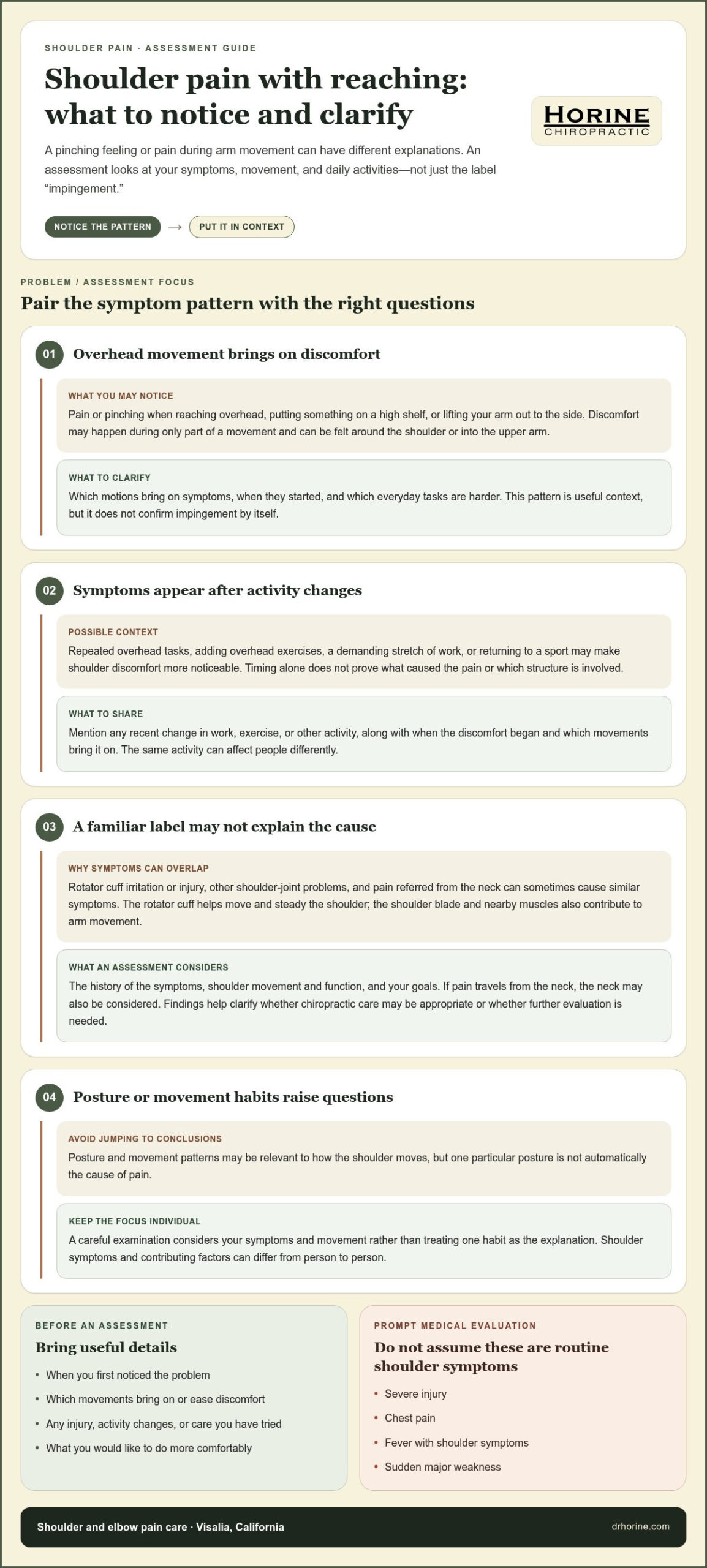
Some people notice pain or a pinching feeling while reaching overhead, putting an item on a high shelf, or lifting the arm out to the side. Others feel discomfort only during part of a movement, or find particular tasks harder than usual. The location and intensity can vary: pain may be felt around the shoulder or extend into the upper arm.
That pattern is useful to describe, but it doesn’t confirm impingement on its own. A painful shoulder movement can have different explanations, and not every shoulder that hurts when raised has the same problem. Make a note of which motions bring on symptoms, how long they’ve been happening, and which daily activities they affect. These details help put the discomfort in context.
Which shoulder structures may be involved
The rotator cuff is a group of muscles and tendons that helps move and steady the shoulder. A small fluid-filled cushion called the subacromial bursa sits near these tendons and helps reduce friction. Irritation around these tissues may be associated with pain, but the shoulder also depends on coordinated movement between the upper-arm bone, the shoulder joint, and the scapula, or shoulder blade.
The scapula shifts as you raise and lower your arm, while nearby muscles help guide and support that motion. Symptoms may relate to more than one structure or movement, so a label alone can’t identify the source. In chiropractic for shoulder impingement, an appropriate assessment considers your symptoms and movement rather than assuming the diagnosis from a familiar phrase. That distinction keeps the next steps focused on what your shoulder is actually doing.
Why shoulder impingement symptoms develop: what else may cause them
Shoulder discomfort can emerge after a change in how much or how often you use your arm. Repeatedly stocking a high shelf, adding overhead exercises, taking on a stretch of demanding work, or returning to a sport can increase the load on shoulder tissues. The timing is useful context, but it doesn’t prove that activity caused an injury or identify which structure is involved.
How movement and activity can affect shoulder discomfort
Shoulder movement depends on several structures working together. If a task repeatedly challenges your comfortable range or capacity, symptoms may become more noticeable during that task. When describing the pattern, include when the discomfort began, which movements bring it on, and whether your activity recently changed. Those specifics are more useful than relying on the word “impingement” alone.
Posture and movement patterns may be relevant to how the shoulder moves, but a particular posture isn’t automatically the cause of pain. People use their shoulders differently, and the same activity can affect them differently. A careful assessment considers your symptoms and movement rather than treating one habit as the explanation.
When shoulder pain may not be impingement
Rotator cuff irritation or injury, other shoulder-joint problems, and pain referred from the neck can sometimes cause overlapping symptoms. Pain that travels from the neck, for example, may lead a clinician to consider the cervical spine as part of the assessment. A fall or sudden strain, marked weakness, or symptoms that feel unusual may also change what needs attention first.
Similar shoulder symptoms can have different underlying causes, so the name of a pain pattern alone can’t settle the diagnosis. That’s why chiropractic for shoulder impingement should be considered after an appropriate assessment clarifies whether the symptoms and findings fit that approach.
Seek prompt medical evaluation for severe injury, chest pain, fever with shoulder symptoms, or sudden major weakness. These signs call for timely attention rather than assuming the discomfort is routine shoulder impingement.
If your shoulder pain keeps returning or you’re unsure what movements are safe, an individual assessment can help clarify the next step. Dr. Horine Chiropractic provides shoulder and elbow pain care in Visalia, with attention to your symptoms and how they affect everyday activities.
What a chiropractic assessment for shoulder impingement should clarify
A useful assessment is a conversation and examination, not a decision based on the word “impingement” alone. The clinician learns how your symptoms started and what affects them, then considers your shoulder movement, function, and goals before discussing possible next steps. This process helps determine whether chiropractic for shoulder impingement may be appropriate for your situation or whether further evaluation is needed.
What to share during the first shoulder pain assessment
Before your visit, think through when you first noticed the problem and which activities bring on or ease the discomfort. Mention changes at work or during exercise, any injury, and care you’ve already tried. Specific examples, such as pain with reaching behind your back, difficulty lifting a light object, or symptoms that also involve your neck, can help the clinician understand the pattern.
Your goals matter, too. You may want to return to a sport, manage work tasks more comfortably, or reach overhead with less difficulty. Sharing what you need to do in daily life helps shape the assessment around meaningful activities, rather than focusing only on a diagnosis label. For more on what a first visit may involve, see this first-visit chiropractic exam guide.
How examination findings guide the next step
The examination may include observing how you raise and lower your arm, checking comfortable range of motion, and discussing which positions reproduce symptoms. Depending on your history and findings, the clinician may also consider the neck and upper back, since nearby areas contribute to shoulder and arm movement. The assessment is tailored to the person, rather than following a fixed checklist that assumes every shoulder problem is alike.
Afterward, the clinician can explain what the findings suggest, discuss care options and practical goals, and determine how progress might be reassessed. A personalized plan should reflect your symptoms, examination, and priorities. If findings raise concern for another cause or indicate that chiropractic care isn’t the right next step, additional medical evaluation may be appropriate. A clear explanation helps you understand the reasoning behind a plan and what to do next.
Can chiropractic care help shoulder impingement symptoms?
Chiropractic care may be considered as part of conservative care for shoulder symptoms when an appropriate assessment suggests it fits your needs. Next steps should be based on your symptoms, examination findings, and daily activities, not on an assumption that the word “impingement” calls for one standard treatment. An adjustment or other approach isn’t automatically right for every shoulder problem.
What personalized shoulder care may involve
After reviewing your assessment, the clinician can discuss suitable care options and the goals you want to work toward, such as making everyday movement more comfortable. The plan may include targeted therapies selected for your particular findings. Your shoulder’s response and changes in function help guide whether the approach remains appropriate or needs adjustment.
That ongoing conversation matters. If a movement remains difficult or symptoms change, the plan can be reviewed in light of how you’re doing. For a broader look at how care may be tailored to joint concerns, read this joint pain treatment guide.
Chiropractic for shoulder impingement doesn’t promise a specific result or timeline. A thoughtful plan should make clear what it’s intended to address and how your progress will be considered. It should also leave room to reconsider the approach if your symptoms or examination findings point in a different direction.
When to pause or seek further evaluation
If pain worsens, movement becomes more restricted, or you aren’t making the expected functional progress, bring it up so the situation can be reassessed. Significant weakness or symptoms following an injury may also call for further medical evaluation. Severe injury, chest pain, or other urgent symptoms require prompt medical attention; chiropractic care isn’t a substitute for emergency care.
Dr. Horine Chiropractic provides shoulder and elbow pain care in Visalia, with an assessment-led approach based on your individual needs. Explore shoulder pain care in Visalia to learn more.
Shoulder impingement care in Visalia: your practical next steps
If shoulder pain keeps returning, limits your reach, or leaves you unsure what’s causing it, an assessment can help bring more clarity. The term “impingement” alone doesn’t determine what care is right for you. With chiropractic for shoulder impingement, a sensible first step is to discuss your symptoms and examination findings, then decide what approach fits.
Preparing for a shoulder pain appointment in Visalia
A few notes can help you describe what’s been happening. Consider when symptoms began, which movements aggravate them, and how they affect tasks such as dressing, working, or reaching. Bring relevant medical history and mention any injury, previous care, or other concerns you want addressed. These details give the clinician useful context without requiring you to arrive with a diagnosis.
If neck discomfort or symptoms traveling between your neck and shoulder are part of the picture, mention those too. You may also find this neck pain care guide helpful as you prepare to discuss the full pattern of symptoms.
Choosing a clear, personalized path forward
At Dr. Horine Chiropractic in Visalia, care begins with a comprehensive first-visit examination and diagnostic assessment. The clinician considers your history, symptoms, and movement before discussing a plan. That plan is personalized to your findings and functional goals, whether you’re hoping to manage work more comfortably or feel more confident with everyday arm movements. Treatment and next steps depend on the individual assessment, and your experience can inform how the plan is reviewed.
Dr. Horine Chiropractic has served the Visalia community since 1987. You don’t need to know exactly what’s causing the pain before taking a next step. If shoulder discomfort persists, movement is restricted, or the cause remains unclear, arrange an appointment to discuss your symptoms and what the assessment suggests. The goal is a clear, realistic conversation about care, not a promise of a particular outcome.
Take a Clear Next Step for Your Shoulder
A painful or pinching shoulder doesn’t reveal its cause by itself. The pattern of your symptoms, how your arm moves, and what you need to do each day all help guide a useful assessment. Chiropractic for shoulder impingement may be considered when an individualized examination indicates it’s appropriate, but care should be based on your findings, not a label alone.
At Dr. Horine Chiropractic, comprehensive first-visit examinations and personalized treatment plans help make the next steps clearer. The practice has served the Visalia community since 1987, providing shoulder and elbow pain care with an attentive, assessment-led approach. If pain persists, movement feels limited, or you’re uncertain about what’s behind your symptoms, start by discussing your concerns.
Schedule an appointment to discuss your shoulder pain. A thoughtful assessment can help you understand your options and move forward with greater confidence.
Frequently Asked Questions
Can chiropractic care help shoulder impingement?
Chiropractic care may be considered as part of conservative care for some people with shoulder impingement symptoms, depending on the examination and likely cause. Chiropractic for shoulder impingement isn’t a guaranteed solution, and the same approach won’t suit every shoulder concern. An assessment considers your symptoms, movement, and goals to help determine whether care is appropriate. If findings suggest another cause or the need for further evaluation, that can be discussed before deciding on next steps.
What does shoulder impingement feel like?
Shoulder impingement may feel like pain or pinching when reaching overhead, lifting, or moving your arm in certain directions. The location and intensity vary, and some people notice discomfort only during particular tasks. These symptoms don’t confirm impingement, because other shoulder or neck conditions can feel similar. Consider an assessment if pain persists or limits daily activities. Significant weakness or a recent injury also deserves prompt attention from a clinician.
How is shoulder impingement diagnosed?
Assessment generally includes a discussion of your symptoms and health history, followed by a physical examination. A clinician may check how your shoulder moves and how symptoms relate to everyday functions, while considering possible shoulder or neck causes. No single symptom or self-test confirms the source for everyone. Depending on the findings, the clinician may recommend further evaluation. Imaging isn’t automatically necessary for every person with shoulder pain.
Can shoulder impingement heal on its own?
Some shoulder symptoms may improve over time, but what happens depends on the underlying cause, your activities, and your individual health. Improvement isn’t guaranteed, and persistent pain shouldn’t simply be ignored. Consider an assessment if symptoms worsen, keep returning, restrict normal movement, or don’t improve as expected. Understanding what may be contributing to the discomfort can help you make a more informed decision about activity and possible care.
What happens during a chiropractic visit for shoulder pain?
A first visit typically begins with a conversation about your symptoms and health history, followed by an examination suited to your concern. At Dr. Horine Chiropractic in Visalia, the process starts with a comprehensive examination and diagnostic assessment. The findings guide a discussion of personalized next steps based on your symptoms and goals. A particular adjustment or treatment isn’t assumed in advance; recommendations depend on the assessment.
When should I seek medical care for shoulder pain instead of chiropractic care?
Seek prompt medical evaluation after a major injury or for severe or rapidly worsening pain, sudden substantial weakness, fever, or chest pain. These symptoms may need assessment beyond routine musculoskeletal care, so don’t delay urgent medical attention to try chiropractic treatment first. If pain persists or limits movement without these warning signs, a clinical examination can help clarify possible causes and an appropriate next step for your situation.
Can shoulder impingement pain come from the neck?
Yes, pain felt around the shoulder can sometimes be referred from the cervical spine, while a shoulder condition can also cause nearby discomfort. Symptoms alone can’t reliably identify the source. An assessment may consider your neck and shoulder, symptom history, and relevant movements to help clarify the pattern. Tell a clinician promptly about numbness or significant weakness, especially if these symptoms are new, worsening, or affecting arm function.

Article by
Dr. Russell Horine, DC Chiropractor
Horine Chiropractic has established a strong reputation for delivering exceptional results in treating complex back and neck pain cases. Their primary objective is to serve patients efficiently and compassionately, aiding them in their journey to wellness. Horine Chiropractic uses a comprehensive, groundbreaking approach to treating stubborn back and neck pain. They have been helping Visalia’s backs, necks, and everything in between for a combined 45 years. They create a comprehensive approach to help their patients meet their health needs. Horine Chiropractic customizes treatment plans to meet each patient's unique health needs. The clinic is accepting new patients and providing compassionate care to those in need.
Medical Disclaimer
This content is provided for general educational and informational purposes only and is not intended as medical advice, diagnosis, or treatment. Individual conditions and treatment needs vary. Please consult a qualified healthcare professional regarding your specific symptoms and treatment options.