

That sharp, electric bolt shooting down your leg might feel like a permanent injury, but the best path to recovery often depends on a factor you haven’t considered: whether your pain is a structural “kink” or a functional “weakness.” When weighing chiropractic vs physical therapy for sciatica, it’s easy to feel overwhelmed by conflicting advice. If you’re currently struggling with numbness that makes every step feel like a gamble, you’ve likely felt the deep frustration of not knowing exactly why your body is betraying you. It’s exhausting to search for answers while managing constant discomfort, and you simply want to feel like yourself again.
You deserve a clear understanding of what’s happening in your spine and a non-surgical plan that actually works. In this guide, we’ll explore the structural and functional differences between these two common treatments to help you find the most effective solution for your pain. You will learn how to identify if a herniated disc is the culprit and how to build a structured path to lasting relief. We’ll break down exactly what to expect from each approach so you can move forward with the confidence and clarity you’ve been looking for.
Key Takeaways
- Understand that the sharp “lightning bolt” pain down your leg is a symptom of nerve compression rather than a standalone disease.
- Learn how manual chiropractic adjustments address the structural root of your pain by restoring alignment and physically removing pressure from the nerve.
- Compare chiropractic vs physical therapy for sciatica to determine if your body needs immediate structural relief or long-term functional strengthening.
- Discover how building a functional support system through core stability can help you avoid future flare-ups and maintain your mobility.
- See how a personalized, non-surgical plan based on a thorough physical exam can help you return to your normal daily routine without the need for invasive procedures.
Understanding the Sciatic “Lightning Bolt”: What is Actually Happening?
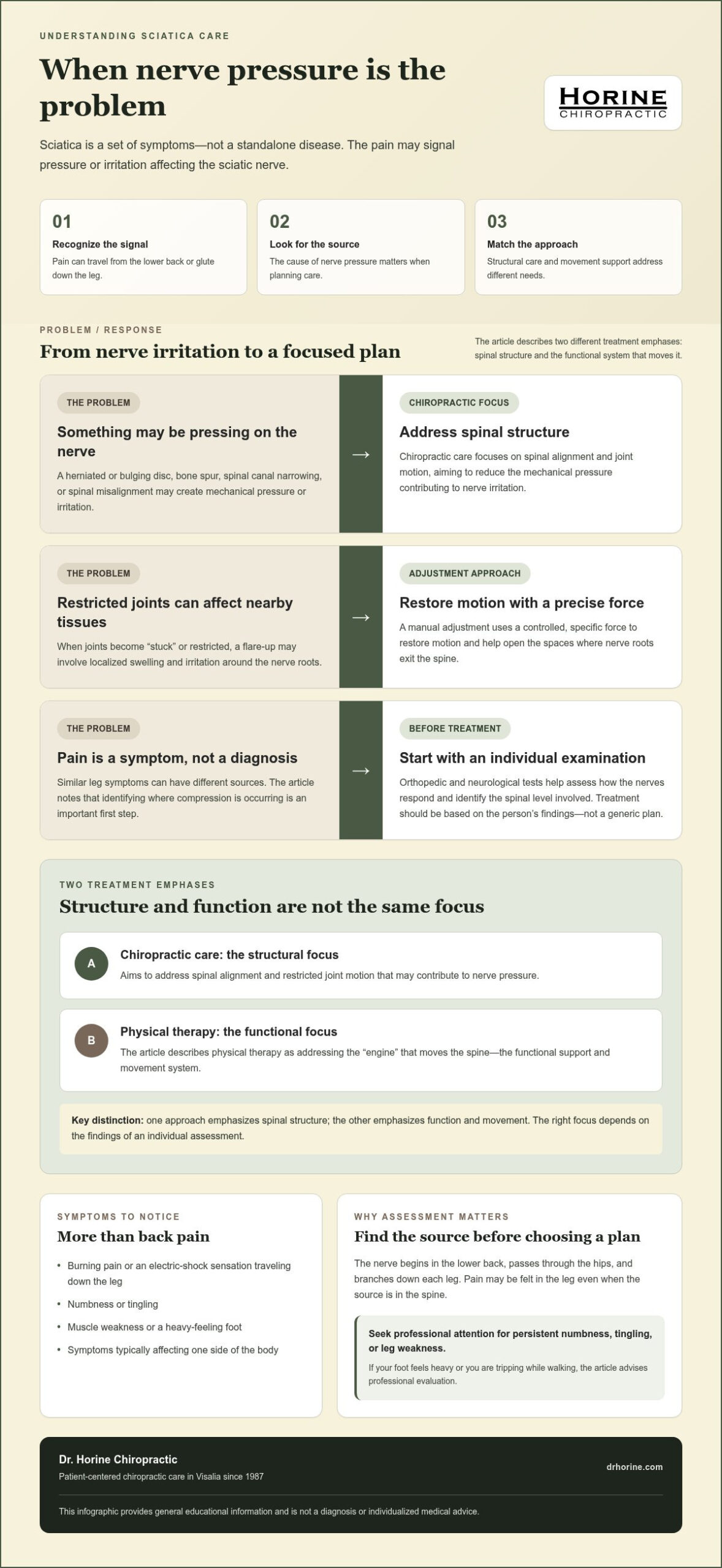
Sciatica isn’t a medical condition you “catch” like a cold. It is a specific set of symptoms signaling that something is physically pressing on the sciatic nerve. As the longest and thickest nerve in your body, it starts in your lower back, runs through your hips, and branches down each leg. When this nerve gets pinched or irritated, it sends a distinct, unmistakable signal. Understanding the Sciatic ‘Lightning Bolt’ means recognizing that sharp, searing pain that travels from your glute down to your calf. It is a mechanical problem that requires a clear solution, which is why the conversation around chiropractic vs physical therapy for sciatica often begins the moment the pain becomes unbearable.
While the pain can feel like it’s coming from your leg, the root of the issue is almost always in your spine. Whether the pressure comes from a herniated disc, a bone spur, or spinal stenosis, the result is the same: a nerve that is being squeezed and inflamed. Identifying the specific source of that pressure is the first step toward finding relief that lasts.
Common Symptoms: More Than Just Back Pain
While many people associate this condition with a dull ache in the lower back, the reality is often much more intense. You might experience a burning sensation or a sudden, electric shock that makes it difficult to stand up straight. These symptoms typically only affect one side of your body. This happens because the nerve roots exit the spine on both the left and right sides; it’s rare for a single injury to compress both simultaneously. Pay close attention to “red flag” symptoms like persistent numbness, tingling, or muscle weakness in your leg. If your foot feels heavy or you find yourself tripping while walking, the nerve is likely experiencing significant compression that needs professional attention.
The Root Causes of Nerve Irritation
So, what is actually causing that pinch? Most often, it’s a herniated or bulging disc. Imagine your spinal discs as small, flexible cushions; if one bulges out of place, it takes up space meant for the nerve. Bone spurs or a narrowing of the spinal canal can also create this mechanical pressure. In many cases, a simple spinal misalignment is the culprit. When vertebrae aren’t stacked correctly, they can irritate the nerve pathways. Choosing between chiropractic vs physical therapy for sciatica often depends on whether you need to fix the alignment of the bones or strengthen the muscles supporting them. Ignoring these signals and trying to “tough it out” is risky, as prolonged compression can lead to chronic nerve damage.
Chiropractic Care: Addressing the Structural Root of Nerve Compression
If you are weighing the benefits of chiropractic vs physical therapy for sciatica, you’re likely searching for the fastest way to stop that shooting pain. Chiropractic care focuses primarily on the spine’s structure. Think of your spine as a series of moving parts that must stay perfectly aligned to protect the delicate nerves inside. When a vertebra shifts even slightly out of place, it creates mechanical pressure on the sciatic nerve. The primary goal of a chiropractor is to restore that alignment, physically removing the obstacle that’s causing your distress.
By correcting these misalignments, we don’t just mask the symptoms. We improve your body’s natural ability to heal the surrounding soft tissues. When the mechanical pressure is gone, blood flow to the area improves and inflammation begins to subside. This is why many patients notice a significant shift in their comfort levels after just the first few sessions. The body finally has the space it needs to recover without the constant irritation of a pinched nerve.
How Manual Adjustments Relieve Sciatica
The biomechanics of an adjustment are straightforward but precise. A manual adjustment is a controlled, specific force applied to a joint. This movement helps “open up” the narrow spaces between your vertebrae where nerve roots exit the spinal column. By restoring motion to joints that have become “stuck” or restricted, we reduce the localized swelling that often accompanies a flare-up. For more advice on managing these painful moments, you can look at this Head-to-Head Comparison: Choosing the Best Path for Your Recovery to see how immediate structural care can change your trajectory.
The Diagnostic Phase: Why the Exam Matters Most
Real relief starts with a thorough investigation rather than a generic treatment. During your first visit, we perform detailed orthopedic and neurological tests to see exactly how your nerves are responding. This isn’t about a one-size-fits-all approach. It’s about identifying the exact level of the spine, such as the L4 or L5 vertebrae, where the compression is happening. A specialized chiropractic for nerve compression assessment ensures your plan is built for your specific disc health. We have served the Visalia community since 1987 with this patient-centered approach, focusing on honest results. If you’re ready to find out what is truly causing your pain, scheduling a thorough physical exam is the most logical next step toward getting your life back.
Physical Therapy: Building the Functional Support System
While chiropractic care focuses on the structural alignment of your spine, physical therapy addresses the “engine” that moves it. If your vertebrae are the frame of a house, your muscles are the support beams and braces. When choosing between chiropractic vs physical therapy for sciatica, it helps to view physical therapy as the functional side of recovery. Its primary role is to strengthen the specific muscles that support your spine and hips, ensuring that once your alignment is restored, it actually stays that way.
This approach is fundamentally “active.” While early chiropractic care is often passive, meaning the doctor performs the treatment on you, physical therapy requires your participation. You’ll learn specific movements designed to take the mechanical load off your lower back. By focusing on the soft tissues, physical therapy helps relieve chronic tension in areas like the piriformis and hamstrings, which often tighten up as a protective response to nerve pain.
Strengthening and Stabilizing the Core
A major focus of any physical therapy plan is building what experts call the “internal corset.” This refers to the transverse abdominis, the deep core muscle that wraps around your midsection. When this muscle is strong, it acts as a natural brace for your spinal discs. Targeted exercises help prevent your spine from slipping back into the painful positions that caused the initial nerve pinch. Proper posture correction is also a cornerstone of this process. You’ll discover how small changes in how you sit or stand can significantly reduce the daily wear and tear on your lower back.
Mobility and Stretching Techniques
Physical therapy also utilizes advanced stretching techniques like neural flossing. This involves specific, gentle movements that help the sciatic nerve glide smoothly through the surrounding tissue rather than getting “snagged” on inflamed areas. We also look for muscle imbalances that might be pulling your pelvis out of its natural alignment. However, it’s a common mistake to think stretching alone is the cure. If a joint is physically restricted or a vertebra is misaligned, stretching the attached muscle can sometimes pull on the nerve even harder. This is why understanding the balance of chiropractic vs physical therapy for sciatica is so vital; you often need to clear the structural path before the functional training can truly take hold. For more insights on how specialized clinics integrate these modalities, you can explore Rehabilitacja kręgosłupa at Centrum Medyczne Mesir.
Deciding between chiropractic vs physical therapy for sciatica doesn’t have to be a coin flip. The choice usually depends on your immediate goal and the current state of your pain. Chiropractic care acts as your structural specialist. Its primary aim is to move the bone away from the nerve to stop the “lightning bolt” in its tracks. Physical therapy serves as your functional specialist. It builds the muscular strength and stability required to keep your spine supported during daily movement.
If you’re in the middle of an intense flare-up, chiropractic care often provides a faster path to initial relief. It addresses the mechanical pinch directly, which can lower your pain levels enough to make other movements possible. Physical therapy is more of a marathon. It builds the endurance and habit changes your body needs to stay pain-free for years. For many of our neighbors, a combined approach is the gold standard. You use adjustments to clear the structural path and exercises to pave the road for lasting health. To see how integrated clinical services can benefit your recovery journey, check out Therapeutic Streams Sport Rehab.
When to See a Chiropractor First
If your pain started with a sudden movement, like a “tweak” while lifting or a sharp twist, a chiropractor should likely be your first stop. This type of acute pain often signals a joint that has shifted or become restricted. When you feel “stuck” and can’t find a comfortable position to sit or sleep, the issue is structural. You need a sciatica treatment in Visalia that focuses on the bone-on-nerve connection to decompress the area immediately. We focus on these manual adjustments to help you find relief without the need for invasive procedures or drugs.
Lifestyle Considerations for Visalia Residents
Your daily routine in Visalia plays a massive role in your spinal health. Our local desk workers often face the consequences of prolonged sitting, which causes the hip flexors to tighten and the lower back to round. This constant pressure can eventually lead to a disc bulge. Conversely, those working in our local agricultural and trade industries deal with repetitive stress and heavy lifting. These physical demands can cause vertebrae to shift out of alignment over time, leading to chronic nerve irritation.
Maintaining your long term wellness means understanding these specific risks before they become permanent injuries. Whether you spend your day in an office or out in the fields, your spine needs regular maintenance to handle the load. If you’re tired of guessing which treatment you need, we’re here to provide clarity. Contact Dr. Horine’s office today to schedule a thorough exam and get a clear, personalized plan for your recovery.
Targeted Sciatica Relief in Visalia: The Dr. Horine Difference
Since 1987, Dr. Horine Chiropractic has been a trusted neighbor for families in Visalia. Our approach isn’t built on high-pressure sales or assembly-line treatments. It’s built on a patient-centered philosophy. This means we value the act of listening as much as the act of treating. We know you’ve likely spent weeks or months feeling unheard while your pain worsened. When you walk into our clinic, the first thing we do is listen to your story. We want to understand how your pain affects your ability to walk, work, and enjoy life in the Central Valley.
We believe in honest care. This transparency is the foundation of our practice. If we determine that your specific condition won’t benefit from manual adjustments, we’ll tell you immediately. We aren’t here to keep you coming back for treatments that don’t work. If your situation requires a different type of provider, we’ll guide you to the right person. Our 35 plus years of experience have taught us that integrity is the only way to build a lasting healthcare partnership.
What to Expect During Your Initial Diagnostic Consultation
Many articles about chiropractic vs physical therapy for sciatica skip the most important part: the diagnosis. You can’t fix a problem you haven’t properly identified. Your first visit is unhurried and methodical. We perform a thorough physical examination that focuses on your spinal mechanics and nerve function. We look at how you move, where your reflexes stand, and exactly which nerve roots are under pressure. This diagnostic-first approach removes the guesswork from your recovery.
Once we understand the root cause, we create a personalized treatment plan. These plans prioritize quick relief to get you through the day and long-term stability to ensure the pain doesn’t return. You’ll leave your first visit with a clear, structured path forward. Our goal is the removal of the uncertainty that often accompanies chronic pain, replacing it with a concrete plan for improvement.
Your Next Steps Toward Pain-Free Living
You don’t have to “just live with” the shooting pain or the numbness. Addressing leg pain from back issues early is critical. The longer a nerve is compressed, the higher the risk of lasting damage. We’ve helped thousands of Visalia residents return to their normal routines through non-invasive, manual care. It’s about getting back to the things you love without the constant shadow of discomfort.
Booking your consultation is simple. You can reach out to our office by phone or use our online booking tool to find a time that works for you. While we don’t offer weekend appointments, we focus on providing attentive, thorough care during our standard hours. Let’s work together to find the clarity you need. Take the first step toward a more comfortable, active life today.
Take Control of Your Path to Sciatica Recovery
Choosing the right path for your recovery doesn’t have to feel like a guessing game. By understanding the balance between structural alignment and functional strength, you can move past the confusion and focus on what actually works for your body. When weighing chiropractic vs physical therapy for sciatica, the goal is always to find the most direct route to relief and long term stability. Whether you need an immediate adjustment to decompress a nerve or targeted exercises to support your spine, the key is starting with a plan built specifically for you.
Since 1987, we’ve focused on serving Visalia families with honest, non-surgical manual relief techniques. We believe every patient deserves a clear answer, which is why we provide comprehensive diagnostic exams for every new neighbor who walks through our doors. You don’t have to accept sharp pain or numbness as your new normal. Schedule Your Targeted Sciatica Assessment with Dr. Horine Today to get the clarity and comfort you deserve. We’re here to help you get back to your active life with confidence.
Frequently Asked Questions
Is chiropractic or physical therapy better for a herniated disc?
Both approaches offer valuable benefits, but chiropractic care is often the most logical first step for addressing the structural pinch of a herniated disc. By performing manual adjustments, we help restore proper alignment to the vertebrae, which can physically reduce the pressure on the nerve root. Once the mechanical “kink” is resolved, physical therapy can then be used to strengthen the supporting muscles and prevent future bulges from occurring.
How many sessions of chiropractic care are usually needed for sciatica?
Every recovery timeline is unique, but a typical course of care for an acute issue often involves 6 to 12 visits over 4 to 8 weeks. Some patients in Visalia feel significant relief after just one or two adjustments, while others with chronic issues require more consistent sessions to achieve long term stability. We provide a clear, structured plan after your initial exam so you know exactly what to expect.
Can I do physical therapy exercises if my back is still out of alignment?
It is generally more effective to resolve structural misalignments before starting intensive strengthening exercises. If you try to build muscle around a joint that is physically restricted or out of place, you may accidentally reinforce a painful movement pattern. When comparing chiropractic vs physical therapy for sciatica, many people choose to clear the structural path first, which makes their subsequent physical therapy exercises much more productive and comfortable.
Is it safe to get a chiropractic adjustment for shooting leg pain?
Yes, manual adjustments are a safe and non-invasive way to manage shooting leg pain when performed after a thorough physical exam. We use orthopedic and neurological testing during your first visit to ensure your spine is ready for care. By applying a controlled, specific force to the restricted joint, we can often reduce the immediate pressure on the sciatic nerve and calm the inflammation causing that “lightning bolt” sensation.
What happens if neither chiropractic nor physical therapy works for my sciatica?
If conservative treatments don’t provide the relief you need, we follow an “honest care” policy and refer you to a specialist who can. This might include an orthopedic surgeon or a specialist for imaging like an MRI. While we don’t perform surgery or in-house imaging at our Visalia office, we act as your partner in health to ensure you find the most effective path toward a pain-free life.
Do I need a referral to see a chiropractor in Visalia for sciatica?
In most cases, you don’t need a medical referral to schedule an appointment at our Visalia clinic. Chiropractors are primary care providers for musculoskeletal issues, so you can contact us directly to begin your assessment. It’s always a good idea to check with your specific insurance provider regarding your coverage, but we are happy to help you navigate those details when you call to book your initial diagnostic consultation.
Can sciatica go away on its own without professional treatment?
While some mild cases may seem to settle with rest, ignoring persistent sciatica is risky. Without addressing the underlying cause, such as a structural misalignment or a bulging disc, the pain often returns with greater intensity. Professional care helps you move past the symptoms to fix the root problem. This proactive approach prevents temporary discomfort from turning into chronic nerve damage or permanent muscle weakness in your leg or foot.
How long does a typical chiropractic visit for sciatica last?
Your initial diagnostic consultation is unhurried and thorough, typically lasting about 30 to 45 minutes as we perform a full physical exam. Regular follow-up adjustment sessions are more focused and usually take between 10 and 20 minutes. This methodical rhythm ensures you receive the personalized attention you need without spending your entire afternoon in a waiting room. We value your time and focus on practical, results-driven care for our neighbors.
Article by
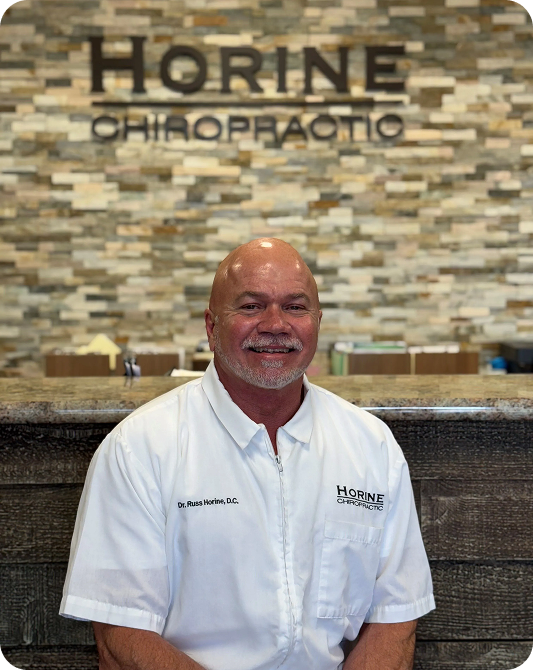
Dr. Russell Horine, DC Chiropractor
Horine Chiropractic has established a strong reputation for delivering exceptional results in treating complex back and neck pain cases. Their primary objective is to serve patients efficiently and compassionately, aiding them in their journey to wellness. Horine Chiropractic uses a comprehensive, groundbreaking approach to treating stubborn back and neck pain. They have been helping Visalia’s backs, necks, and everything in between for a combined 45 years. They create a comprehensive approach to help their patients meet their health needs. Horine Chiropractic customizes treatment plans to meet each patient's unique health needs. The clinic is accepting new patients and providing compassionate care to those in need.
Medical Disclaimer
This content is provided for general educational and informational purposes only and is not intended as medical advice, diagnosis, or treatment. Individual conditions and treatment needs vary. Please consult a qualified healthcare professional regarding your specific symptoms and treatment options.