

What if your chiropractic schedule was determined by your body’s actual healing stages rather than a generic office calendar? It’s a common worry. You want to find relief for that nagging neck stiffness or lower back pain, but you’re likely wondering how often should you get a chiropractic adjustment to see real results without being pressured into a “forever” treatment plan. You shouldn’t feel like a recurring subscription or a number on a spreadsheet. We understand that hesitation, and we believe you deserve a clear, honest roadmap to recovery without the high-pressure sales tactics often found in healthcare.
In this guide, we’ll explore a science-based framework that moves you from immediate pain relief to long-term wellness maintenance. You’ll learn what to expect during each phase of healing and how to recognize when your body is ready for the next step. Our goal is to provide a transparent timeline for feeling better, giving you a sense of control over your own health plan and a clear path back to your normal, comfortable self.
Key Takeaways
- Frequency depends on your unique situation, including whether you’re managing a sudden injury or a long-standing chronic condition.
- Discover how the science-based stages of care determine how often should you get a chiropractic adjustment to move from immediate relief to lasting stability.
- Learn to identify the subtle physical cues, like a loss of range of motion or a persistent dull ache, that signal your spine needs professional attention.
- Explore how targeted plans for conditions like sciatica or neck pain help break the cycle of tension and restore your natural comfort.
- Understand why a thorough initial diagnostic exam is the foundation of an honest, personalized treatment plan that respects your time and health goals.
Understanding the Variables: What Really Determines Your Adjustment Schedule?
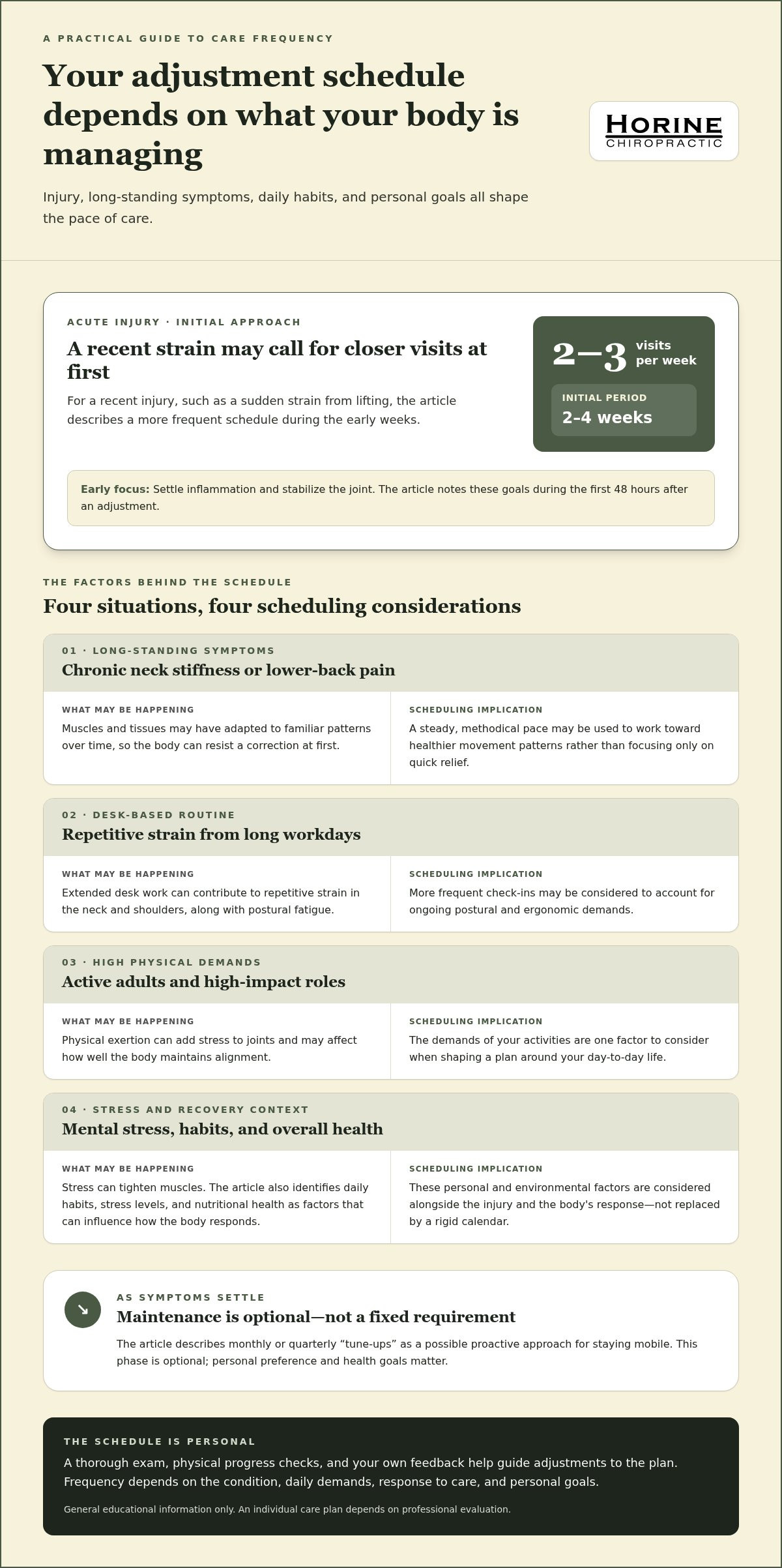
Determining your frequency isn’t about following a rigid office policy. It’s about listening to your body’s specific signals and understanding how it heals. When you ask how often should you get a chiropractic adjustment, you’re really asking how quickly your nervous system can adapt to positive change. Every person responds uniquely to a Spinal adjustment, and our role is to monitor that response with professional confidence and empathy. Your schedule is a living plan, influenced by the depth of your injury, your daily habits, and your personal health goals.
Acute Injuries vs. Chronic Conditions
A recent injury, such as a sudden strain from lifting a heavy box, usually requires a front-loaded approach. In these acute cases, we often see patients two or three times a week for the initial two to four weeks. The primary goal during the first 48 hours after an adjustment is to settle inflammation and stabilize the joint. By visiting more frequently at the start, we prevent the injury from hardening into a permanent, painful pattern.
Chronic conditions present a different challenge. If you’ve lived with neck stiffness or lower back pain for years, your muscles have developed a stubborn memory for that poor alignment. Your body might actually resist the correction at first, trying to pull the spine back into its old, crooked habit. Retraining these tissues takes a steady, methodical pace. It’s a process of building new, healthier patterns rather than just chasing a quick fix.
Lifestyle and Environmental Factors
Your daily environment plays a massive role in how well you hold an adjustment. Many of our neighbors in Visalia spend their workdays at a desk, which creates a specific type of repetitive strain on the neck and shoulders. This postural fatigue means you might need more frequent check-ins to counteract the constant effects of gravity and poor ergonomics. Your body’s ability to maintain alignment is also tied to your internal state, including your stress levels and nutritional health.
Active adults or those in high-impact physical roles face different stressors. Physical exertion can lead to quicker wear and tear on the joints, while high mental stress causes muscles to tighten, often pulling the spine out of place more rapidly. During your first visit chiropractic exam, we look closely at these external factors. We want to build a plan that fits your actual life, ensuring you feel informed and empowered at every stage of your recovery.
The Three Phases of Chiropractic Care: A Goal-Oriented Framework
Healing isn’t a single event; it’s a biological progression that requires different levels of attention at different times. By breaking your treatment into three distinct stages, we can provide a clear answer to how often should you get a chiropractic adjustment based on your body’s current needs. This framework removes the guesswork and ensures you’re always moving toward a more stable, comfortable state. We monitor your progress through physical exams and your own feedback to know exactly when it’s time to move to the next phase.
Phase 1: Finding Immediate Relief
This is often called the “emergency” stage. When you first visit us with sharp pain or significant restriction, the focus is purely on comfort and functional improvement. During these first 2 to 4 weeks, we prioritize reducing localized inflammation and easing nerve compression. Because your body is still in a reactive, unstable state, missing appointments during this window can easily lead to a relapse of symptoms. Consistency at the start is vital to break the pain cycle and prepare your tissues for deeper work.
Phase 2: Strengthening and Stability
Maintenance care is like a regular dental cleaning for your spine. The logic behind monthly or quarterly “tune-ups” is to catch minor misalignments before they become major crises. Research on how often you should get a chiropractic adjustment suggests that many people benefit from this proactive approach to stay mobile and pain-free. However, this phase is entirely optional. We provide the information and professional guidance, but you decide how wellness maintenance fits into your personal health philosophy. If you’re ready to start your own journey toward relief, the team at Dr. Horine Chiropractic is ready to listen and help you build a plan that works.
Frequency Guidelines for Common Musculoskeletal Conditions
Your body doesn’t experience pain in a vacuum. A sharp pinch in your lower back requires a different clinical approach than the slow, heavy ache of a tension headache. When people ask how often should you get a chiropractic adjustment, the answer depends heavily on the specific tissues involved. We look at the role of chiropractic care as a targeted tool for your unique condition, whether it’s a spinal issue or pain in your extremities like shoulders and knees. Each tissue type has its own healing timeline that we must respect.
Sciatica and Nerve Compression
Nerve-related pain is often the most intense and disruptive. Seeking sciatica treatment in Visalia usually involves a more frequent schedule during the first few weeks. Because the sciatic nerve is being compressed or irritated, we need to provide consistent relief to keep the pressure off and allow inflammation to subside. We track your progress by looking for “centralization.” This is a phenomenon where pain that was shooting down your leg begins to move back toward your lower back. It’s a clear, positive sign that the nerve is healing. Most patients with acute sciatica see significant changes within the first two to four weeks of intensive care.
Neck Pain and Tension Headaches
If you’re looking for neck pain specialists in Visalia, you’re likely dealing with cervicogenic headaches or “tech neck” from long hours at a computer. These conditions often stem from a stubborn cycle of muscle tension and spinal restriction. To break this cycle, we might suggest adjustments once or twice a week initially. We balance these visits with ergonomic advice to help you stay comfortable between appointments. For migraine sufferers, the frequency might vary based on your specific triggers and the intensity of your episodes. The goal is always to reduce the frequency and severity of the pain until you can transition to a more relaxed maintenance schedule.
Lower back pain and joint issues in the hips or knees also follow this logical progression. We focus on the core of your mobility, ensuring the foundation of your body is stable and aligned. Whether you’re dealing with a chronic ache or a sudden flare-up, we help you understand how often should you get a chiropractic adjustment to regain your full range of motion. We treat you as a whole person, not just a set of symptoms, ensuring every visit brings you closer to your normal, active life.
Listen to Your Body: Signs You Need an Adjustment
Your body is a sophisticated communication system. It doesn’t just experience pain; it sends specific signals to let you know when its foundation is off balance. Learning to interpret these cues is one of the best ways to determine how often should you get a chiropractic adjustment. While we provide the clinical expertise, your daily sensations provide the essential data we need to personalize your care. We want you to feel empowered to recognize these changes before they become debilitating.
One of the most reliable indicators is the difference between a dull ache and a sharp pinch. A dull ache usually suggests that your muscles are working overtime to stabilize a restricted joint, while a sharp pinch often indicates direct nerve irritation. Beyond pain, you should watch for a loss of range of motion. If you notice you can’t turn your head as far when checking your blind spot or if your hips feel “stuck” when standing up, your spine is likely experiencing restriction that needs professional attention.
Physical Cues and Warning Signs
Many people ignore morning stiffness, assuming it’s just a natural part of aging. However, if that stiffness doesn’t walk off within fifteen minutes of moving, it’s often a sign that your joints aren’t moving through their healthy range. Your spinal health also has a surprising connection to your overall energy levels. Because your spine houses your central nervous system, restrictions can lead to a sense of general fatigue or even subtle digestive issues. Taking a wait-and-see approach with these symptoms often allows a manageable issue to develop into a much more complex problem.
The Concept of ‘Holding’ an Adjustment
The ultimate goal of chiropractic care is for your body to “hold” its alignment. This means that your muscles and ligaments have become strong enough to keep your spine in its proper place between visits. During your appointments, we use diagnostic checks to see if an adjustment is actually necessary that day. If your spine is holding, we may decide to leave it alone. This honest care approach ensures you’re only adjusted when your body truly needs it, which is a key factor in deciding how often should you get a chiropractic adjustment as you progress.
We often utilize the Rule of Three to monitor your journey. This involves assessing your progress over three consecutive visits to see how your body is adapting to the corrections. If you’re holding your alignment longer, we naturally extend the time between your visits. This methodical approach builds trust and helps you understand your own musculoskeletal rhythms rather than feeling tethered to a rigid schedule. If you’re ready for a healthcare partner who listens to your body as much as you do, contact the team at Dr. Horine Chiropractic to schedule your thorough assessment.
A Personalized Path to Relief at Dr. Horine Chiropractic
Choosing a healthcare provider is a significant decision. You want someone who listens as much as they treat. At our practice, we reject the “one-size-fits-all” mentality that often leads to uncertainty about how often should you get a chiropractic adjustment. Instead, we offer our Honest Care Guarantee. This means we only recommend the specific frequency you actually need to reach your goals. We aren’t interested in high-pressure tactics or long-term contracts; we’re interested in your results and your comfort.
Your Personalized Diagnostic Assessment
Every journey begins with a thorough investigation. During your first visit chiropractic exam, we move beyond just looking at your symptoms. We look for the root cause of your nerve pressure or structural misalignment. This initial consultation is the most important step in determining your treatment roadmap. It allows us to create a plan that respects both your time and your budget while giving you a clear timeline for feeling better.
We also believe in the power of a coordinated healthcare team. If your condition requires insights from your primary care physician or another specialist, we’re happy to coordinate that communication. This level of thoroughness ensures that your plan is safe, effective, and perfectly tailored to your body’s specific healing rhythm. We treat people, not just symptoms, ensuring you feel heard and understood throughout the entire process.
The Dr. Horine Difference in Visalia
Dr. Horine has been serving the Visalia community since 1987. This 35-plus years of experience matters because it provides a deep, seasoned understanding of how different bodies respond to care over time. We’ve seen almost every type of musculoskeletal challenge, from acute sciatica to chronic tension headaches. This perspective allows us to be pragmatic and upfront about your expectations, removing the fear of the unknown that often accompanies a new treatment.
Our first priority is always quick relief. We want to get you back to your normal state of being as efficiently as possible. Once you’re comfortable, we discuss the benefits of corrective or maintenance care, but the final choice is always yours. We position ourselves as your partner in health, providing the clarity you need to decide how often should you get a chiropractic adjustment for your long-term wellness. If you’re ready to stop guessing and start healing, we invite you to schedule your assessment today and start your path toward lasting relief.
Take the First Step Toward Lasting Comfort
Your journey toward better health doesn’t have to be a mystery. By understanding the distinct phases of healing and learning to interpret your body’s unique signals, you can move away from persistent pain and toward a state of lasting stability. Determining how often should you get a chiropractic adjustment is a collaborative process. It’s about finding a frequency that respects your lifestyle while effectively addressing the root cause of your discomfort, whether that’s recurring neck stiffness or sharp leg pain.
Dr. Horine has provided honest, patient-centered care to the Visalia community since 1987. Our practice is built on the foundation of thorough, comprehensive exams that eliminate the guesswork and ensure we only recommend the care you truly need. We reject high-pressure sales tactics, opting instead to act as your partner in the recovery process. You deserve a healthcare experience that prioritizes your relief and empowers you with clarity at every stage.
Ready to reclaim your mobility and live without the constant distraction of physical restriction? Schedule Your Personalized Consultation with Dr. Horine Today and discover a clear, science-based path back to your best self. We look forward to helping you feel comfortable, strong, and fully in control of your health once again.
Frequently Asked Questions
Is it possible to get adjusted too often?
It is possible to receive adjustments too frequently, which can lead to joint instability or hypermobility. Our practice in Visalia focuses on a methodical approach where we only adjust when your spine truly needs it. We use diagnostic checks during every visit to see if your body is holding its previous alignment. If your joints are moving correctly, we leave them alone to ensure your supportive ligaments remain strong and stable.
How long does a typical chiropractic treatment plan last?
A typical plan is divided into stages based on your specific goals. For acute relief, you might see us for two to four weeks. If we are working on corrective care to change long-standing structural habits, the plan could extend for several months. We always provide a clear roadmap during your initial assessment so you know exactly what to expect. Every plan is personalized to your body’s unique healing rate.
Will I have to keep going to the chiropractor forever?
You aren’t required to continue care indefinitely, though many patients choose to. Once we achieve your goals for pain relief and spinal stability, you can stop treatment. Some Visalia residents transition to wellness care, which involves monthly or quarterly check-ins to prevent new injuries. This proactive approach is entirely optional and depends on your personal health philosophy. Our priority is getting you back to your normal, active life.
What happens if I stop going once the pain is gone?
If you stop care immediately after the pain vanishes, you might leave underlying structural issues uncorrected. Pain is often the last symptom to appear and the first to leave. Stopping too early can lead to a relapse because the muscles and ligaments haven’t had enough time to strengthen in their new, healthy positions. We help you understand how often should you get a chiropractic adjustment to ensure your relief is lasting.
Can I get an adjustment just once to see if it helps?
You can certainly visit us for a single session to experience how an adjustment feels. While a single visit can provide immediate relief for minor tension, it’s rarely enough to resolve chronic or complex issues like sciatica. A comprehensive first-visit exam is essential to understand why you’re in pain. This diagnostic step ensures that even a single treatment is safe and targeted toward your specific physical needs.
How do I know if my chiropractic adjustments are actually working?
You’ll know your care is working when you experience a measurable increase in your range of motion and a decrease in pain intensity. Other positive signs include improved sleep quality, higher energy levels, and a reduction in the frequency of your symptoms. We use physical re-evaluations in our Visalia office to track these changes objectively. When you find your body holding its alignment for longer periods, it’s a clear sign of progress.
Does insurance typically cover frequent chiropractic visits?
Most insurance providers cover chiropractic care when it is deemed medically necessary to treat a specific condition like lower back pain or sciatica. Coverage often includes the initial exam and a set number of adjustment sessions per year. However, many plans don’t cover maintenance or preventive care once your symptoms have resolved. We recommend checking your specific policy details; our team can help clarify how your benefits apply to your treatment.
Should I get adjusted if I’m not currently in pain?
Proactive adjustments can be very beneficial for maintaining spinal hygiene and preventing future crises. Many people in Visalia seek care to address silent restrictions that haven’t yet caused pain but are limiting their mobility. Regular check-ins help identify these minor misalignments early. This preventive approach is a key part of deciding how often should you get a chiropractic adjustment to stay active and avoid the sudden onset of debilitating stiffness.

Article by
Dr. Russell Horine, DC Chiropractor
Horine Chiropractic has established a strong reputation for delivering exceptional results in treating complex back and neck pain cases. Their primary objective is to serve patients efficiently and compassionately, aiding them in their journey to wellness. Horine Chiropractic uses a comprehensive, groundbreaking approach to treating stubborn back and neck pain. They have been helping Visalia’s backs, necks, and everything in between for a combined 45 years. They create a comprehensive approach to help their patients meet their health needs. Horine Chiropractic customizes treatment plans to meet each patient's unique health needs. The clinic is accepting new patients and providing compassionate care to those in need.
Medical Disclaimer
This content is provided for general educational and informational purposes only and is not intended as medical advice, diagnosis, or treatment. Individual conditions and treatment needs vary. Please consult a qualified healthcare professional regarding your specific symptoms and treatment options.