

If your jaw feels sore or tired after clenching, you may not realize when you’re doing it. If you’re wondering how to relieve jaw pain from clenching, start by easing the strain instead of forcing your jaw to stretch or push through discomfort. Clenching can happen while you’re focused or asleep, and soreness may affect eating, speaking, or rest.
Jaw pain can involve the muscles, the joint, dental concerns, or a combination of factors. Gentle comfort measures may help reduce irritation while you notice possible triggers. This guide explains how clenching may contribute to jaw, head, or neck discomfort, and offers low-risk steps such as adjusting foods and relaxing your jaw. It also explains when persistent or concerning symptoms warrant evaluation and when to seek urgent medical care. These suggestions are general information, not a diagnosis or a substitute for advice tailored to you.
Key Takeaways
- Clenching or grinding can leave your jaw tight, tired, or sore, but symptoms alone don’t confirm the cause.
- Learn gentle steps to relieve jaw pain from clenching that reduce strain without forcing your jaw to stretch.
- Notice whether discomfort seems connected to stress, concentration, sleep, or chewing, and track how it changes.
- Persistent or worsening pain deserves professional evaluation. A locked jaw, significant swelling, fever, or injury calls for prompt care.
How clenching can lead to jaw pain, and what relief can realistically mean
A tight, sore, or tired jaw can make everyday tasks such as chewing and talking uncomfortable. Clenching may be part of the picture, even if you don’t notice it happening. The habit is called bruxism, which means clenching or grinding your teeth while awake or asleep. Bruxism can involve either behavior, but jaw pain alone doesn’t confirm that you have it.
Relief may mean easing the workload on tender muscles and noticing habits that could be adding strain. One step may not resolve every symptom, and some individuals explore broader wellness modalities—such as those at the Quantum Resonant Healing Center—to help address chronic stress and physical tension. The best next step depends on what’s causing the discomfort.
What are TMJ and TMD, and how are they different?
The temporomandibular joint, or TMJ, connects your jaw to your skull on each side of your head. TMD, short for temporomandibular disorders, refers to a group of conditions affecting the jaw joints and surrounding muscles. Bruxism is clenching or grinding; TMD is a group of disorders affecting the jaw joint and surrounding muscles. Jaw pain by itself doesn’t establish either diagnosis.
Why clenching may make your jaw feel sore
Jaw muscles contract to hold the teeth together or move the jaw. Repeated or prolonged contraction can leave them tired or tender, much like other muscles after sustained effort. Headaches or neck discomfort can occur alongside jaw symptoms, but that overlap doesn’t prove they share one cause. If neck discomfort is also affecting you, we can also discuss back and neck pain care during a personalized musculoskeletal evaluation.
To relieve jaw pain from clenching, start by distinguishing a possible habit from a confirmed diagnosis. Notice when discomfort appears and share that information with a healthcare professional when discussing appropriate next steps.
Why you may clench your jaw, and the symptoms worth noticing
Jaw clenching doesn’t always have one clear trigger. Stress or concentration may play a role for some people, while sleep habits and other factors may be relevant for others. These are possibilities, not proof of what’s causing your symptoms. The Mayo Clinic’s overview of bruxism describes several possible influences and symptoms.
You might wake with tenderness, notice jaw fatigue later in the day, or feel discomfort while chewing. Tooth sensitivity, headaches, and discomfort near the ears can also occur, but each can have causes unrelated to clenching. Symptoms vary, and no single symptom pattern identifies a diagnosis or its cause.
How to notice daytime clenching without blaming yourself
During a focused task, take a brief, neutral pause: are your teeth pressed together, or is your jaw relaxed? If you notice tension, let your jaw rest comfortably rather than criticizing yourself. Constant monitoring isn’t necessary. Occasional check-ins can help you recognize a habit without turning awareness into another source of stress.
What a symptom pattern can, and cannot, tell you
For a short time, note when discomfort appears, what you were doing, and what seems to ease or worsen it. For example, record whether tenderness is present on waking or builds during a day with lots of chewing. Include other symptoms, such as a headache or tooth sensitivity, and whether they happen at the same time. These notes can help you describe your experience during an assessment, but they can’t determine the cause.
If symptoms keep returning or interfere with normal activities, a professional evaluation can help clarify appropriate next steps. In Visalia, you can schedule an appointment with Dr. Horine Chiropractic to discuss your musculoskeletal concerns. Recognizing possible triggers and patterns is one part of learning how to relieve jaw pain from clenching, but it doesn’t replace an individualized assessment.
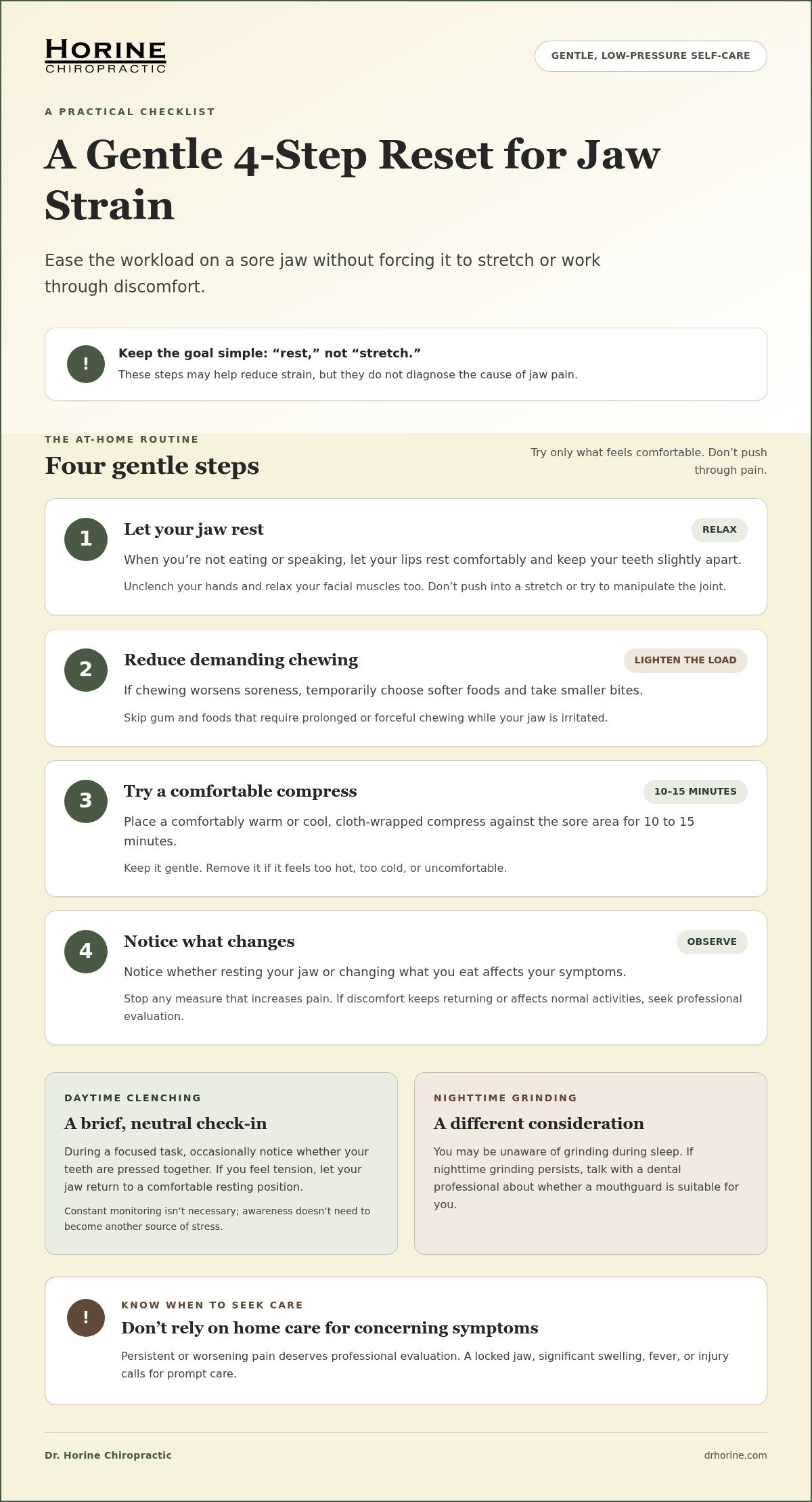
How to relieve jaw pain from clenching with gentle steps at home
A simple, low-pressure routine may help ease jaw strain and show you what affects your comfort. Try these steps without forcing your jaw to move farther than feels comfortable.
- Let your jaw rest. When you’re not eating or speaking, allow your lips to rest comfortably and keep your teeth slightly apart. Unclench your hands and relax your facial muscles too. Don’t push your jaw into a stretch or try to manipulate the joint.
- Reduce demanding chewing. If chewing worsens the soreness, temporarily choose softer foods and smaller bites. Skip gum and avoid foods that require prolonged or forceful chewing while your jaw is irritated.
- Try a comfortable compress. Place a comfortably warm or cool, cloth-wrapped compress against the sore area for 10 to 15 minutes. Keep it gentle, and remove it if it feels too hot, too cold, or uncomfortable.
- Observe what changes. Notice whether resting your jaw or changing what you eat affects your symptoms. Stop any measure that increases pain.
A gentle reset for a tense jaw
Think “rest,” not “stretch.” A relaxed jaw doesn’t require you to hold your teeth together. Check in occasionally, especially during focused tasks, then let your mouth return to a comfortable position. This brief reset can help you relieve jaw pain from clenching without adding more strain.
Daytime habits and nighttime dental protection
Noticing and easing daytime clenching differs from protecting your teeth during sleep, when you may not notice grinding. If nighttime grinding persists, talk with a dental professional about whether a mouthguard is suitable for you. For broader facial tension and wellness support, some individuals also consult aesthetic practices like Injections & Co. to explore complementary options. An evaluation can also help clarify which next steps fit your symptoms.
Keep self-care gentle, and stop any step that increases pain rather than pushing through it.
When jaw pain needs professional evaluation, and what to expect in Visalia
Home care isn’t a substitute for an assessment if jaw pain persists, keeps returning, worsens, or makes eating and speaking difficult. A locked jaw, significant swelling, fever, an injury, or trouble opening your mouth normally calls for prompt medical or dental care. Don’t try to force a locked jaw open.
Jaw pain with chest pressure, shortness of breath, or similar emergency symptoms may signal a serious problem. Seek emergency medical care right away rather than waiting for a routine appointment.
How to prepare for an evaluation
A few notes can help you describe what’s happening. Record when the pain occurs, what seems to aggravate or ease it, and whether you notice related neck discomfort or headaches. Share relevant dental care, recent injuries, medications, and any changes in chewing or sleep. You don’t need to arrive with a diagnosis. These details help the evaluating professional understand the context and consider appropriate next steps.
A patient-centered next step in Visalia
At Dr. Horine Chiropractic in Visalia, a first visit includes a comprehensive exam and assessment of musculoskeletal concerns. You can discuss your symptoms and history, then review what the assessment can clarify and what next steps may be appropriate. An evaluation can consider relevant musculoskeletal factors, but it doesn’t establish every possible dental or medical cause of jaw pain. Depending on your symptoms, you may also need care from another appropriate health professional.
Any care plan is personalized, and an assessment doesn’t guarantee a particular outcome. Sharing what has changed, what affects your comfort, and how symptoms limit daily activities can make the conversation more useful. Seek urgent medical care for emergency symptoms rather than relying on a routine musculoskeletal evaluation.
Take the next step toward a more comfortable routine
Jaw discomfort can make you second-guess everyday habits. Take a measured approach: notice what affects your symptoms, use only comfortable self-care, and seek guidance if pain persists or limits daily activities. Learning how to relieve jaw pain from clenching isn’t about pushing through discomfort or finding one fix that works for everyone. It’s about choosing a sensible next step based on what you’re experiencing.
Dr. Horine Chiropractic has served the Visalia community since 1987. If jaw discomfort is affecting your routine, schedule an evaluation to discuss your symptoms and possible next steps.
Frequently Asked Questions
Can jaw pain from clenching go away on its own?
Mild jaw soreness may settle without specific treatment, particularly if the irritation is temporary. Improvement alone, however, doesn’t confirm that clenching caused the pain. Relieving jaw pain from clenching depends partly on what’s driving it. If discomfort returns repeatedly, doesn’t keep improving, or makes eating difficult, get an evaluation instead of assuming it will pass.
How long does jaw pain from clenching last?
There’s no single timeline that applies to everyone. Discomfort may ease relatively quickly, or linger and return if the jaw remains irritated or another issue is involved. Notice whether the pain is settling or staying the same, and whether it returns after similar activities. If it persists, worsens, or disrupts your routine, seek an assessment rather than relying on a fixed waiting period.
Can clenching cause pain near the ear?
Clenching can cause discomfort near the ear because the jaw joint and surrounding muscles are close to that area. Still, pain near the ear can also have dental, ear-related, or other causes, so location alone can’t identify the source. If ear-area discomfort continues, worsens, or comes with other symptoms, arrange an appropriate medical or dental evaluation.
Can jaw clenching cause headaches?
Clenching may occur alongside headaches, and some people notice head discomfort when their jaw feels tense or tired. For example, a headache on waking may coincide with morning jaw soreness, but that pattern doesn’t prove clenching is responsible. Headaches have several possible causes. If recurring headaches concern you, seek an individualized assessment. Sudden, severe symptoms require urgent medical care.
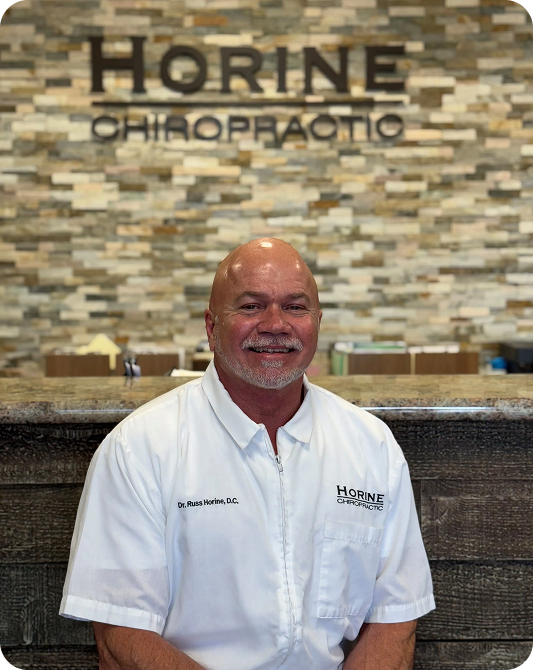
Article by
Dr. Russell Horine, DC Chiropractor
Horine Chiropractic has established a strong reputation for delivering exceptional results in treating complex back and neck pain cases. Their primary objective is to serve patients efficiently and compassionately, aiding them in their journey to wellness. Horine Chiropractic uses a comprehensive, groundbreaking approach to treating stubborn back and neck pain. They have been helping Visalia’s backs, necks, and everything in between for a combined 45 years. They create a comprehensive approach to help their patients meet their health needs. Horine Chiropractic customizes treatment plans to meet each patient's unique health needs. The clinic is accepting new patients and providing compassionate care to those in need.
Medical Disclaimer
This content is provided for general educational and informational purposes only and is not intended as medical advice, diagnosis, or treatment. Individual conditions and treatment needs vary. Please consult a qualified healthcare professional regarding your specific symptoms and treatment options.