
What if that familiar twinge in your spine isn’t a sign that your body is failing, but rather a “check engine light” signaling a mechanical compensation your brain hasn’t solved yet? It’s incredibly frustrating to feel like you’ve finally turned a corner, only to have a simple movement send you right back to the heating pad. You aren’t alone in this cycle; in fact, about 28% of adults in the U.S. reported experiencing chronic lower back or sciatic pain in 2022. Finding true recurring lower back pain relief requires more than just masking the discomfort until it fades. It requires an honest look at why the cycle started in the first place.
We understand the fear that comes with every flare-up, especially the worry that surgery might be the only permanent answer. If you are exploring medical options and need to understand the clearance process for a potential procedure, click here to learn more about pre-surgical testing from John Abroon M.D. as a guide for what to expect. You deserve a path forward that doesn’t involve constant guesswork or temporary patches. In this article, we’ll show you exactly why your pain keeps returning and how a thorough diagnostic approach can break the pattern. We will walk through the investigative steps needed to uncover the root cause, giving you a clear plan to return to your daily activities with confidence and clarity. It’s time to stop managing symptoms and start building a foundation for lasting health.
Key Takeaways
- Understand why recurring pain is often your body’s way of compensating for a hidden mechanical weakness rather than just a series of “bad luck” injuries.
- Explore why common home remedies provide only temporary comfort and how to find a path toward lasting recurring lower back pain relief.
- Learn five proactive habits you can start today, including ergonomics and movement, to help stabilize your spine and prevent the next flare-up.
- Discover the “diagnostic first” philosophy that uses thorough examinations to identify the root cause of your pain instead of just treating the surface symptoms.
- Gain the clarity you need to return to an active lifestyle without the constant fear of needing surgery or invasive procedures.
Understanding Recurring Lower Back Pain: More Than Just a “Bad Back”
Many people think of back pain as a one-time event, much like a cold or a scraped knee. You rest, the pain fades, and you assume the problem is gone. However, recurring lower back pain is different. It follows a frustrating pattern of episodes where you feel fine for weeks or even months, only to have a sudden flare-up triggered by something as simple as tying your shoes. This cycle suggests that while the initial pain subsided, the underlying cause never actually left. To understand this better, it helps to look at a comprehensive overview of low back pain to see how common these mechanical issues really are in our daily lives.
While an acute injury is usually tied to a specific accident, chronic mechanical weakness is a quiet, ongoing issue. It is like a car with a slightly misaligned frame; you can keep driving it, but the tires will wear out unevenly every few thousand miles. If you just keep replacing the tires without fixing the frame, you are only treating the symptom. This is why “waiting it out” often feels like a trap. Each time the pain returns, it often hits harder or lasts longer because the underlying stress has been accumulating. Recurring back pain is essentially a failure of the body to fully resolve an underlying mechanical stress.
The Difference Between Symptom Masking and True Relief
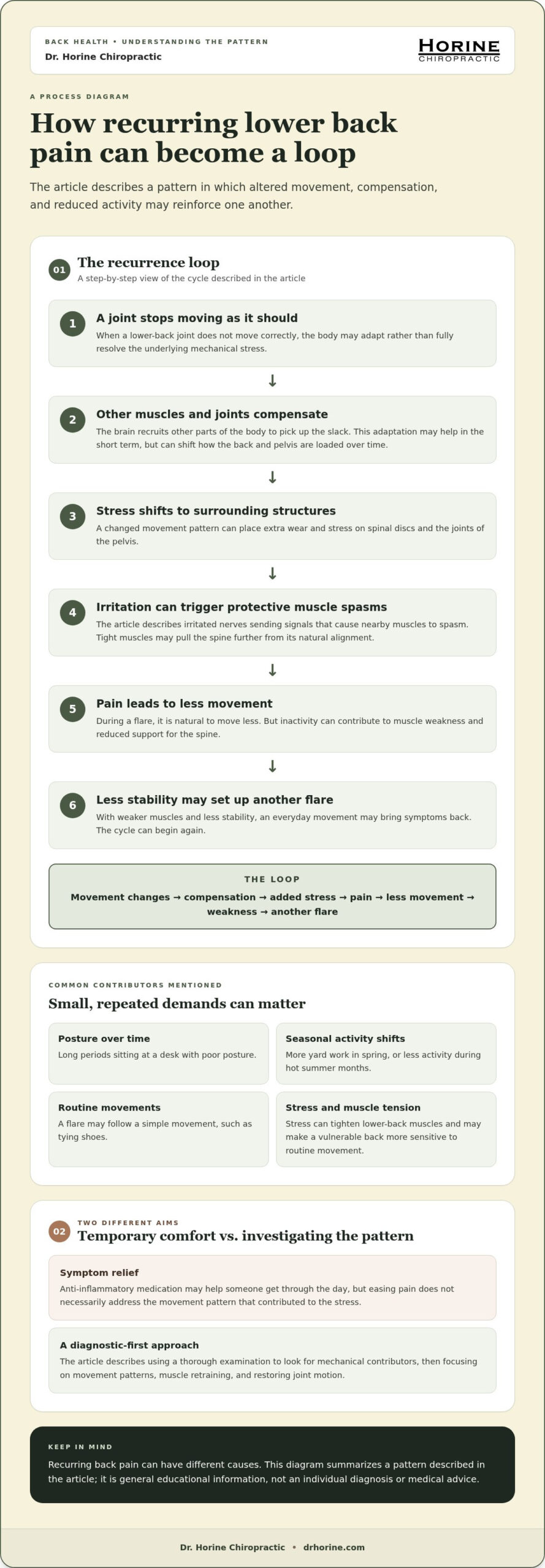
When a flare-up hits, most people reach for anti-inflammatories. While these can help you get through the day, they often create a false sense of security. By numbing the pain, you might continue moving in ways that further aggravate the injury. This is the “I feel fine now” trap. Without addressing the movement pattern that caused the stress, you aren’t achieving recurring lower back pain relief; you’re just silencing the alarm while the fire still burns. Over time, these masked movement patterns lead to more frequent and more severe episodes.
Common Triggers for Recurrent Flares
Flares aren’t always caused by heavy lifting or a major fall. Sometimes, it’s cumulative micro-trauma, like sitting at a desk for years with poor posture. In Visalia, we often see seasonal shifts impact our patients, such as increased yard work in the spring or the sedentary nature of our hottest summer months. Stress also plays a role. It causes muscles in the lower lumbar region to tighten, making an already vulnerable spine much more likely to “give out” during a routine movement. For women, managing the mental and hormonal aspects of stress is a vital component of physical recovery; read more about how Women’s Mental Health Specialist provides hormone-informed care.
The body is an expert at adaptation. When a joint in your lower back stops moving correctly, your brain doesn’t just give up. Instead, it instructs other muscles and joints to pick up the slack. This process, known as spinal compensation, is helpful for a few days, but it’s disastrous over months and years. By shifting your weight to protect a weak area, you inadvertently create “wear and tear” on your discs and the joints of your pelvis. This is why you might feel pain on the left side one month, only for it to migrate to the right side the next.
This mechanical shift triggers a protective response from your nervous system. Irritated nerves send signals that cause surrounding muscles to spasm. These spasms aren’t just painful; they act like tight guide-wires, pulling your spine even further out of its natural alignment. This creates a “Recurrence Loop.” You feel pain, so you naturally stop moving. Inactivity leads to muscle weakness, which makes your spine even less stable, eventually leading to the next flare-up. Breaking this cycle is the only way to achieve true recurring lower back pain relief.
Vertebral Subluxation and Nerve Interference
In the world of chiropractic care, we often talk about vertebral subluxation. In simple terms, this means a spinal joint has become “stuck” or is not moving through its full, healthy range. While many common causes of lower back pain are muscular, a subluxation specifically interferes with the nerves that exit the spine. When these nerves are compressed or irritated, the effects can travel far beyond your back, often manifesting as sciatica / leg pain.
Muscle Memory and Postural Habits
Your muscles have a long memory. If you’ve spent years sitting at a desk, a common reality for many Visalia professionals, your muscles have likely “learned” a slouched or compensated posture. They keep pulling your spine back into that old, painful position even after you try to stand up straight. Our approach to localized back pain treatment focuses on retraining these muscles and restoring proper joint motion. If you’re tired of the Recurrence Loop, it might be time to see how a thorough exam can pinpoint exactly where your mechanics are failing.
Comparing Relief Options: Home Care, Medication, and Professional Care
Finding the right path to recovery can feel like a maze of conflicting advice. From a global health perspective, lower back pain affects hundreds of millions of people, yet many rely on quick fixes that never address the underlying mechanical failure. Over-the-counter medications are often the first line of defense. While these are helpful for managing a rough afternoon, they don’t change how your spine moves. They simply quiet the alarm while the structural issue remains. Physical therapy is another popular choice, focusing on strengthening the core. Strength is vital, but if you’re strengthening muscles around a joint that is already misaligned, you might just be reinforcing a bad movement pattern.
Many patients come to us with a deep fear that surgery is the only way to find permanent recurring lower back pain relief. It’s a common misconception. Even major institutions like Johns Hopkins Medicine point out that surgery doesn’t guarantee a pain-free life and should often be a last resort after conservative care has been exhausted. Chiropractic care fills the gap between these options. It focuses on the structural foundation of the spine, ensuring that joints are moving correctly so that other therapies, like exercise and stretching, can actually do their jobs. If you’re searching for a non surgical back pain treatment that addresses the root cause rather than masking symptoms, evidence-based chiropractic care offers a proven path forward. For those who require specialized surgical procedures for other conditions, such as abdominal wall repair, resources like the Brisbane Hernia Clinic provide the focused expertise necessary for a successful recovery.
The Role of Manual Spinal Adjustments
When a segment of your spine becomes “locked” or restricted, it stops contributing to your body’s overall movement. This forces other areas to overwork. A manual spinal adjustment in Visalia is designed to restore motion to these specific, restricted segments. By using gentle, controlled force, we help the joint return to its natural function. This non-invasive approach is often the first step in breaking the cycle of recurrence because it addresses the mechanical “stuckness” that medications and generic exercises often miss.
When to Move Beyond Home Remedies
It’s easy to get lost in a sea of “YouTube stretches” or self-treatment tips. While some advice is helpful, generic stretches can sometimes make a specific spinal issue worse. You should seek professional diagnostic attention if you notice certain red flags:
- Pain that travels down your leg or into your foot.
- Numbness or a “pins and needles” sensation in your lower body.
- Episodes that occur more frequently or with less provocation.
- Weakness in your legs that makes you feel unsteady.
Self-treating recurring pain without a diagnosis is like trying to fix a complex engine based on a guess. Understanding the difference between broad back care and targeted localized back pain treatment options can help you make a more informed decision about your next step. A professional exam provides the clarity you need to move forward safely; as an example of specialized care for persistent conditions, you can visit Sapphire Clinics to see how expert medical assessments can help navigate long-term pain.
5 Proactive Habits for Long-Term Back Health in Visalia
Living in our corner of the Central Valley often involves a unique mix of desk work, agricultural labor, and outdoor recreation. While professional care is essential, your daily choices dictate how long that relief lasts. Consistency in small habits prevents major spinal relapses. By integrating these proactive steps into your routine, you can maintain your progress and find lasting recurring lower back pain relief. It’s about making your environment work for your body, rather than forcing your body to adapt to a stressful environment.
Ergonomics for Work and Home
If you spend your day at a computer, follow the 90-90-90 rule. This means keeping your elbows, hips, and knees at 90-degree angles with your feet flat on the floor. Your monitor should be at eye level to prevent you from hunching forward, which puts immense pressure on the lumbar spine. For those involved in more physical tasks, like gardening or local agricultural work, pay close attention to your lifting technique. Always bend at your knees rather than your waist to avoid musculoskeletal pain. Additionally, consider your footwear. Our active lifestyle in Visalia demands supportive shoes with proper arch support to absorb shock, especially if you spend your weekends on your feet at local parks or events.
Movement as Medicine
Motion is vital for keeping spinal discs hydrated and healthy. Instead of a soft, bouncy treadmill, try walking on the flat, stable ground at Mooney Boulevard. This provides a consistent surface that doesn’t force your lower back to over-compensate for an unstable belt. If your job requires long periods of sitting or standing, take “micro-breaks” every thirty minutes. Simply standing up, reaching for the ceiling, and taking a deep breath can reset your posture and improve blood flow to the spinal tissues. Gentle stretching routines, like a morning cat-camel stretch, can also keep your lumbar discs mobile without overstraining them. Finally, remember to stay hydrated. In our warm climate, drinking enough water is crucial for keeping your spinal discs pliable and resilient. If you’re tired of the flare-ups, book an initial consultation today to discover a customized plan for your recovery.
Breaking the Cycle: The Dr. Horine Approach to Lasting Relief
At Dr. Horine Chiropractic, we believe that you can’t fix what you haven’t fully understood. While many clinics might offer a quick adjustment and send you on your way, our philosophy is “Diagnostic First.” We don’t guess; we test. This commitment to thoroughness is how we’ve helped our neighbors find recurring lower back pain relief since 1987. By identifying the specific mechanical failures in your spine, we move beyond the “one-size-fits-all” approach that so often leads to those frustrating relapses we’ve discussed in previous sections. Our approach to non surgical back pain treatment is grounded in restoring the natural mechanics your body has forgotten, ensuring every care decision is driven by objective findings rather than guesswork. This emphasis on objective data is a growing trend in modern healthcare; for instance, the Quality Comprehensive Health Center uses advanced 3D body scanning to help patients visualize their health and track structural changes over time.
Our ultimate goal is to shift your journey from mere pain management to true wellness and prevention. This starts by looking at the whole person, not just the symptom. A personalized treatment plan isn’t a luxury; it’s a necessity for anyone tired of the “Recurrence Loop.” We want to ensure that every adjustment we make is purposeful and tailored to your body’s unique alignment and needs. By restoring proper function, we give your body the foundation it needs to stay healthy long after you leave our office. This commitment to natural, non-invasive health is also shared by the Chiropractic Natural Care Center, which helps patients achieve similar long-term outcomes through dedicated chiropractic care.
What to Expect During Your First Visit
When you walk into our clinic, you’ll find an unhurried, attentive atmosphere that feels more like a conversation with a friend than a clinical appointment. We take the time to listen to your history because your past experiences with pain are the roadmap to your recovery. During the investigative process, we conduct a comprehensive exam that evaluates your posture, range of motion, and nerve function. We aren’t just looking for where it hurts; we’re looking for why it hurts. Whether your pain is influenced by long hours at a desk or the physical demands of local agricultural work, we build a plan that fits your specific Visalia lifestyle.
This commitment to thoroughness is a hallmark of quality care. For an example of how a clinic might structure this first step, you can explore Initial Consultation options at Fit & Healthy Chiropractic, where the focus remains on finding the root cause of discomfort.
Your Partner in Long-Term Wellness
Recovery is a collaborative process that requires transparency and sincerity. We value honest communication, ensuring you understand every step of your care and what to expect from your results. We track your progress using objective measures, looking for improvements in how you move and function even before the pain completely vanishes. This partnership ensures you feel empowered and informed at every stage of the interaction. If you’re ready to stop the cycle of temporary fixes and reclaim your active lifestyle, Schedule your diagnostic assessment at Dr. Horine Chiropractic today.
Reclaim Your Active Lifestyle Today
You don’t have to live in a cycle of “waiting it out” and hoping the next flare-up isn’t the one that stops you in your tracks. By understanding that your body is often compensating for hidden mechanical stress, you can finally move past temporary patches. Achieving lasting recurring lower back pain relief starts with a thorough investigation into your unique spinal health. Since 1987, we’ve provided our Visalia neighbors with personalized, non-surgical treatment plans that prioritize long-term wellness. Our patient-centered care is built on the belief that you deserve to be heard and understood, not just processed through a clinical system.
We’re here to help you return to your daily activities without the constant fear of your back giving out. When you’re ready to stop the guesswork and start a structured path toward recovery, we’re ready to listen. Book Your Comprehensive Back Pain Exam in Visalia and discover the clarity that comes with a professional diagnostic assessment. You have the power to break the cycle; we have the tools to guide you there.
Frequently Asked Questions
Why does my lower back pain keep coming and going for years?
Pain that returns over years usually signals an underlying mechanical stress that your body has never fully resolved. Even when the inflammation settles and the pain fades, the structural misalignment or joint restriction remains. This creates a vulnerability where a simple, routine movement can easily trigger the next flare-up. We focus on identifying these hidden weaknesses to help you achieve lasting recurring lower back pain relief rather than just temporary comfort.
Can a chiropractor help with recurring back pain that is not constant?
Chiropractic care is actually ideal for episodic pain because it addresses the “stuck” joints that cause these cycles. When a joint in your spine doesn’t move correctly, it forces other areas to overwork, leading to periodic exhaustion and pain. By restoring proper motion during the periods when you feel “fine,” we can stabilize your spine and prevent the next painful episode from occurring.
Is it safe to get a spinal adjustment if I have a bulging disc?
It’s generally safe and often quite helpful, provided your care is based on a thorough diagnostic exam. Adjustments for disc issues are highly specific and gentle. The goal is to improve the mechanics of the joints above and below the affected disc, which helps reduce the direct pressure and allows the area to heal. We always prioritize a conservative, non-surgical approach to keep you moving safely.
How many visits does it usually take to see relief from recurring pain?
While every person’s history is unique, many patients notice a positive change in their mobility and comfort within the first few visits. However, true stability takes time. Because your muscles have likely “learned” poor postural habits over years, a series of visits is usually necessary to retrain the tissues and ensure the spine stays in its proper alignment, preventing the pain from returning shortly after treatment.
What is the best sleeping position for lower back pain relief?
The best position is one that maintains the natural curves of your spine. If you sleep on your side, place a pillow between your knees to keep your hips level. If you prefer sleeping on your back, tuck a pillow under your knees to take the strain off your lower lumbar region. Avoid sleeping on your stomach, as this often forces your neck and lower back into stressful, twisted positions.
Can tight hamstrings cause my lower back pain to return?
Tight hamstrings are a very common contributor to recurring back issues. Because these muscles attach to your pelvis, they can pull it backward and flatten the natural curve of your lower spine. This mechanical pull creates constant tension in your back muscles and discs. Addressing this tightness through specific stretches is often a key part of the personalized plans we develop for our patients in Visalia.
When should I be worried that my back pain is something serious?
You should seek immediate medical attention if your back pain is accompanied by a loss of bladder or bowel control, sudden weakness in your legs, or numbness in your groin area. These symptoms can indicate serious nerve compression that requires urgent intervention. Additionally, if your pain is the result of a major trauma or is accompanied by an unexplained fever, it’s important to get a professional evaluation right away; for expert neurosurgical consultation on complex spinal health, Dr. Rodrigo Ávila Cervantes · Spine Neurosurgeon provides specialized care for patients needing advanced diagnostic insight.
Do I need an MRI before seeing a chiropractor in Visalia?
You don’t need an MRI to begin your care at our clinic. Our comprehensive first-visit exam is designed to determine if your issue is mechanical and if chiropractic care is the right fit for you. Since 1987, we’ve used thorough physical assessments to guide our treatments. If our exam suggests that advanced imaging is necessary, we’ll refer you to a trusted local imaging center to get the clarity we need.
Article by
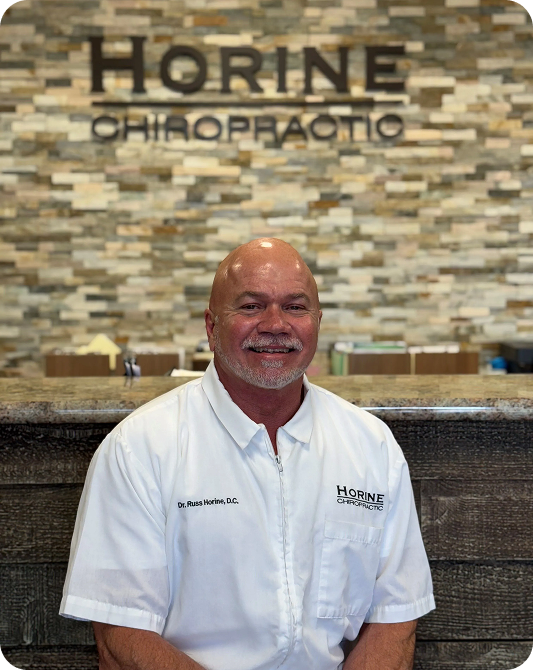
Dr. Russell Horine, DC Chiropractor
Horine Chiropractic has established a strong reputation for delivering exceptional results in treating complex back and neck pain cases. Their primary objective is to serve patients efficiently and compassionately, aiding them in their journey to wellness. Horine Chiropractic uses a comprehensive, groundbreaking approach to treating stubborn back and neck pain. They have been helping Visalia’s backs, necks, and everything in between for a combined 45 years. They create a comprehensive approach to help their patients meet their health needs. Horine Chiropractic customizes treatment plans to meet each patient's unique health needs. The clinic is accepting new patients and providing compassionate care to those in need.
Medical Disclaimer
This content is provided for general educational and informational purposes only and is not intended as medical advice, diagnosis, or treatment. Individual conditions and treatment needs vary. Please consult a qualified healthcare professional regarding your specific symptoms and treatment options.