

Shoulder pain that feels like a rotator cuff problem may have several possible causes. Pain or weakness when reaching, lifting, or lying on your shoulder can make everyday activities difficult, but symptoms alone cannot confirm a rotator cuff injury. If you’re experiencing persistent shoulder discomfort, an evaluation can help identify possible causes and determine which treatment options may be appropriate.
If your shoulder hurts, it’s understandable to wonder whether rest, conservative care, or a surgical assessment is the right next step. A thorough first-visit assessment can help clarify your symptoms and guide appropriate care, though it can’t always establish whether a tendon is torn. Further medical evaluation may be needed.
In this article, you’ll learn about possible causes of rotator cuff pain, what an evaluation can and can’t tell you, and treatment paths to discuss based on your symptoms and examination findings. We’ll also cover when to schedule an appointment and when sudden or severe symptoms call for urgent medical attention, so you can take a sensible next step with more clarity.
Key Takeaways
- Pain with reaching, lifting, or lying on your shoulder can have different causes; symptoms alone can’t confirm a rotator cuff injury.
- A step-by-step evaluation guides care, and imaging or specialist assessment may be appropriate when indicated.
- Treatment for rotator cuff pain in Visalia may involve conservative care or surgical evaluation, depending on your condition and findings.
- Learn a practical next step for persistent shoulder pain and when symptoms call for urgent medical attention.
Rotator Cuff Pain in Visalia: What Symptoms Can, and Cannot, Tell You
Pain when reaching overhead, lifting an object, or lying on the affected shoulder can make ordinary routines uncomfortable. The rotator cuff is a group of muscles and tendons that helps move the shoulder and keep the upper arm stable in its joint. If you’re experiencing shoulder pain in Visalia, a professional evaluation can help identify possible causes and determine which treatment options may be appropriate for your condition.
“Rotator cuff pain” describes shoulder discomfort that may involve these tissues; it isn’t the same as a confirmed rotator cuff tear. A tear means some tendon fibers are damaged, and symptoms can’t confirm whether a tear is present or how extensive it is. Other shoulder conditions can cause similar discomfort. The Mayo Clinic’s overview of rotator cuff diagnosis and treatment explains how evaluation informs care, but it can’t determine the cause of your pain.
Which movements and symptoms may raise a rotator cuff concern?
Pain or weakness when lifting your arm, reaching overhead, or lowering it again may mean you should seek an evaluation. Some people also notice discomfort when reaching behind their back or lying on that side. These patterns can raise a question, not answer it: symptoms vary, and shoulder problems can overlap. Dr. Horine Chiropractic’s shoulder and elbow pain care starts with an evaluation of your individual symptoms and findings.
When should shoulder symptoms receive prompt medical attention?
Seek appropriate medical care promptly after a significant injury if pain is severe, or if you suddenly can’t use or lift your arm. A fall or forceful impact followed by marked weakness deserves medical attention rather than self-diagnosis. If symptoms feel urgent or concerning, seek medical care first. A later evaluation can help clarify next steps; it shouldn’t delay attention to a potentially serious injury.
If your shoulder pain continues, schedule an evaluation with Dr. Horine Chiropractic in Visalia to better understand your symptoms and discuss appropriate next steps. Depending on your condition, additional medical evaluation or imaging may be recommended.”
How a Rotator Cuff Evaluation Helps Guide Treatment
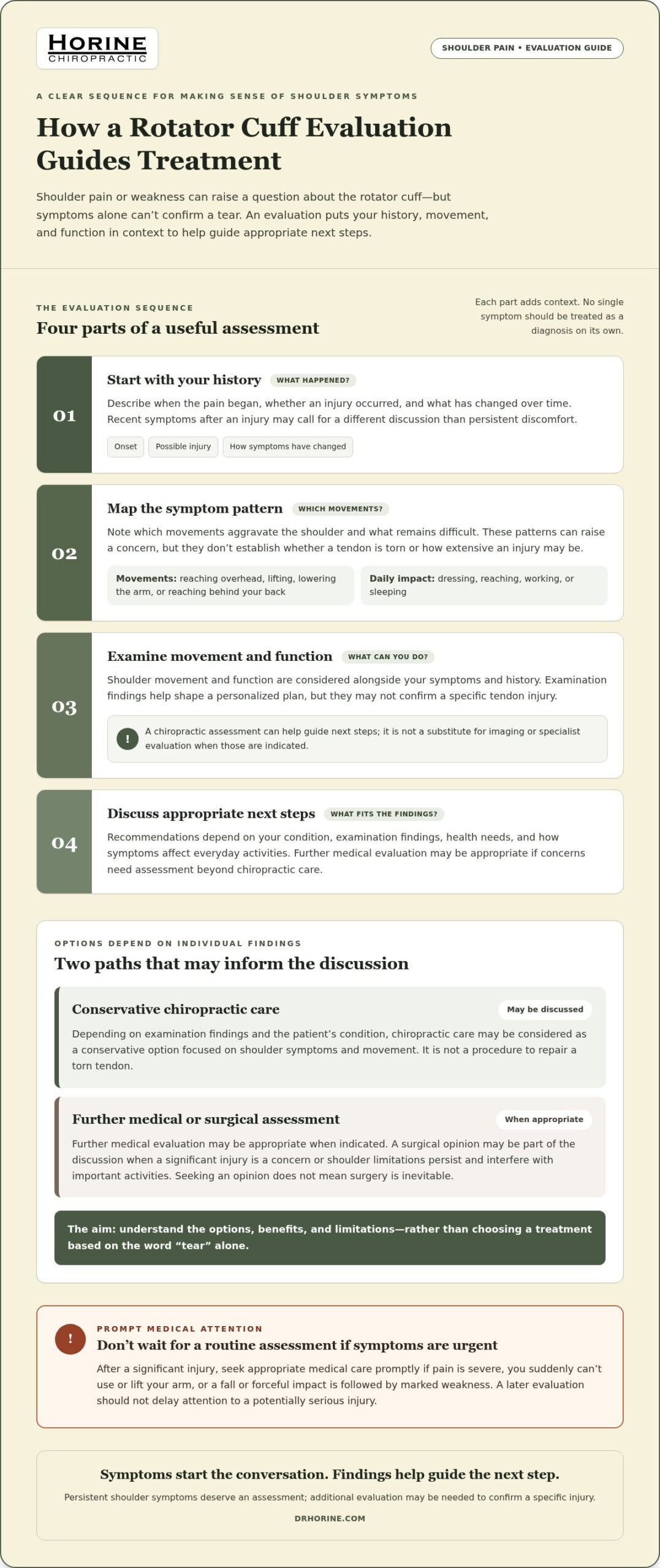
A useful evaluation follows a sequence: first, understand your history; then, consider your symptom pattern; examine shoulder movement and function; and discuss sensible next steps. This process helps put your concerns in context instead of treating one symptom as a diagnosis. For patients seeking rotator cuff pain treatment in Visalia, recommendations should be based on their individual symptoms, medical history, and examination findings.
What to expect when discussing shoulder pain at a first visit
Be ready to describe when the pain began, which movements aggravate it, whether an injury occurred, and how symptoms affect daily tasks such as dressing, reaching, working, or sleeping. The clinician may assess how your shoulder moves and functions. Symptoms alone, even pain or weakness with certain movements, cannot confirm a rotator cuff tear or establish its size; examination findings help shape a personalized plan.
When might further medical evaluation be appropriate?
If the history or examination raises concerns that need assessment beyond chiropractic care, further medical evaluation may be appropriate. A chiropractic assessment can help guide next steps, but it isn’t a substitute for imaging or specialist evaluation when those are indicated. The Mayo Clinic’s overview of rotator cuff diagnosis and treatment also describes how clinicians consider different care approaches.
Duration matters, too. Recent symptoms after an injury may call for a different discussion than persistent discomfort that limits daily activities. Share what has changed over time and what you’ve already tried. These details help make recommendations more relevant, while no single finding should be treated as a diagnosis on its own. Learn more about shoulder and elbow pain care in Visalia.
If shoulder symptoms linger, you can schedule an evaluation with Dr. Horine Chiropractic to discuss your history, exam findings, and next steps.
Rotator Cuff Pain Treatment Options: Matching Care to Your Findings
A treatment plan should reflect what the evaluation finds, how symptoms affect your daily activities, and your health needs. Conservative care and surgical assessment serve different purposes, and they aren’t automatically competing choices. Shoulder pain alone doesn’t mean surgery is necessary or appropriate. For those exploring regenerative alternatives to surgery, integrative practices such as Sikora Integrative Medicine illustrate how modalities like PRP and cellular therapies are used to support natural tissue healing. Patients seeking rotator cuff pain treatment in Visalia should discuss their options with a qualified healthcare professional, considering their diagnosis, symptoms, and individual treatment needs.
When Chiropractic Care May Be Appropriate for Shoulder Pain
Dr. Horine Chiropractic provides shoulder and elbow pain care tailored to examination findings and the patient’s condition. Depending on those findings, we may discuss chiropractic care as a conservative option focused on addressing shoulder symptoms and movement. It isn’t a procedure to repair a torn tendon, and its suitability depends on an individual assessment. Learn about the practice’s care for shoulder and elbow pain.
When is a surgical opinion part of the decision?
As you compare paths, consider what you want to regain, what movements remain difficult, and whether symptoms are changing. Share these details during an evaluation. Dr. Horine Chiropractic uses individual findings to guide care discussions in Visalia, without assuming that every shoulder problem calls for the same approach or promising a particular result.
Choosing Rotator Cuff Pain Treatment in Visalia: A Clear Next Step
Shoulder symptoms may be reason enough to seek an evaluation, but you don’t need to identify the cause before making an appointment. A clinician can consider your history, symptoms, and examination findings together, then discuss care that fits your situation. At Dr. Horine Chiropractic in Visalia, we personalize assessment and care planning, without assuming every shoulder concern has the same explanation or requires the same approach.
What information can help make a shoulder appointment more useful?
A few notes can help you describe what’s changed. Consider when symptoms began, which activities aggravate them, and how they affect daily function, such as getting dressed, reaching, or sleeping. Share any relevant injury history and previous evaluations, too. You don’t need to arrive with a diagnosis. Clear details about what you experience give the clinician helpful context for the visit and discussion of possible next steps.
A patient-centered next step for shoulder pain in Visalia
The next step depends on your individual symptoms and examination, not just the possibility of a rotator cuff problem. Dr. Horine Chiropractic provides personalized musculoskeletal assessment and shoulder care in Visalia. If you’re exploring shoulder and elbow pain treatment, including shoulder pain treatment options, an appointment can help you discuss your concerns and what care may be appropriate. Recommendations may change if your findings suggest that further medical evaluation is needed.
If shoulder pain is affecting your routine, schedule an evaluation with Dr. Horine Chiropractic to discuss your symptoms and the best next step.
Take a Thoughtful Next Step for Your Shoulder
You don’t need to know exactly what’s causing your shoulder pain before asking for help. If it’s affecting your daily routine, focus on what you’re experiencing and what you’d like to do more comfortably. For people seeking rotator cuff pain treatment in Visalia, an evaluation can clarify concerns and identify appropriate next steps without assuming a diagnosis.
Dr. Horine Chiropractic has served the Visalia community since 1987, providing personalized musculoskeletal assessments and care for shoulder and elbow pain. Recommendations depend on your symptoms and examination findings. A visit gives you space to share what matters, understand which care options may fit, and decide whether further evaluation is appropriate.
You can take this one step at a time. Start with a conversation focused on your needs, then make decisions with clearer information and support.
Frequently Asked Questions
Can a rotator cuff tear heal on its own?
A rotator cuff tear does not always heal on its own. Many full-thickness tears do not reattach without surgery, although appropriate nonsurgical treatment may improve pain and shoulder function. The best approach depends on the injury type and severity, your symptoms, and your activity needs. A qualified healthcare professional can evaluate your shoulder and help determine whether conservative treatment or further medical assessment is appropriate.
How long can rotator cuff pain take to improve?
There’s no standard recovery timeline. Improvement can depend on the cause of the pain, its severity, your overall health, and how you respond to care. If you’re exploring rotator cuff pain treatment in Visalia, an evaluation can put your symptoms in context instead of relying on a one-size-fits-all estimate. Arrange an assessment if pain persists, worsens, or interferes with ordinary activities.
Can rotator cuff pain occur without a tear?
Yes. Shoulder pain can have causes other than a rotator cuff tear, and discomfort by itself doesn’t confirm tendon damage. For example, pain during an activity shows something is bothering your shoulder, but it doesn’t identify the specific tissue involved. Avoid trying to diagnose the problem from one symptom. Seek an appropriate assessment if pain continues or makes it difficult to move your arm normally.
When should I seek urgent care for shoulder pain?
Seek urgent medical attention for severe shoulder symptoms after a significant injury, or if you suddenly can’t use your arm. Get urgent help if shoulder pain occurs with chest pain, difficulty breathing, fever, or other alarming changes. Don’t wait for a routine appointment if symptoms feel urgent. This information is educational and can’t replace prompt medical assessment of potentially serious symptoms.

Article by
Dr. Russell Horine, DC Chiropractor
Horine Chiropractic has established a strong reputation for delivering exceptional results in treating complex back and neck pain cases. Their primary objective is to serve patients efficiently and compassionately, aiding them in their journey to wellness. Horine Chiropractic uses a comprehensive, groundbreaking approach to treating stubborn back and neck pain. They have been helping Visalia’s backs, necks, and everything in between for a combined 45 years. They create a comprehensive approach to help their patients meet their health needs. Horine Chiropractic customizes treatment plans to meet each patient's unique health needs. The clinic is accepting new patients and providing compassionate care to those in need.
Medical Disclaimer
This content is provided for general educational and informational purposes only and is not intended as medical advice, diagnosis, or treatment. Individual conditions and treatment needs vary. Please consult a qualified healthcare professional regarding your specific symptoms and treatment options.