
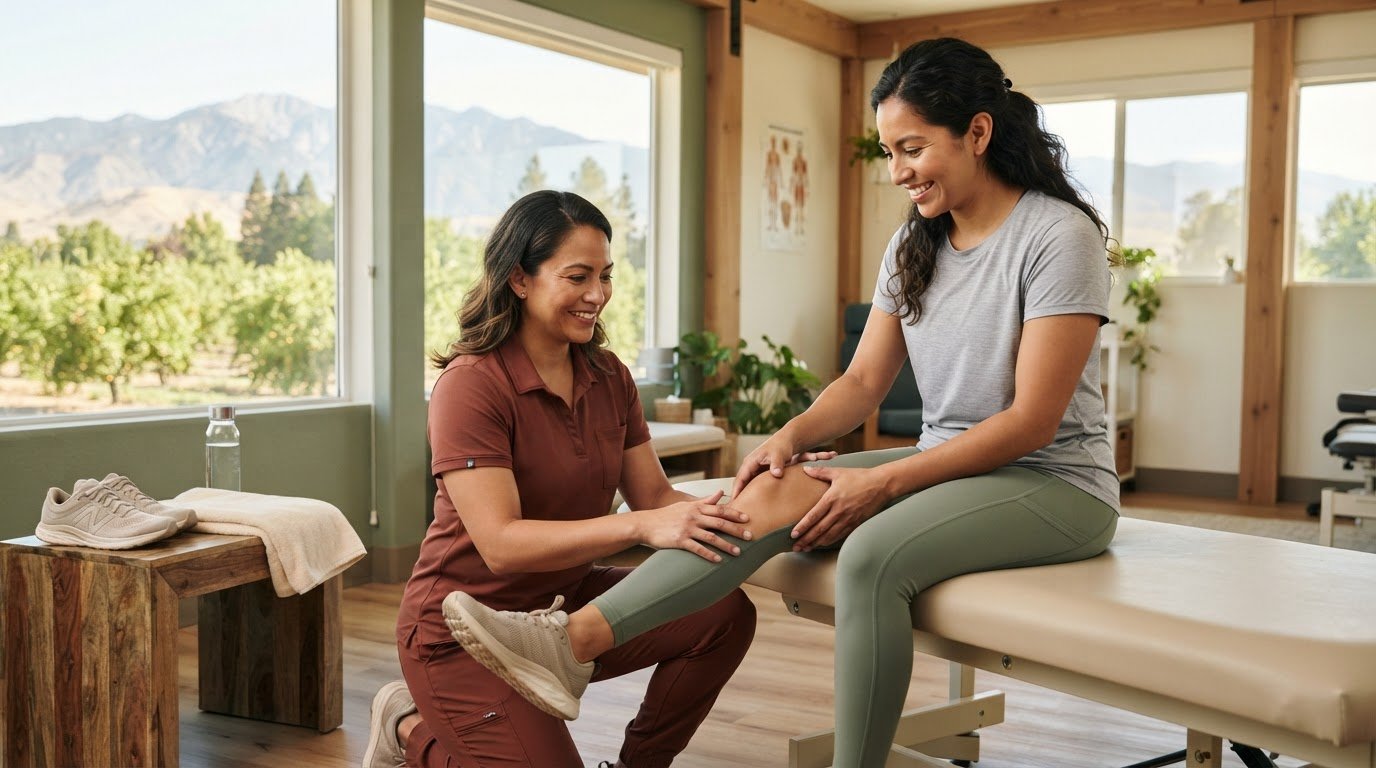
What if running through knee pain and stopping completely aren’t your only options? Pain around the kneecap during a run, on stairs, or after sitting can make it difficult to know what your body needs. If you’re looking into runner’s knee treatment Visalia, the right next step depends on what may be causing the pain, how it responds to activity, and where you are in recovery.
It’s understandable to wonder whether your symptoms are runner’s knee, whether easing up will help, or whether it will set back your training. Runner’s knee is one possible cause of pain around or behind the kneecap. Similar symptoms can come from other conditions, so an assessment may help clarify your options.
This article covers common causes and signs to watch for, compares care approaches, and explains how to work toward running again without rushing the process. Dr. Horine Chiropractic provides knee pain care in Visalia, with an examination and personalized plan to discuss appropriate next steps. The aim is a clearer path to comfortable movement that reflects your symptoms and needs.
Key Takeaways
- Pain around the kneecap may have several contributing factors, including changes in running distance, intensity, hills, or frequency.
- Runner’s knee is one possible explanation for knee pain, but an assessment can help distinguish it from other causes with similar symptoms.
- The right runner’s knee treatment Visalia option depends on your symptoms, examination findings, health history, and running goals.
- A gradual return to running can start with adjusting activities that provoke pain, then rebuilding tolerance and progressing based on your response.
- Dr. Horine Chiropractic offers knee pain care and musculoskeletal examinations to help discuss appropriate next steps, without assuming a runner’s knee diagnosis.
Runner’s knee in Visalia: what the pain may mean
Knee pain can disrupt more than a training plan. It may make running, climbing stairs, working out, or everyday movement uncomfortable. “Runner’s knee” is a common name for pain around or behind the kneecap, often associated with patellofemoral pain syndrome. It describes a pattern of pain, not a diagnosis that can be confirmed from symptoms alone. Other knee problems can feel similar and may call for a different approach.
This section focuses on pain around the kneecap rather than every cause of knee pain. For a broader overview of joint discomfort and care considerations, see the Visalia joint pain treatment guide. You can also read an overview of Patellofemoral Pain Syndrome (runner’s knee) for background. Neither a general guide nor a symptom checklist can replace an individual clinical assessment.
What does runner’s knee usually feel like?
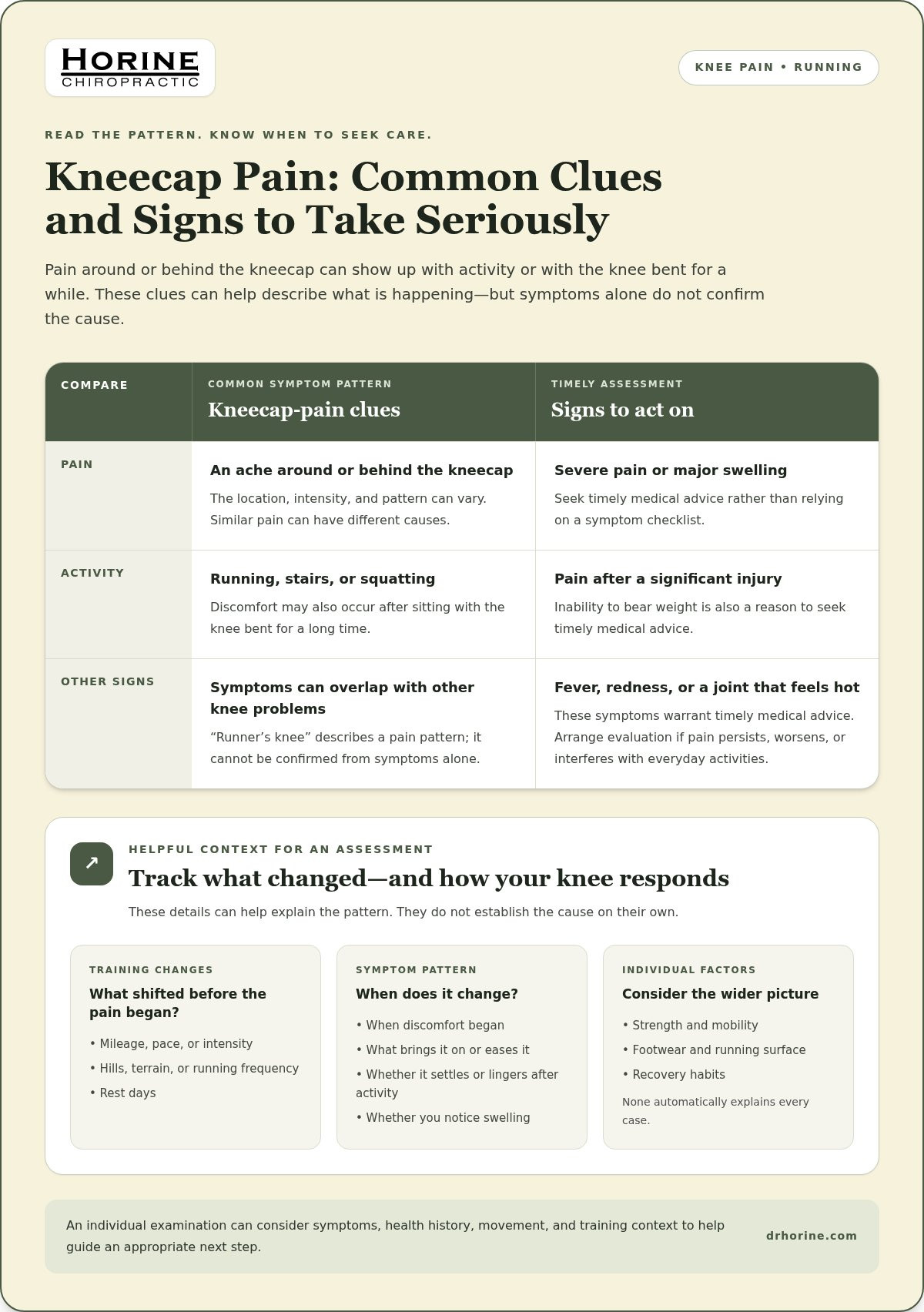
People often notice an ache around or behind the kneecap while running, going up or down stairs, or squatting. Sitting with the knee bent for a long time may also bring on discomfort. The location, intensity, and pattern can vary. Pain in this area doesn’t automatically mean patellofemoral pain, since other conditions can cause overlapping symptoms.
Before seeking runner’s knee treatment Visalia, note what brings on the pain and what eases it. Record how long symptoms last, whether you notice swelling, and whether your training changed before the problem began. For example, a recent increase in running frequency, intensity, or hill work may be useful context to share during an assessment. These details help a clinician understand the pattern, but they don’t establish the cause on their own.
When is knee pain more than a running issue?
Some symptoms call for prompt assessment rather than a self-directed return to training. Seek timely medical advice for severe pain, major swelling, inability to bear weight, or pain following a significant injury. Fever, redness, or a joint that feels hot also warrants timely medical advice.
If pain persists, worsens, or interferes with everyday activities, arrange an appropriate clinical evaluation. The goal is to understand what may be behind the symptoms and whether further medical assessment is needed, not to label the problem based on one symptom. An examination can help guide a suitable next step, especially when the cause isn’t clear or symptoms are concerning.
Why runner’s knee develops: load, movement, and individual factors
There isn’t always one clear reason kneecap pain starts. Symptoms may reflect the combined effect of training demands, how the body handles those demands, recovery, and individual circumstances. A sudden increase in mileage, faster workouts, more hills, or extra running days can challenge your current capacity. That doesn’t prove the training change caused the pain, but it’s useful context to discuss.
Runner’s knee is a symptom label, not a complete diagnosis. Strength, mobility, footwear, running surface, and recovery habits may be considered as part of the overall picture, but none automatically explains every case. Research discussing diagnostic and treatment options also emphasizes assessing the individual rather than relying on a single explanation.
How training changes can affect knee symptoms
A training increase that seems modest on paper may still exceed your current tolerance, especially if mileage, pace, hills, or frequency change at once. Some exertion during exercise can be expected, but pain that grows, changes your stride, or makes you compensate deserves attention. Don’t treat this distinction as a diagnosis or a reason to push through worsening symptoms.
For a clearer conversation about runner’s knee treatment Visalia, keep a simple record of recent mileage, pace, terrain, rest days, and how your knee feels during and after activity. Note when the discomfort began and whether it settles, lingers, or changes with a particular workout. A concise training history can help an assessment focus on relevant patterns.
Why the same knee pain can have different causes
Similar pain can come from different problems, so a clinician may consider more than the kneecap itself. Depending on the concern, an examination may look at the knee, hip, ankle, movement, and training history. These details help inform whether the symptoms fit patellofemoral pain or whether another explanation needs attention.
A particular posture, supposedly weak muscle, or pair of shoes shouldn’t be treated as the universal answer. Footwear and running surfaces may be worth discussing, but their relevance varies from person to person. The clinician uses your history and examination findings to guide next steps, and may recommend medical assessment if the presentation calls for another level of care.
If knee symptoms are interfering with your routine, an evaluation can help clarify what may be contributing and which options are appropriate. Dr. Horine Chiropractic lists knee pain treatment and provides musculoskeletal examinations. You can learn about knee pain care and discuss whether an assessment is a suitable next step.
Runner’s Knee Treatment Options in Visalia
There isn’t one care plan for every runner with pain around the kneecap. The right option depends on your symptoms, examination findings, health history, and goals, including whether you’re aiming to manage daily activities or return to a particular running routine. For an accessible overview of why runner’s knee happens, Yale Medicine discusses factors related to kneecap movement and the condition.
These common pathways can differ in purpose. They are general options to discuss, not personal treatment recommendations.
| Option | What it may involve | When to consider discussing it |
|---|---|---|
| Activity modification | Temporarily adjusting running or other activities that provoke symptoms, rather than automatically stopping all movement. | When a particular workout or movement aggravates symptoms and you need guidance on adjusting activity. |
| Rehabilitation | Clinician-guided movement and progressive exercise, selected to address your needs and build tolerance. | When rebuilding strength, movement capacity, or confidence is part of the plan. |
| Chiropractic evaluation | A musculoskeletal examination and discussion of whether knee pain care is appropriate for your presentation. | When you want an assessment of the concern and to discuss suitable next steps. |
| Medical assessment | Clinical evaluation of the knee and consideration of whether further investigation or referral is needed. | For concerning symptoms, significant injury, unclear pain, or symptoms that persist or worsen. |
When can conservative care be considered?
If symptoms are mild and no concerning signs are present, activity adjustments and progressive exercise may be options to discuss with a qualified clinician. The aim isn’t to follow a generic plan from an article, but to find an approach suited to your symptoms and response. A chiropractor can assess musculoskeletal concerns and discuss whether care fits your needs, but chiropractic treatment shouldn’t be assumed to address every possible cause of kneecap pain.
For runner’s knee treatment Visalia, persistent, worsening, or unclear symptoms are a reason to seek professional assessment rather than repeatedly changing your training without guidance.
When should a runner seek medical or specialist assessment?
Seek prompt medical attention for severe pain, major swelling, inability to bear weight, a significant injury, fever, redness, or a hot joint. Further evaluation is also sensible if pain doesn’t improve or substantially interferes with daily function. After examining your concern and considering your health history, a clinician can discuss whether another type of assessment or referral is appropriate. Recommendations should reflect your clinical needs, not a one-size-fits-all assumption.
A safer return to running: practical steps for Visalia runners
Getting back to running is easier to manage when you treat it as a gradual process, not a test of willpower. Start by understanding your symptoms and, if they’re persistent or concerning, getting appropriate clinical guidance. Then adjust activities that clearly aggravate the knee, rebuild tolerance, and progress based on how your body responds at each step.
How should you adjust running while symptoms are active?
You may need to pause or modify a run, hill session, or workout that noticeably increases your knee pain. That doesn’t automatically mean stopping all movement or following a fixed rest period. The right adjustment depends on your symptoms and, when needed, advice from a clinician. Avoid changing several training demands at once, such as adding distance, speed, and hills in the same period. Adjusting one variable at a time can make it easier to notice what your knee tolerates.
Keep a short log rather than relying on memory. Note the activity, how your knee felt during it, whether your stride changed, and how symptoms responded afterward. For example, record whether discomfort settled after the run or remained noticeable during ordinary movement. This information can help you and a clinician discuss what to modify next, though it isn’t a substitute for an individual assessment.
What should guide a gradual return to running?
Once you and your clinician agree that progressing is appropriate, build back gradually. Consider duration, pace, and terrain separately, and avoid increasing them all together. Pay attention during the activity and afterward. A return should respond to your symptoms, not be tied to an arbitrary date.
A symptom-guided return to running is gradual progression based on your response, not a fixed calendar. If pain worsens, persists after activity, or changes your stride, pause the progression and reassess with a clinician. That feedback can help determine whether to adjust training again or seek further evaluation.
If symptoms extend beyond the knee or include persistent leg pain, the cause may not be limited to a running-related kneecap problem. The Visalia sciatica treatment guide offers information about another possible source of leg symptoms. An examination can help clarify which concerns need attention.
For runner’s knee treatment Visalia, an evaluation can help you discuss your symptoms and appropriate next steps without assuming a particular diagnosis or return schedule. Dr. Horine Chiropractic lists knee pain treatment and provides musculoskeletal examinations and personalized plans. Request an evaluation to discuss your knee pain and whether the practice may be an appropriate starting point.
Runner’s knee care at Dr. Horine Chiropractic in Visalia
Dr. Horine Chiropractic lists knee pain treatment and provides musculoskeletal examinations and personalized treatment plans. An evaluation is an opportunity to discuss what you’re experiencing and possible next steps, not a promise that your symptoms are runner’s knee or that one specific treatment will be suitable. Recommendations depend on your history, examination findings, and whether your concern fits the care offered.
If you’re considering runner’s knee treatment Visalia, it helps to know what an initial conversation can cover. Describe where the pain occurs, which activities bring it on, and how it affects running or daily movement. The clinician can listen to your history, examine the concern, and discuss appropriate options. If the findings suggest you need another level of medical assessment, chiropractic care shouldn’t take the place of that evaluation.
What to expect when discussing knee pain with a chiropractor
A little preparation can make the conversation more useful. Bring notes about when symptoms began, recent changes to mileage or workouts, what worsens or eases the pain, and any prior evaluations. Share your running goals, too, such as returning to easy runs or preparing for an event. Bring questions about what the examination can clarify and which next steps may be appropriate.
Examination findings help determine whether chiropractic care fits your needs. If you’re comparing local options, the Visalia chiropractor selection guide offers points to consider when choosing a provider. No evaluation can guarantee a particular diagnosis or outcome, and treatment plans should reflect the individual rather than assume a fixed number of visits.
How to take the next step in Visalia
If knee pain persists or limits your running and everyday activities, you can request an appointment with Dr. Horine Chiropractic online or by phone. The practice has served the Visalia community since 1987. An appointment gives you a chance to explain your symptoms, have the concern examined, and discuss whether the practice’s knee pain care is appropriate.
Choose urgent medical assessment instead if symptoms suggest an emergency or follow a significant injury. For other concerns, an evaluation can help you make a more informed decision about care and your next steps toward comfortable movement.
Request an appointment to discuss knee pain when you’re ready.
Take the next step toward comfortable running
Kneecap pain can have more than one cause, so a symptom label alone shouldn’t determine your plan. Pay attention to how training changes and activity affect your symptoms, and seek an assessment when pain persists, worsens, or limits daily movement. A gradual return to running should respond to your symptoms and individual guidance, not follow a fixed calendar.
If you’re considering runner’s knee treatment Visalia, Dr. Horine Chiropractic lists knee pain treatment and offers comprehensive examinations with personalized plans. The practice has served the Visalia community since 1987. An evaluation can help clarify your concerns and discuss appropriate next steps, though it doesn’t guarantee a particular diagnosis or outcome. If you have severe symptoms or a significant injury, seek prompt medical assessment.
When you’re ready to discuss your knee pain, request an appointment with Dr. Horine Chiropractic in Visalia. A clearer understanding of your symptoms and a plan suited to your needs can help you work toward comfortable movement and a considered return to running.
Frequently Asked Questions
What is the fastest way to treat runner’s knee?
There’s no single fastest fix that works for every runner. Start by adjusting activities that clearly aggravate your symptoms, rather than pushing through worsening pain or assuming complete rest is necessary. A clinician can assess what may be causing the discomfort and discuss suitable activity changes or progressive exercises. The right plan depends on your symptoms and health history, so avoid relying on a treatment that promises immediate relief.
Can you keep running with runner’s knee?
Some runners may be able to continue with modified activity, but it depends on how the knee responds. Reduce or pause running that makes pain worse, changes your stride, or leaves symptoms lingering afterward. A symptom log can help you track your response and discuss adjustments with a clinician. If you’re unsure whether continuing is appropriate, seek guidance instead of applying a generic rule to every runner.
How long does runner’s knee take to heal?
Recovery time varies with the cause of the pain, symptom severity, and how your knee responds to changes in activity and exercise. The research provided for this article indicates that many cases improve within 6 to 8 weeks with appropriate load management and strengthening, but that isn’t a guaranteed timeline. If symptoms aren’t improving, are worsening, or keep interfering with daily activities, arrange an assessment to review the plan.
Is runner’s knee the same as a meniscus injury?
No. Runner’s knee commonly refers to pain around or behind the kneecap, while a meniscus injury involves cartilage within the knee joint. They are different problems, but symptoms can overlap, so pain location alone can’t confirm which one is present. A twist, swelling, catching, or difficulty moving the knee may be important details to share, but only an appropriate clinical evaluation can help clarify the cause.
Can a chiropractor help with runner’s knee in Visalia?
A chiropractor can assess musculoskeletal concerns and discuss whether chiropractic care may suit your needs. Dr. Horine Chiropractic lists knee pain treatment and provides examinations and personalized plans, but an evaluation doesn’t guarantee a runner’s knee diagnosis or a particular outcome. For runner’s knee treatment Visalia, discuss your symptoms, running goals, and health history with a clinician. If your presentation needs another level of medical care, seek that assessment.
When should I see a doctor for knee pain after running?
Seek prompt medical advice for severe pain, major swelling, inability to bear weight, or pain after a significant injury. Fever, redness, or a knee that feels hot also calls for timely medical attention. Arrange an assessment if symptoms persist, worsen, or substantially limit everyday activities. These signs don’t identify a specific condition on their own, but they help indicate when self-management may not be enough.
Should I use ice or heat for runner’s knee?
Ice or heat may offer temporary comfort, but neither identifies or treats the underlying cause. Some people prefer a cold pack after activity, while gentle warmth may feel soothing for stiffness. Protect your skin with a cloth barrier, and stop if the application causes discomfort or irritation. If you have reduced sensation or a health condition affecting circulation, ask a healthcare professional what’s safe for you.
Article by
Dr. Russell Horine, DC Chiropractor
Horine Chiropractic has established a strong reputation for delivering exceptional results in treating complex back and neck pain cases. Their primary objective is to serve patients efficiently and compassionately, aiding them in their journey to wellness. Horine Chiropractic uses a comprehensive, groundbreaking approach to treating stubborn back and neck pain. They have been helping Visalia’s backs, necks, and everything in between for a combined 45 years. They create a comprehensive approach to help their patients meet their health needs. Horine Chiropractic customizes treatment plans to meet each patient's unique health needs. The clinic is accepting new patients and providing compassionate care to those in need.
Medical Disclaimer
This content is provided for general educational and informational purposes only and is not intended as medical advice, diagnosis, or treatment. Individual conditions and treatment needs vary. Please consult a qualified healthcare professional regarding your specific symptoms and treatment options.