

If you’re searching for exercises to do after spinal decompression, first clarify what “spinal decompression” means in your case. It can refer to non-surgical therapy or surgery, and the right timing and types of movement can differ.
After spinal surgery, follow your surgical team’s instructions. General online exercise advice may not fit your procedure or stage of healing. Non-surgical spinal decompression therapy, such as the therapy offered at Dr. Horine Chiropractic in Visalia, California, does not involve the same postoperative recovery. Still, your symptoms and your clinician’s guidance matter. A movement that feels comfortable for one person may aggravate another, so don’t assume a routine or timeline is right for you.
This guide explains how decompression type affects activity, how to approach movement cautiously, and when an evaluation may help you understand your options. It also covers symptoms that call for prompt medical attention. The goal is not to push through pain or follow a one-size-fits-all plan, but to make your next step safer and more informed.
Key Takeaways
- “Spinal decompression” can mean non-surgical therapy or surgery, and each calls for different movement guidance.
- Walking and gentle mobility may be appropriate after spinal decompression, but discuss what’s right for you with your clinician.
- Follow your instructions, start only with cleared activity, and ask before progressing to strengthening.
- If activity brings new, worsening, or concerning symptoms, stop and seek appropriate medical guidance.
What Does Spinal Decompression Mean, and Why Does It Change Exercise Advice?
That distinction matters because exercises to do after spinal decompression depend on the treatment, your symptoms, and the guidance from the clinician overseeing your care. A movement that may be considered during non-surgical care isn’t automatically appropriate after an operation. Even people who have had the same type of treatment may have different symptoms and instructions.
Non-surgical therapy and decompression surgery are not interchangeable
Non-surgical therapy and surgery aren’t two names for the same recovery process. After surgery, healing and activity restrictions depend on the procedure and your individual postoperative plan. Follow your surgeon’s discharge and activity instructions. General exercise information can’t replace those directions. Specialized medical institutions like birunihospital.com note that surgical spine care requires carefully individualized, physician-supervised recovery protocols rather than self-directed routines.
After non-surgical therapy, don’t assume every stretch or strengthening exercise is suitable. Your clinician can consider your treatment, how you’re feeling, and any other instructions before discussing movement. For a broader overview of the different meanings of spinal decompression, see Spinal Decompression Explained.
Dr. Horine Chiropractic in Visalia provides non-surgical spinal decompression therapy. A chiropractic evaluation can help put musculoskeletal symptoms and movement questions in context, but it isn’t postoperative management. If your decompression involved surgery, follow your surgical team’s guidance for recovery and activity. The movement examples below are for discussion, not a replacement for individualized instructions.
Which Exercises May Be Appropriate After Spinal Decompression?
Gentle movement and walking require individual clearance
After surgery, use your surgeon’s restrictions and progression guidance to decide whether walking or a particular movement is appropriate. Don’t assume a stretch is permitted just because it feels gentle. After non-surgical therapy, follow the recommendations of the clinician overseeing your care. If your instructions don’t address an activity you’re considering, ask before adding it.
Be specific when you discuss activity. Explain whether you mean walking for exercise, stretching while getting dressed, or bending to pick something up. These examples help turn general instructions into practical questions. Your clinician can clarify what applies to your situation; general information can’t determine which activity suits your recovery.
Strengthening exercises may be considered later, but only if your treating clinician considers them appropriate. The American Academy of Orthopedic Surgeons’ Spine Conditioning Program provides general spine exercises focused on strength and flexibility. It isn’t a personalized plan for recovery after decompression. Before adapting any routine, discuss whether its movements fit your treatment and current guidance.
Safe Return to Activity After Spinal Decompression
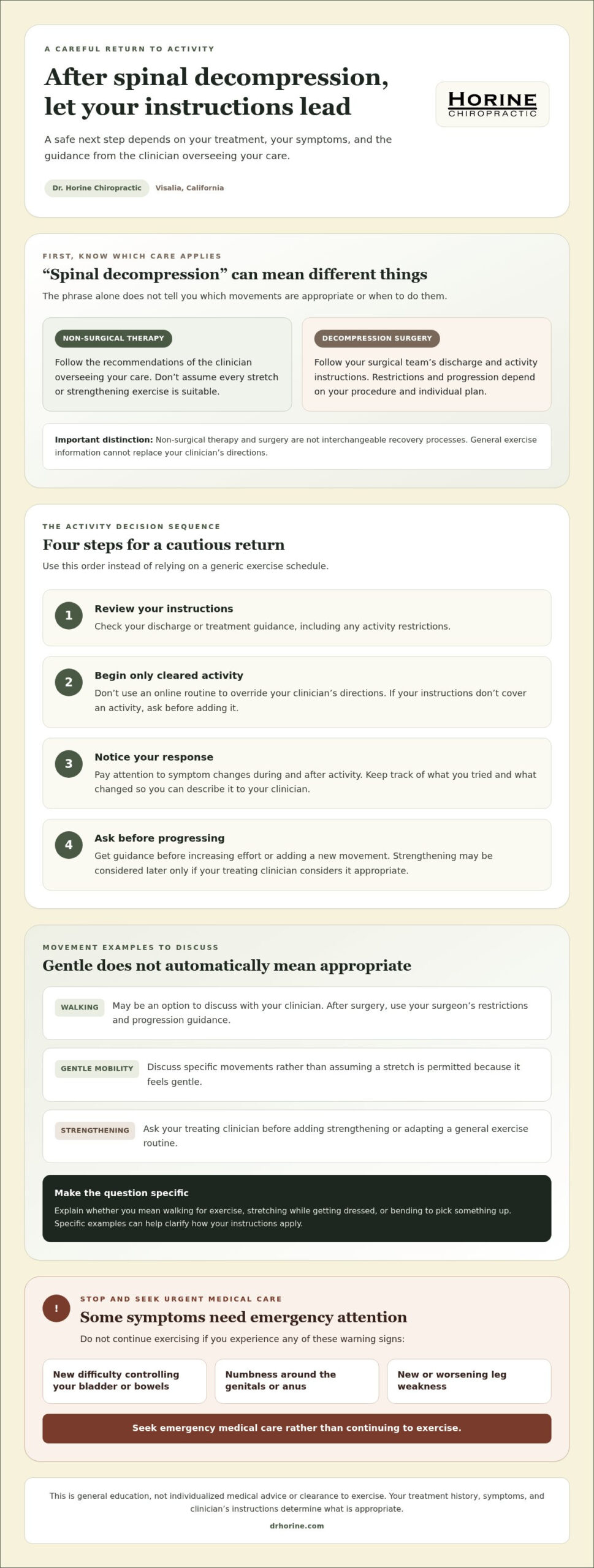
A careful return to activity starts with treatment-specific instructions, not a generic exercise schedule. Whether your decompression was surgical or non-surgical, use this sequence to make decisions:
- Review your instructions. Check your discharge or treatment guidance, including any restrictions.
- Begin only activities you’ve been cleared to do. Don’t use an online routine to override your clinician’s directions.
- Notice your response. Pay attention to changes during activity and afterward.
- Ask before progressing. Get guidance before increasing effort or adding a new movement.
Use symptom response to guide the next step
Track what you tried and whether symptoms changed during or after the activity. This can help you describe your response to the clinician guiding your care. If symptoms increase, feel different, or concern you, stop and contact that clinician before trying the activity again. Discomfort alone can’t tell you whether you’re injured or making progress, so don’t use it as a diagnosis.
Some symptoms need urgent attention. New difficulty controlling your bladder or bowels, numbness around the genitals or anus, or new or worsening leg weakness can be signs of a serious problem. Seek emergency medical care rather than continuing to exercise. The NHS guidance on cauda equina syndrome describes these warning signs.
This section offers general education, not individualized medical advice or clearance to exercise. Your treatment history, current symptoms, and clinician’s instructions determine what’s appropriate for you. If you’re unsure how to interpret a change or when to progress, pause and ask for guidance.
When Personalized Guidance Can Help After Spinal Decompression
A chiropractic evaluation and non-surgical spinal decompression therapy are distinct from postoperative management. If you’ve had surgery, your surgical team remains the source for instructions about healing and activity. A chiropractic evaluation can help discuss musculoskeletal symptoms and movement in context, but it doesn’t replace surgical follow-up.
What to discuss during an evaluation
Describe the type of decompression you received and when, the symptoms you’re noticing, and any activity instructions you’ve been given. Mention whether discomfort stays in your back or travels into a leg, and whether it changes during daily activities. For ongoing back concerns, Dr. Horine Chiropractic offers lower back pain treatment. If you have leg symptoms, an evaluation can also help determine whether sciatica treatment in Visalia may be relevant.
If you’re in Visalia and experiencing ongoing back or leg symptoms, you can schedule an evaluation with Dr. Horine Chiropractic to discuss your concerns and treatment history. An evaluation can help identify appropriate next steps without promising a particular result.
Choose a Clear, Supported Next Step
The exercises to do after spinal decompression should fit your care, not a generic timeline. Clarify which activities may be appropriate for your situation and what changes mean you should pause and seek guidance. That can make returning to movement feel less like guesswork. For those interested in broader recovery protocols and long-term physical wellness, centers like My Health 360 highlight how structured, physician-guided recovery strategies can help individuals safely rebuild activity.
Dr. Horine Chiropractic has served the Visalia community since 1987. A comprehensive exam and personalized treatment plan can help put your musculoskeletal concerns in context. If you have ongoing back or leg symptoms, an evaluation gives you a chance to discuss them. If you’re recovering from surgery, keep following your surgical team’s postoperative instructions; a chiropractic evaluation doesn’t replace that care.
To discuss ongoing back or leg symptoms and possible next steps, schedule an evaluation with Dr. Horine Chiropractic in Visalia.
Frequently Asked Questions
Can I exercise immediately after spinal decompression?
There’s no universal timeline for restarting exercise. Check your written instructions to see whether they address everyday movement, planned exercise, and activity limits. If the paperwork uses terms like “as tolerated” and you’re unsure what they mean for a particular activity, ask the clinician who gave the instructions to clarify rather than guessing.
What exercises should I avoid after spinal decompression surgery?
Your surgeon’s instructions are the best guide; a general list can’t account for the details of your operation. Compare a planned activity with the restrictions in your discharge paperwork, and note any unclear terms or movements not addressed. Bring those questions to your follow-up before resuming the activity. If symptoms change while you’re doing it, stop and contact your treating team for direction.
Is walking a good exercise after spinal decompression?
Walking may be suitable if your care instructions allow it, but clarify what counts as exercise walking in your situation. For example, ask whether the guidance covers a short walk for errands as well as a planned exercise walk. Permission for one kind of activity doesn’t necessarily mean you’re cleared to increase or change another.
Can spinal decompression exercises fix a herniated disc?
No exercise can be promised to fix a herniated disc. The exercises to do after spinal decompression depend on the condition being addressed and a clinician’s assessment. Movement may be one part of care, but it doesn’t prove that a disc has healed. Ask what a recommended movement is meant to do and how your clinician will decide whether to adjust your plan.
When should I seek medical care after spinal decompression?
Seek advice about new, worsening, or concerning symptoms, and follow the contact instructions from your treating team. If symptoms feel severe or urgent, seek urgent medical care rather than waiting for a routine appointment or trying another exercise. After surgery, follow any emergency guidance in your discharge paperwork. Exercise information can’t determine what’s causing a symptom or rule out a serious problem.
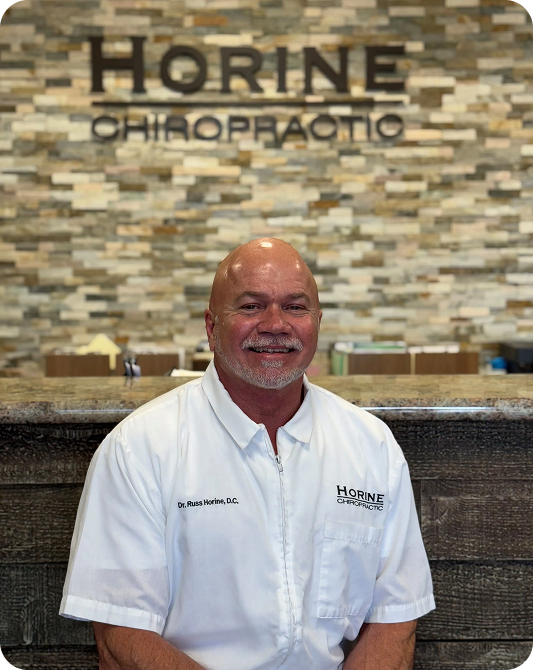
Article by
Dr. Russell Horine, DC, Chiropractor
Horine Chiropractic has established a strong reputation for delivering exceptional results in treating complex back and neck pain cases. Their primary objective is to serve patients efficiently and compassionately, aiding them in their journey to wellness. Horine Chiropractic uses a comprehensive, groundbreaking approach to treating stubborn back and neck pain. They have been helping Visalia’s backs, necks, and everything in between for a combined 45 years. They create a comprehensive approach to help their patients meet their health needs. Horine Chiropractic customizes treatment plans to meet each patient’s unique health needs. The clinic is accepting new patients and providing compassionate care to those in need.
Medical Disclaimer
This content is provided for general educational and informational purposes only and is not intended as medical advice, diagnosis, or treatment. Individual conditions and treatment needs vary. Please consult a qualified healthcare professional regarding your specific symptoms and treatment options.