

Your chronic neck stiffness isn’t just a muscle problem; it’s a structural defense mechanism your body uses to protect itself. You’ve likely spent mornings struggling to turn your head or afternoons fighting off a tension headache, only to find that heat pads and temporary stretches don’t provide lasting relief. It is exhausting to feel like you’re stuck in a loop of discomfort, especially when research shows that between 50% and 85% of people who experience neck pain will face a recurrence within five years. You deserve a plan that focuses on alleviating chronic neck stiffness by addressing the structural issues at the source rather than just masking the symptoms.
We understand the frustration of feeling unheard or limited by your own body. This article provides a systematic, step-by-step checklist designed for 2026 to help you identify what is truly triggering your tension. We’ll explore a blend of ergonomic adjustments, lifestyle shifts, and professional insights that aim to restore your full range of motion. By following this structured approach, you can stop guessing about your health and start building a clear plan for long-term spinal health and pain-free workdays. It’s time to move past the temporary fixes and find a solution that actually stays with you.
Key Takeaways
- Learn why “muscle guarding” is often the real culprit behind your discomfort and why a structural approach is essential for alleviating chronic neck stiffness.
- Discover specific ergonomic adjustments for your workspace, such as monitor height and arm alignment, that help prevent “tech neck” before it starts.
- Master a targeted mobility checklist featuring cervical retractions and levator scapulae stretches to release that “stuck” feeling in your cervical spine.
- Identify the “Plateau Point” to determine exactly when home care provides only temporary relief and a professional diagnostic assessment is required.
- Find out how a personalized, honest evaluation can help you move past temporary fixes toward a clear, long-term plan for spinal health.
Understanding Why Alleviating Chronic Neck Stiffness Is So Difficult
Chronic neck stiffness is officially defined as a persistent restriction in the cervical spine that lasts for more than three months. It’s a frustrating reality for many, especially when traditional stretches don’t seem to make a dent. Unlike an acute strain where you simply “slept wrong” and feel better in a few days, chronic issues involve deep seated postural adaptations. When you’re understanding neck stiffness, it’s vital to recognize the “Muscle Guarding” phenomenon. This is your body’s survival instinct in action. If a joint in your neck is misaligned or restricted, your brain sends signals to the surrounding muscles to tighten up. This creates a natural splint to prevent further injury. While this protects you in the short term, it makes alleviating chronic neck stiffness incredibly difficult because you’re fighting against your own nervous system’s protective response.
For many modern desk workers, this constant tension eventually develops into Upper Cross Syndrome. This is a specific structural pattern where the muscles in the front of the chest and the back of the neck become overactive and tight, while the muscles that support the shoulder blades and deep neck flexors become weak. It isn’t just a muscle ache; it’s a complete recalibration of your posture. When your body adapts this way, your muscles are effectively “on” all day long, leading to that familiar feeling of exhaustion and rigidity by 5:00 PM. This persistent strain underscores the importance of proper alignment, a concept explored by Restore Chiropractic Center in their work on the link between spinal health and neurological development.
The Structural vs. Muscular Connection
The cervical spine is an engineering marvel designed to support the weight of your head, which weighs about 10 to 12 pounds. When your spine maintains its natural curve, that weight is distributed evenly across your joints and discs. However, when that curve is lost due to “tech neck” or repetitive stress, the muscles have to work significantly harder to keep your head upright. True natural neck pain relief begins by looking past the muscle tension to see if the underlying structure is supporting you correctly. If the bones aren’t moving as they should, the muscles simply won’t let go, no matter how much you massage them.
When Stiffness Becomes a Warning Sign
Stiffness is often the first signal that something deeper is wrong within the spinal architecture. If you ignore this warning, the constant pressure on your joints can lead to premature disc degeneration or “wear and tear” that becomes much harder to manage later in life. You should pay close attention if your stiffness is accompanied by symptoms that suggest nerve involvement, such as tingling in your arms, numbness in your hands, or a loss of grip strength. It’s also helpful to remember that cervicalgia is simply a medical term for neck pain; it’s a symptom of the problem rather than a root cause diagnosis.
The Daily Ergonomic Checklist for Desk Workers
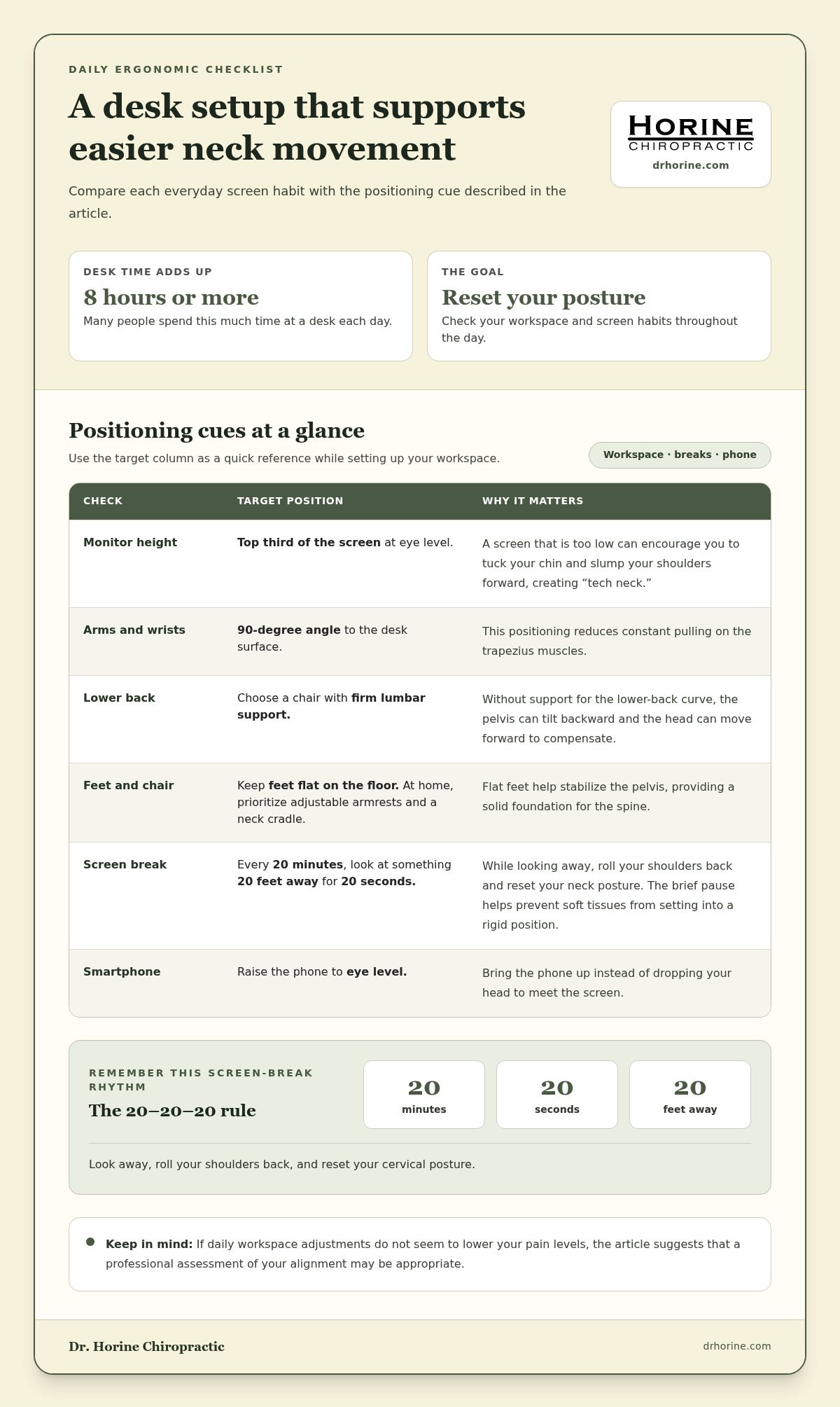
Most of us spend eight hours a day or more at a desk. If your setup is working against you, your muscles will stay in that “guarding” mode we discussed in the previous section. Alleviating chronic neck stiffness starts with a rigorous, daily check of your workspace. First, look at your monitor height. The top third of your screen should be exactly at eye level. If it’s too low, you’ll naturally tuck your chin and slump your shoulders forward, creating the structural strain known as “tech neck.”
Your arms and lower back play a surprising role in how your neck feels throughout the day. You should keep your elbows and wrists at a 90-degree angle to the desk surface. This simple shift reduces the constant pulling on your trapezius muscles. Additionally, ensure your chair provides firm lumbar support. Without support for the curve in your lower back, your pelvis tilts backward and your head moves forward to compensate. This chain reaction is a primary reason why many people struggle with alleviating chronic neck stiffness despite doing occasional stretches.
Adopt the 20-20-20 rule for your physical health. Every 20 minutes, take 20 seconds to look at something 20 feet away. While you do this, roll your shoulders back and reset your cervical posture. This brief pause prevents your soft tissues from “setting” into a rigid, painful position. If these daily adjustments don’t seem to lower your pain levels, it might be time for a professional eye to look at your alignment. You can reach out to Dr. Horine for a straightforward assessment of your structural health.
Optimizing Your Visalia Home Office
Many of our neighbors in Visalia are now working from spare bedrooms or kitchen tables. If you’re in a Central Valley home office setup, prioritize a chair with adjustable armrests and a neck cradle. Keep your feet flat on the floor at all times. This stabilizes your pelvis, which provides a solid foundation for your entire spine. According to this authoritative overview of neck pain, understanding these environmental factors is a critical step in long-term management.
Mobile Device Habits
We often forget that ergonomics doesn’t end when we leave the desk. Raise your smartphone to eye level instead of dropping your head to meet it. Avoid the common mistake of holding your phone between your ear and shoulder while multitasking. Doing this creates a massive muscular imbalance that often requires a stiff neck after sleeping fix just to get through the next morning. Use voice-to-text whenever possible to keep your neck in a neutral, relaxed position.
A Step-by-Step Mobility and Stretching Checklist
Once you’ve optimized your workspace, the next phase of alleviating chronic neck stiffness involves restoring mobility to the tissues that have adapted to poor posture. These movements shouldn’t feel like a workout. Instead, think of them as a way to remind your nervous system that it’s safe to let go of that protective guarding response we discussed earlier. While ergonomics help prevent new strain, these active movements address the tension already stored in your body.
Start with Cervical Retractions, commonly known as chin tucks. Sit tall and gently pull your chin straight back, as if you’re making a double chin, without tilting your head up or down. This simple motion is the gold standard for re-aligning your head over your shoulders and reversing “tech neck.” Next, target the Levator Scapulae, the specific muscle that causes that “stuck” sensation when you try to look over your shoulder. To stretch it, sit on your right hand to anchor your shoulder, tilt your head toward your left shoulder, and look down toward your left armpit. Hold this for 30 seconds to feel a deep, productive release.
Don’t forget your mid-back. Thoracic extensions help open the rib cage and take the direct load off your neck. You can do this by leaning back over the top of a low-back chair or using a foam roller to encourage the spine to extend. Finally, perform a gentle Scalene release by tilting your ear to your shoulder to address the front of the neck. This is particularly helpful for those who feel referred pain or heaviness down the arm. For more ergonomic tips for desk workers, incorporating these movements into your daily routine is essential maintenance.
Frequency and Duration Guidelines
For chronic cases, aim to perform these movements three to five times throughout your day. The “No Pain” rule is non-negotiable; if a movement causes sharp, electric, or radiating pain, stop immediately and consult a professional. Consistency in movement is more important than the intensity of the stretch. You’ll find much better results from doing three gentle sessions a day than one aggressive session once a week.
Morning vs. Evening Mobility
A two-minute morning routine helps “wake up” your cervical joints after hours of stillness. Start with gentle neck circles and chin tucks to prepare your spine for the day’s demands. In the evening, focus on decompression to undo the cumulative effects of a long workday in Visalia. If you notice your discomfort is concentrated on one side, you might find specific help in our guide to side neck pain left side. This targeted approach ensures that you’re alleviating chronic neck stiffness with a plan that fits your specific needs.
Evaluating Professional Care: When the Checklist Isn’t Enough
You have likely spent weeks trying the monitor adjustments and the chin tucks mentioned earlier. Sometimes, these changes are enough to break the cycle of tension. However, many people hit what we call the “Plateau Point.” This is the moment when your home care efforts provide only temporary relief, usually lasting less than 24 hours before the rigidity returns. If you find yourself needing to stretch every hour just to stay mobile, the issue has likely moved beyond a simple muscle imbalance. At this stage, alleviating chronic neck stiffness requires a professional diagnostic assessment to find the specific vertebrae that are restricted in their movement.
Manual spinal adjustments are fundamentally different from a general massage or a yoga class. While a massage works on the soft tissue, an adjustment focuses on the precise alignment of the spinal joints. We often hear patients voice concerns about the “cracking” sound. It’s helpful to understand that this is simply the release of gas bubbles from the joint fluid, similar to the sound a suction cup makes when it’s moved. Modern chiropractic is incredibly precise and grounded in safety. For individuals interested in specialized, gentle methods that focus on the alignment of the cervical spine, you can learn more about the approach offered by Precision Spinal Care. It isn’t about “cracking” your neck; it’s about restoring proper motion to a joint that has lost its ability to glide correctly.
The Value of a Personalized Treatment Plan
Every spine is unique, with its own specific curvatures and history of past injuries. Generic advice often fails because it doesn’t account for these structural nuances. A neck pain specialist in Visalia uses a comprehensive exam to rule out more serious issues and create a roadmap tailored specifically to your body. We track your progress over a 4 to 6 week period, looking for objective improvements in your range of motion and daily comfort levels. This methodical approach ensures we’re addressing the cause rather than chasing the symptoms.
Chiropractic vs. Other Modalities
Physical therapy and massage are excellent tools for rehabilitation and relaxation. However, chiropractic care is uniquely focused on the bone-on-nerve relationship. If a vertebra is misaligned, it can create subtle pressure on the nerves, which keeps your muscles in that state of “guarding” we discussed. By addressing this root cause, we can often achieve more lasting results. Our practice is built on an “honest care” philosophy. This means no high-pressure tactics, no long-term contracts, and no unnecessary treatments. We treat you as a neighbor, not just a case file. If your home checklist isn’t providing the relief you need, schedule an honest assessment with us today to find a clear path forward.
Your Long-Term Recovery Plan with Dr. Horine in Visalia
When you walk into our clinic for the first time, you won’t find a cold, clinical atmosphere. We start with a thorough conversation about your history, listening to the specific ways your pain has limited your life. This isn’t just about ticking boxes; it’s about understanding the unique stresses your body faces every day. After our talk, we move into a personalized diagnostic assessment. We look for the structural root causes we’ve discussed throughout this guide, ensuring that our plan for alleviating chronic neck stiffness is based on your actual spinal alignment rather than guesswork.
Our primary objective is what we call the “Quick Relief” goal. While long-term spinal health is the ultimate destination, we know you need to feel better now. We prioritize treatments that help you return to your normal routine as quickly as possible. This pragmatic focus is why we avoid high-pressure tactics or unnecessary long-term commitments. We want you to feel empowered and informed at every stage of your recovery. Integrating chiropractic care into your lifestyle means you can enjoy everything Visalia has to offer, from walks at Mooney Grove Park to a full day of productive work, without the constant shadow of neck tension.
Before your first appointment, it’s helpful to have a few things ready to ensure a thorough assessment:
- A list of any previous injuries, even those that seem unrelated to your neck.
- Information regarding your current workstation setup or daily physical habits.
- A clear description of your symptoms, including when they started and what makes them worse.
- Any previous X-rays or imaging reports you may have available.
Serving the Visalia Community Since 1987
Dr. Horine has been a part of the Visalia community for nearly four decades. This deep local root means we treat our patients like the neighbors they are. We’ve seen how the needs of Central Valley residents have changed over the years, and we’ve adapted our patient-centered care to match. Our commitment to transparency means you’ll always get an honest assessment of your condition. We value results and integrity over sales pitches, which has built a foundation of trust that spans generations of local families.
Take the First Step Toward Relief
If you’re tired of temporary fixes and are ready for a systematic approach to alleviating chronic neck stiffness, we’re here to help. Many of our patients come to us after they feel they’ve “tried everything” with no success. We encourage you to seek one more honest opinion. Booking an appointment is simple; you can reach us by phone or use our convenient online system for 2026 scheduling. Don’t let another morning start with restricted movement. Schedule your neck stiffness assessment with Dr. Horine today.
Take Your Next Steps Toward Lasting Mobility
Managing persistent tension requires more than just a quick stretch; it demands a structured approach that addresses both your daily habits and your spinal structure. By implementing the ergonomic and mobility checklists we’ve discussed, you’re already ahead of the curve in alleviating chronic neck stiffness. If you find that home care only provides a few hours of relief, it’s a clear sign that your body needs a more targeted, professional intervention to restore proper joint function.
Dr. Horine has served the Visalia community since 1987, providing honest, patient-centered care focused on practical results. As an expert in manual spinal adjustments, he identifies the structural causes of your pain to help you return to a normal, active life. You don’t have to navigate this journey alone. Our practice is here to listen and partner with you in your recovery. Book Your Comprehensive Neck Exam in Visalia today and start your path toward a future where you can move freely and work without distraction. We’re ready to help you find the clarity and relief you deserve.
Frequently Asked Questions
Can a chiropractor really help with chronic neck stiffness that has lasted for years?
Yes, a chiropractor can help because chronic stiffness often stems from long-standing structural misalignments that manual adjustments are designed to address. Even after years of discomfort, your body retains the ability to heal once the mechanical interference in the joints is removed. We focus on restoring the natural glide to vertebrae that have been restricted for a long time. It’s about retraining your nervous system to move correctly again.
How many sessions does it usually take to feel a difference in neck mobility?
Most patients begin to notice an improvement in their range of motion within the first few visits, though every case is unique. While initial relief can happen quickly, stabilizing the spine often requires a series of sessions over several weeks to ensure the results last. We track your progress closely to ensure we’re meeting your specific recovery goals. Our aim is always to get you back to your routine as efficiently as possible.
Is alleviating chronic neck stiffness possible without taking daily pain medication?
Yes, alleviating chronic neck stiffness is often achieved without daily medication by addressing the underlying structural issues rather than just masking the pain. When we restore proper alignment to the cervical spine, the need for chemical anti-inflammatories frequently decreases. Many of our patients find that once their joints move freely, the cycle of chronic tension breaks naturally. This approach focuses on long-term health rather than a temporary, pill-based fix.
What is the difference between a stiff neck and a pinched nerve?
A stiff neck typically involves restricted joint movement and muscle tension, while a pinched nerve often includes radiating symptoms like tingling, numbness, or weakness. If you feel a sharp, electric sensation traveling down your arm or into your hand, that’s a strong indicator of nerve involvement. Simple stiffness is usually localized to the neck and shoulder area. We use specific diagnostic tests to distinguish between these two conditions during your initial exam.
Will I need to get X-rays before receiving a neck adjustment at Dr. Horine’s office?
We determine the need for X-rays on a case-by-case basis after your initial physical examination and history-taking at our Visalia office. If your symptoms or history suggest a need for deeper structural imaging, we’ll discuss that with you transparently. We don’t perform unnecessary imaging, but we prioritize your safety above all else. If X-rays are required to ensure a precise and safe adjustment, we will make that recommendation during your visit.
Can poor posture at a desk cause permanent damage to my neck spine?
Prolonged poor posture can lead to permanent structural changes like disc degeneration or bone spurs if it’s left unaddressed for many years. However, many postural adaptations are reversible or manageable with the right combination of ergonomic changes and corrective care. The key is to intervene before these functional issues turn into permanent structural wear. Regular movement and proper alignment are your best defenses against long-term spinal damage.
What should I do if my neck stiffness is accompanied by frequent headaches?
You should seek a structural assessment if your stiffness is triggering headaches, as these are often cervicogenic in nature. This means the pain in your head is actually originating from the joints and muscles in your upper neck. Alleviating chronic neck stiffness at the source can often stop the headache cycle entirely. It’s a clear sign that your neck tension is affecting your broader nervous system and requires professional attention.
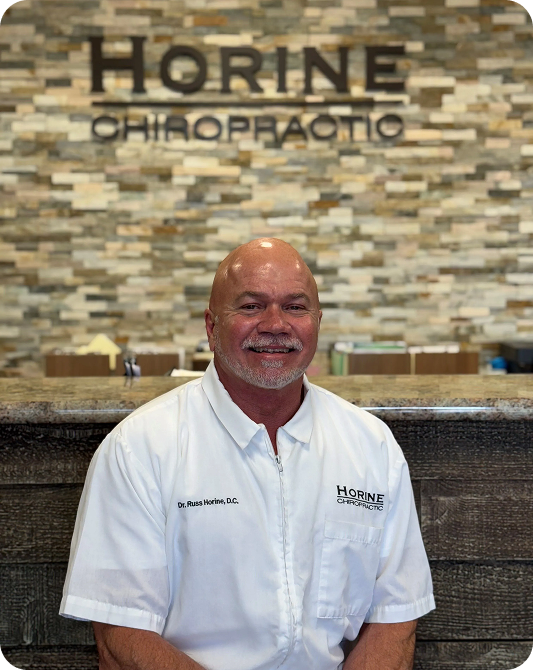
Article by
Dr. Russell Horine, DC Chiropractor
Horine Chiropractic has established a strong reputation for delivering exceptional results in treating complex back and neck pain cases. Their primary objective is to serve patients efficiently and compassionately, aiding them in their journey to wellness. Horine Chiropractic uses a comprehensive, groundbreaking approach to treating stubborn back and neck pain. They have been helping Visalia’s backs, necks, and everything in between for a combined 45 years. They create a comprehensive approach to help their patients meet their health needs. Horine Chiropractic customizes treatment plans to meet each patient's unique health needs. The clinic is accepting new patients and providing compassionate care to those in need.
Medical Disclaimer
This content is provided for general educational and informational purposes only and is not intended as medical advice, diagnosis, or treatment. Individual conditions and treatment needs vary. Please consult a qualified healthcare professional regarding your specific symptoms and treatment options.