

Imagine waking up and, for the first time in months, your first step doesn’t send a bolt of electric fire shooting down your leg. For many people, finding relief from herniated disc pain feels like an impossible goal while dealing with sharp sciatica and the frustrating numbness that makes daily life a struggle. You might feel trapped between the daily grind of physical discomfort and the overwhelming anxiety of a potential spinal surgery. It’s a heavy burden to carry, especially when all you want is to return to the simple joys of walking through your neighborhood or lifting your grandkids without hesitation.
We understand that you’re looking for a path forward that values your long-term health over a quick, temporary fix. This guide focuses on non-surgical, natural methods that prioritize the integrity of your spine and your overall well-being. By focusing on restoring proper mechanics rather than just masking symptoms, it’s possible to find clarity and comfort again. We’ll explore the underlying causes of your discomfort and outline a clear, step-by-step plan to help you regain your mobility and peace of mind without the need for invasive procedures.
Key Takeaways
- Understand the “jelly donut” analogy to visualize how disc material irritates your spinal nerves and causes sharp pain.
- Explore non-surgical manual adjustments that focus on long-term relief herniated disc pain by restoring proper spinal mechanics.
- Learn the step-by-step “90-90” resting position and the correct way to use ice and heat for immediate comfort at home.
- Recognize critical “red flag” symptoms and the importance of seeking a professional diagnostic assessment if pain lasts beyond two weeks.
- See how a personalized, unhurried approach to care has helped neighbors in the Visalia community return to their normal activities since 1987.
Understanding Herniated Discs and the Source of Your Pain
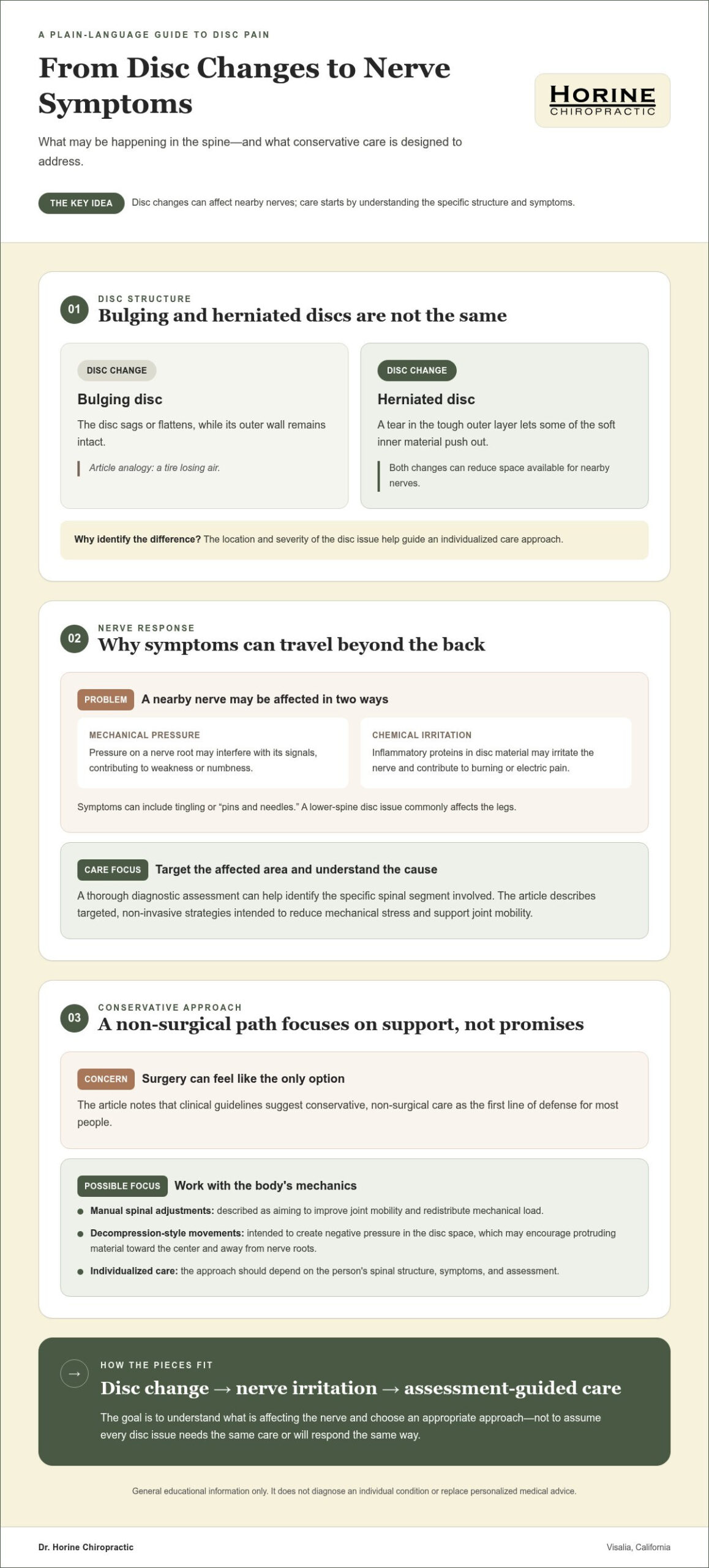
To understand why you’re feeling that sharp, electric sensation, it helps to look at the anatomy of your spine. Your spinal discs act as shock absorbers between your vertebrae. Think of each disc like a jelly donut. It has a tough, rubbery exterior called the annulus and a soft, jelly-like center known as the nucleus. When a disc herniates, a small tear in that outer layer allows some of the inner “jelly” to push out. This mechanical shift is often the primary reason people seek relief herniated disc pain, as that displaced material begins to interfere with the delicate environment of your spinal column.
When this inner material escapes, it does more than just take up space. It often comes into direct contact with nearby spinal nerves. This contact triggers a range of symptoms that can feel quite alarming. You might experience localized back pain at the site of the injury, but the most distressing symptoms often travel elsewhere. It’s common to feel numbness, tingling, or a “pins and needles” sensation that radiates down into your legs or arms. While these symptoms are intense, it’s vital to remember that a herniated disc is a mechanical problem that can be managed; it isn’t a permanent disability that has to define your future.
The Difference Between Herniated and Bulging Discs
Many patients use these terms interchangeably, but they describe different physical states. A bulging disc is similar to a car tire losing air; the disc sags and looks a bit flattened, but the outer wall remains intact. In contrast, a herniation involves an actual structural tear where the inner core escapes. Both conditions can cause significant discomfort because they both reduce the space available for your nerves. Depending on the severity and location of the issue, your path toward localized back pain treatment will vary. Our goal is to identify exactly which structural change is occurring so we can address the root cause effectively.
Why Nerves React to Disc Pressure
Your nerves are incredibly sensitive to their surroundings. When disc material touches a nerve root, it causes two types of trouble: mechanical pressure and chemical irritation. The physical “pinching” blocks the nerve’s ability to send signals correctly, leading to weakness or numbness. Simultaneously, the inner jelly of the disc contains inflammatory proteins that chemically irritate the nerve, causing that burning or electric pain. The location of the disc issue dictates where you feel these sensations. For example, a disc in your lower spine usually affects your legs. The good news is that your body is remarkably resilient. Over time, and with the right non-invasive support, the body can actually reabsorb some of that disc material, leading to natural relief herniated disc pain and a return to your normal routine.
Non-Surgical Paths to Relief for Herniated Disc Pain
When you’re dealing with the sharp, radiating pain of a herniated disc, surgery often feels like a looming inevitability. However, clinical guidelines suggest that conservative, non-surgical care should be the first line of defense for most people. It’s about giving your body the space and support it needs to manage the mechanical stress on your spine. By focusing on non-invasive strategies, you can often find significant relief herniated disc pain without the risks or long recovery times associated with the operating room.
Manual spinal adjustments play a central role in this process. When your vertebrae are misaligned, they create uneven pressure on the discs, much like a car tire that wears down faster on one side due to poor alignment. Adjusting the spine helps redistribute this mechanical load. This shift allows the disc to “breathe” and creates an environment where the body’s natural healing processes can take over. Reducing inflammation is another critical piece of the puzzle. Instead of relying solely on medications that might mask the problem, natural methods focus on calming the irritated tissues around the nerve root.
The Role of Professional Chiropractic Care
Finding a lasting solution starts with a deep understanding of your unique spinal structure. We believe in a thorough diagnostic exam before any care begins, ensuring we address the specific segment causing your distress. A manual spinal adjustment in Visalia focuses on improving joint mobility and restoring balance to your musculoskeletal system. Modern techniques are quite gentle and patient-centered, prioritizing your comfort while working toward functional improvement. It’s a partnership where we listen to your feedback at every step.
Targeted Therapies for Nerve Compression
Nerve compression requires a specific, methodical approach to reduce the “pinch” you’re feeling. Certain decompression-style movements help create negative pressure within the disc space. This vacuum effect can encourage the protruding disc material to move back toward the center, away from the sensitive nerve roots. By focusing on the exact segment of the spine that is affected, we can provide more precise care and long-term relief herniated disc pain. For those struggling with symptoms in the lumbar region, our insights on lower back pain relief in Visalia offer a deeper look at how we tailor these strategies for maximum effectiveness.
If you’re tired of temporary fixes and want to explore a path that respects your body’s integrity, we’re here to help. You can schedule a personalized assessment to see if non-surgical care is the right fit for your recovery journey.
Daily Habits and Home Strategies for Immediate Comfort
Managing a disc injury requires a 24-hour approach that extends far beyond your time in a treatment room. While professional adjustments provide the foundation for recovery, your daily habits determine how quickly you find lasting relief herniated disc pain. Think of your home care as the support system that protects the progress made during your clinical visits. By making small, intentional adjustments to how you sit, sleep, and move, you can significantly reduce the mechanical stress on your spinal nerves.
One of the most effective ways to offload the spine is the “90-90” resting position. To do this, lie flat on your back on a firm surface, such as a yoga mat or a carpeted floor. Place your calves on the seat of a chair or a couch so that your hips and knees are both bent at a 90-degree angle. This position flattens the lower back against the floor, opening up the space between your vertebrae and allowing the disc material to settle away from the nerve roots. Just fifteen minutes in this position can offer a noticeable reduction in sharp, radiating sensations.
Temperature therapy is another powerful tool when used correctly. During an acute flare-up, stick to ice for the first 48 hours. Cold packs help constrict blood vessels and reduce the chemical irritation that causes that “electric” feeling in your legs. Apply ice for 20 minutes, then remove it for at least 40 minutes to protect your skin. Only switch to heat once the sharp pain has transitioned into a dull, muscular ache. Heat is excellent for relaxing tight muscles, but applying it too early can actually increase inflammation around an already sensitive disc.
For our neighbors in Visalia who spend long hours at a desk, the “micro-break” is essential. Set a timer for every 30 minutes to stand up and walk for just sixty seconds. This prevents the discs from being compressed in a seated position for too long. While you’re recovering, be sure to avoid the “BLT” movements: bending at the waist, lifting heavy objects, or twisting your torso. These actions put maximum pressure on the outer wall of the disc and can easily trigger a setback.
Optimizing Your Sleep Environment
Your body does its best healing while you sleep, but poor posture can turn a night of rest into a morning of stiffness. We recommend side-sleeping with a supportive pillow tucked between your knees. This simple change keeps your hips neutral and prevents your top leg from pulling your lower spine into a twist. If your mattress feels too soft, you might find temporary comfort by sleeping on a firm rug or a thin mat on the floor for a few nights. Many patients find that recurring lower back pain relief begins with these small, intentional changes to how they rest at night.
Gentle Movement as Medicine
While it’s tempting to stay in bed when you’re hurting, total bed rest can actually slow your recovery. Gentle movement keeps blood flowing to the discs, which helps with the reabsorption process we discussed earlier. Focus on short, frequent walks on flat surfaces like a sidewalk or a mall floor. You can also try “pelvic tilts” while lying on your back to engage your core without straining your spine. Avoid the urge to “crack” your own back or perform aggressive stretches during a flare-up. These forceful movements can aggravate the tear in the disc wall and delay your path to relief herniated disc pain.
When to Seek Professional Help for Your Disc Pain
Listening to your body is the first step toward lasting health. While the home strategies we discussed earlier can take the edge off, they aren’t meant to be a permanent substitute for professional guidance. If you’ve been searching for relief herniated disc pain for more than two weeks without seeing progress, it’s time to investigate the root cause. Structural issues in the spine rarely resolve themselves through “wait and see” tactics or over-the-counter medications. Those pills might dull the signal, but they don’t move the disc material or restore alignment.
Certain symptoms require immediate medical attention. If you experience a sudden loss of bowel or bladder control, or if you notice significant muscle weakness that causes your leg to “give out,” please seek emergency care. These are signs of severe nerve compression that need urgent intervention. For most people, however, the signs are more subtle: a persistent ache that keeps you from sleeping or a tingling sensation that makes driving through Visalia a struggle. Trust your intuition. If your pain is limiting your independence or making it difficult to play with your grandkids, it’s a clear signal that your body needs help.
The Importance of a Diagnostic Exam
Dr. Horine prioritizes a comprehensive diagnostic assessment during your very first visit. We don’t believe in “one-size-fits-all” adjustments because your spine is as unique as your fingerprint. By pinpointing the exact segment causing the irritation, we can create a personalized treatment plan that targets the mechanical source of your discomfort. Understanding the “why” behind your pain is the most important step toward finding a permanent solution. It removes the fear of the unknown and gives you a clear path back to your normal activities.
Avoiding the “Wait and See” Trap
Ignoring a disc issue often creates a domino effect. When your back hurts, you naturally change how you walk or sit to avoid the pain. These compensatory movements can quickly lead to secondary problems in your hips, knees, or even your neck. Early intervention doesn’t just provide faster relief herniated disc pain; it prevents these additional complications from taking root. Our practice focuses on honest, patient-centered care. We’ll give you a straight answer about what’s happening and what it will take to get you better, without any high-pressure tactics.
If you’re ready to stop guessing and start healing, you can book your initial diagnostic exam today to get a clear picture of your spinal health and start your recovery journey.
Personalized Recovery: The Dr. Horine Approach in Visalia
Dr. Horine Chiropractic has been a steady part of the Visalia community since 1987. Over those decades, we’ve seen how a disc injury can stall a person’s life, turning simple movements into moments of dread. Our approach isn’t about high-pressure tactics or quick, impersonal visits. Instead, we focus on providing a welcoming, human environment where you’re treated as a neighbor, not just a set of symptoms. We know that finding relief herniated disc pain is your immediate priority, but we also look toward your long-term spinal health and overall wellness.
The transition from acute discomfort to lasting mobility requires a steady, methodical plan. We’ve spent over 30 years refining a process that moves beyond temporary fixes. By combining thorough diagnostic exams with gentle, manual adjustments, we help you reclaim the independence you thought was gone. This process isn’t just about stopping the pain for a few days. It’s about making sure you can return to walking the neighborhood or playing with your grandkids with genuine confidence and peace of mind.
Your First Visit: Clarity and Transparency
When you walk through our doors, you’ll notice an unhurried pace that’s rare in modern healthcare. We believe the first step toward recovery is being heard and understood. Your initial consultation is a time for us to listen to your story and conduct a personalized diagnostic assessment. We take the time to explain our findings in clear, accessible language, removing the uncertainty that often surrounds spinal issues. You’ll leave your first visit with a structured path forward and a clear understanding of your options. Scheduling is straightforward; you can book your appointment online or by calling our office directly.
A Partner in Your Health Journey
Dr. Horine views himself as a seasoned guide and a partner in your recovery. Our goal is to provide a pragmatic, result-oriented experience that prioritizes your integrity and comfort. We treat people, not just physical concerns, which means your care plan is always tailored to your specific lifestyle and goals. We’re committed to helping you achieve practical results so you can get back to your normal routine without the risks associated with surgery. You don’t have to “just live with” the frustration of a disc injury. By seeking professional relief herniated disc pain, you’re choosing a path of clarity, physical improvement, and a return to the life you love.
Taking the First Step Toward Lasting Comfort
Recovery isn’t just about waiting for the pain to stop; it’s about actively restoring the mechanical balance of your spine. By combining gentle manual adjustments with simple home strategies like the 90-90 position, you can create a sustainable environment for healing. This approach prioritizes long-term wellness over temporary fixes, helping you avoid the risks and recovery times of surgery. Finding relief herniated disc pain is a journey that starts with clarity and a personalized plan.
Since 1987, our practice has served the Visalia community with a commitment to honest, patient-centered care. With over 35 years of non-surgical expertise, Dr. Horine focuses on treating the person, not just the symptoms, ensuring you feel heard at every stage. We don’t use high-pressure tactics; we simply provide the practical results you need to get back to your life. Schedule Your Personalized Disc Pain Assessment with Dr. Horine and discover how it feels to move with confidence again. You have the power to change your story and return to the activities you love.
Common Questions About Finding Relief
Can a herniated disc heal on its own without surgery?
Yes, your body is naturally capable of reabsorbing the protruding disc material over time. This process, often called resorption, happens as the immune system identifies the displaced material and breaks it down. While the structural change remains, the inflammatory response subsides, allowing you to find relief herniated disc pain without invasive procedures. Consistent movement and proper spinal alignment support this natural recovery.
How long does it take to get relief from herniated disc pain with chiropractic care?
Every patient’s timeline is different, but many people notice initial changes within the first few weeks of consistent care. While sharp, acute symptoms may settle quickly, the mechanical healing of the disc wall takes longer. A typical plan focuses on stabilizing the area over several months to prevent future flare-ups. We prioritize a methodical pace that respects your body’s individual healing rate.
Is walking good for a herniated disc or will it make it worse?
Walking is one of the best activities for recovery because it encourages blood flow and keeps your spinal tissues hydrated. It’s important to walk on flat, even surfaces and wear supportive shoes to avoid jarring the spine. If walking increases your leg pain or numbness, it’s a sign to shorten your distance. Start with five-minute intervals and gradually increase as your comfort improves.
What is the single best sleeping position for herniated disc relief?
Side sleeping with a pillow between your knees is widely considered the most effective position for neutral spinal alignment. This setup prevents your pelvis from rotating and pulling on your lower back. If you prefer sleeping on your back, place a bolster or a few pillows under your knees. This slight elevation flattens the lumbar curve and reduces pressure on the irritated nerve roots.
Can a chiropractor actually fix a herniated disc?
A chiropractor doesn’t “fix” the tear in the disc like a surgeon might, but they address the mechanical stress that caused it. By restoring proper joint mobility and alignment, we reduce the external pressure on the disc and nerves. This change creates the ideal environment for your body to heal itself. Our focus is on functional improvement and long-term relief herniated disc pain.
What exercises or movements should I absolutely avoid with a disc injury?
You should absolutely avoid traditional sit-ups, leg lifts, and any exercise that involves bending forward to touch your toes. These movements increase the internal pressure on the disc and can push the material further against the nerve. Heavy lifting and high-impact activities like running should also be paused during the acute phase. Focus instead on neutral-spine movements that don’t cause radiating symptoms.
When is herniated disc pain considered a medical emergency?
A disc injury becomes a medical emergency if you experience “saddle anesthesia,” which is numbness in the groin or inner thighs. Sudden loss of bowel or bladder control is another critical red flag that requires an immediate trip to the emergency room. These symptoms indicate cauda equina syndrome, a rare but serious condition where the nerves at the base of the spinal cord are severely compressed.
How do I know if my back pain is a herniated disc or just a pulled muscle?
Muscle strains usually cause a localized, dull ache that feels worse when you move the specific muscle. A herniated disc typically involves “neurogenic” symptoms like sharp, electric pain that travels into the buttock or down the leg. If you feel tingling, numbness, or weakness in your foot, it’s more likely a disc issue. A professional diagnostic exam is the only way to be certain.
Article by
Dr. Russell Horine, DC Chiropractor
Horine Chiropractic has established a strong reputation for delivering exceptional results in treating complex back and neck pain cases. Their primary objective is to serve patients efficiently and compassionately, aiding them in their journey to wellness. Horine Chiropractic uses a comprehensive, groundbreaking approach to treating stubborn back and neck pain. They have been helping Visalia’s backs, necks, and everything in between for a combined 45 years. They create a comprehensive approach to help their patients meet their health needs. Horine Chiropractic customizes treatment plans to meet each patient's unique health needs. The clinic is accepting new patients and providing compassionate care to those in need.
Medical Disclaimer
This content is provided for general educational and informational purposes only and is not intended as medical advice, diagnosis, or treatment. Individual conditions and treatment needs vary. Please consult a qualified healthcare professional regarding your specific symptoms and treatment options.