
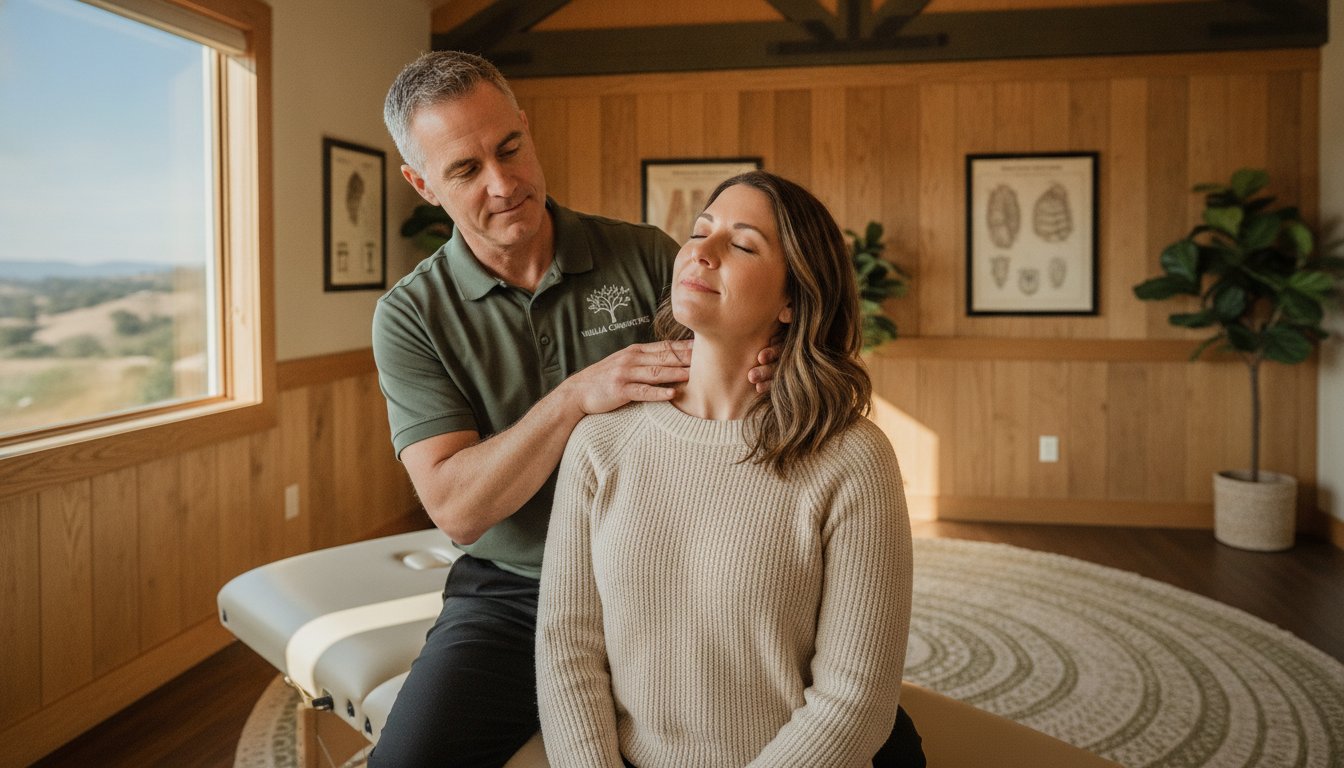
What if that tight, vise-like grip around your forehead isn’t actually a “head” problem at all? For many, the search for an effective tension headache treatment feels like a never-ending cycle of dull pressure and stiff necks that steal your focus at work.
It’s exhausting to rely on over-the-counter pills while worrying about their long-term side effects. We understand that frustration and the desire for a solution that feels more permanent and less like a chemical band-aid. In this article, you’ll discover how to break that cycle by exploring a range of relief options, from simple lifestyle adjustments to professional structural care. We’ll walk through the latest 2026 clinical guidelines and explain how addressing the mechanical alignment of your neck can finally provide the clarity and mobility you’ve been missing. By the end, you’ll have a clear path toward reducing your headache frequency and reclaiming your day without the constant fog of pain.
Key Takeaways
- Learn why tension headaches feel like a “tight band” and how they differ from other headache types so you can address the right problem.
- Evaluate the differences between temporary chemical relief and long-term tension headache treatment that focuses on physical correction.
- Understand the vital connection between neck stiffness and head pain, and how manual adjustments can help restore your natural mobility.
- Identify simple ergonomic changes you can make at home or work to prevent tension from building up throughout the day.
- Discover how a thorough diagnostic exam uncovers the specific source of your discomfort, allowing for a personalized path to recovery.
Understanding Tension Headaches: More Than Just Stress
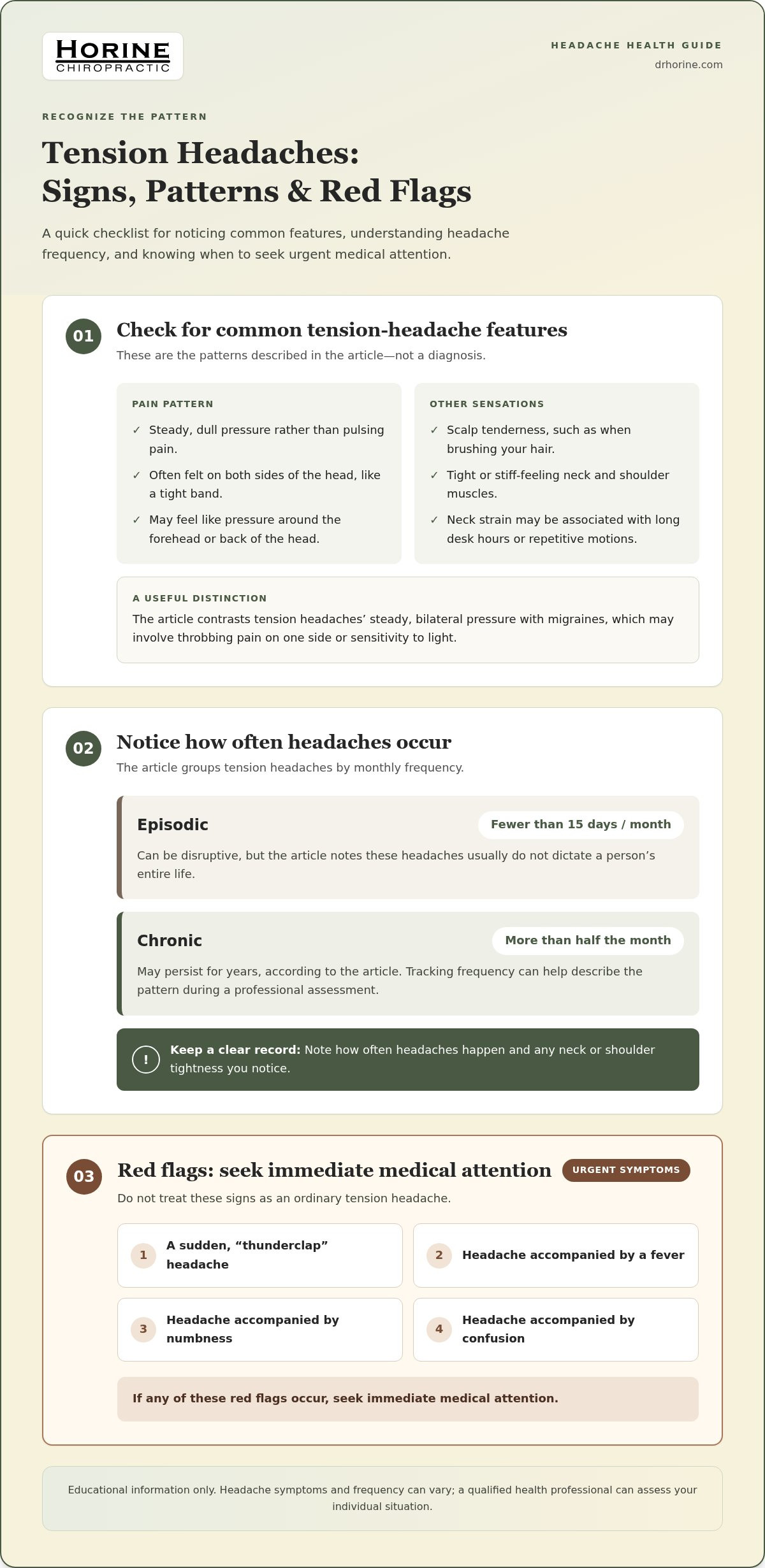
It starts as a dull ache, then slowly tightens until it feels like a heavy band is wrapped around your skull. This sensation is so common that nearly 70% of the population will deal with it at some point. Unlike vascular migraines, which often involve throbbing pain on one side of the head or sensitivity to light, these headaches are characterized by steady, bilateral pressure. They don’t usually pulse; they simply press.
While many people blame “stress,” the reality is often more physical. Long hours at a desk or repetitive motions in the fields around Visalia put immense strain on the structures of your neck. A Tension headache is a musculoskeletal response to physical or emotional strain. When your body stays in a “fight or flight” posture for too long, the muscles eventually reach a breaking point, resulting in that familiar, nagging pain.
Common Symptoms and “Red Flags”
Most people describe the sensation as a vice tightening around their forehead or the back of their head. It’s a persistent, dull ache rather than a sharp, stabbing pain. You might also notice that your scalp feels tender when you brush your hair, or that your neck and shoulder muscles feel like they’ve turned to stone. This physical tightness is your body’s way of signaling that something is out of balance.
It’s vital to listen to what your body is saying. If you experience a sudden, “thunderclap” headache or if your pain is accompanied by a fever, numbness, or confusion, you should seek immediate medical attention. For most, however, the pain is a slow burn that signals a need for a thorough diagnostic assessment to find the underlying structural cause rather than just masking the symptoms.
The Chronic vs. Episodic Distinction
We generally categorize these headaches based on how often they occur. Episodic headaches happen fewer than 15 days per month. They’re annoying and disruptive, but they usually don’t dictate your entire life. Chronic tension headaches, however, occur more than half the month and can last for years if the root cause isn’t addressed. Effective tension headache treatment depends on knowing which category you fall into.
Don’t fall into the trap of “learning to live with it.” when you ignore the pain, you’re often ignoring long-term nerve irritation and muscle fatigue. This constant state of tension erodes your quality of life and makes it harder to focus on what matters. Finding the right tension headache treatment early can prevent these patterns from becoming permanent and help you regain your natural mobility.
Comparing Common Treatments: From OTC Pills to Professional Care
Most people start their search for a tension headache treatment in the medicine cabinet. It’s easy to see why. When your head is pounding and you’re struggling to finish a shift at work, you want the fastest relief possible. However, there’s a significant difference between masking a symptom with chemicals and correcting the physical cause of your pain.
The choice between chemical masking and physical intervention is often the difference between a few hours of peace and a lifetime of improved health. While pills offer a shortcut, they rarely address the structural issues in the neck and shoulders that trigger the “tight band” sensation in the first place. A multi-modal approach that combines professional care with lifestyle changes usually yields the most reliable results.
Over-the-Counter and Prescription Medications
Non-steroidal anti-inflammatory drugs (NSAIDs) like ibuprofen are the standard go-to for most sufferers. The 2023 VA/DoD Clinical Practice Guideline for the Management of Headache recommends 400 mg of ibuprofen or 1000 mg of acetaminophen for acute treatment. These medications work by blocking the enzymes that cause inflammation and pain. A 100-count bottle of Excedrin Tension Headache currently retails for approximately $18.19, making it a low-cost entry point for relief.
The hidden risk here is the “rebound effect.” If you rely on these medications more than a few times a week, your nervous system can become sensitized. This leads to medication overuse headaches, where the pills themselves eventually cause more pain. Furthermore, pills don’t fix the muscle tightness or the structural misalignment that started the problem. They simply turn down the volume of the alarm without putting out the fire.
Soft Tissue and Alternative Therapies
Massage and acupuncture offer a more physical approach to the problem. Therapeutic massage is excellent for relaxing the superficial muscles in your neck and shoulders, providing immediate comfort. Acupuncture focuses on pain signaling, helping to reset the way your brain perceives discomfort. These methods are valuable tools, but they can be temporary fixes if the underlying cervical spine is misaligned.
If your spine isn’t supporting your head correctly, those muscles will tighten right back up within days to protect the delicate nerves in your neck. Lasting relief requires a more thorough investigation into your physical structure. By combining professional physical intervention with consistent home strategies for headache relief, you can finally break the cycle of tension. If you’re tired of the temporary fixes and want to explore a more permanent form of headache relief, it may be time to look at the mechanical source of your pain.
The Chiropractic Approach: Resolving the “Tight Band” at the Source
While most people associate headaches with the brain, the physical reality is often found lower down. Many tension headaches are actually cervicogenic, meaning the pain originates in the structures of the neck. When the vertebrae in your cervical spine lose their natural alignment or range of motion, they can irritate the surrounding nerves and trigger a cascade of muscle spasms. This is why understanding the vital link between head pain and neck stiffness is the first step toward a more permanent tension headache treatment.
Manual spinal adjustments work by restoring proper motion to these restricted vertebrae. When a joint is “stuck,” it sends a constant stream of distress signals to your brain. This creates a kind of neurological “noise” that keeps your neck and scalp muscles in a state of constant guarding. By gently correcting these mechanical issues, we can quiet that nervous system noise. This allows the muscles to finally relax, breaking the cycle of tension that leads to that familiar, vise-like pressure around your head.
The Role of the Upper Cervical Spine
The top two vertebrae in your neck, known as the C1 (atlas) and C2 (axis), are particularly important. These bones sit in close proximity to major brainstem pathways and the suboccipital muscles. Modern habits like “forward head posture,” often caused by looking at phones or computer screens, add significant pounds of pressure to these delicate structures. For every inch your head moves forward from its natural center, it effectively doubles the weight your neck muscles must support.
A specific, gentle spinal adjustment for headaches targets this suboccipital tension. Rather than just rubbing a sore muscle, this approach addresses the joint restriction that’s forcing the muscle to stay tight. It’s a precise way to release the physical stress at the very top of the spine, which is often the primary trigger for chronic head pain.
Beyond the Adjustment: Restoring Mobility
Effective tension headache treatment isn’t just about a single moment of relief; it’s about restoring your body’s ability to move freely. When your spine is healthy, your range of motion improves, and the chronic muscle knots, or trigger points, finally begin to dissipate. These knots are often the result of the body trying to stabilize a misaligned spine. Once the structural foundation is stable, the need for that “muscle guarding” disappears.
This structural care provides a level of lasting comfort that chemical masking simply can’t match. Instead of waiting for the next headache to arrive so you can take a pill, you’re addressing the mechanical flaws that cause the pain in the first place. This proactive approach helps you return to a normal state of being, where you can focus on your work and family without the constant threat of a recurring “tight band” sensation.
Lifestyle and Home Strategies for Long-Term Relief
Professional care is the foundation of recovery, but your daily habits determine how long that relief lasts. Whether you’re working a desk job or managing the physical demands of agriculture in the Visalia area, your body is constantly adapting to the stress you place on it. Incorporating simple habits into your routine can significantly reduce the frequency of your pain and support your overall tension headache treatment plan.
Start with the basics: hydration and movement. Muscles are composed largely of water, and when you’re dehydrated, they lose the elasticity needed to handle physical strain. This leads to the very knots and tightness that trigger head pain. Alongside drinking enough water, simple stretches like gentle chin tucks or shoulder rolls can help decompress the area. These small movements prevent the suboccipital muscles at the base of your skull from locking into a state of permanent tension.
Optimizing Your Workspace
Many of our patients spend eight hours a day in a position that actively fights against their spinal health. To combat this, we recommend the “90-90-90” rule. Your elbows, hips, and knees should all be bent at 90-degree angles, with your monitor at eye level to prevent “tech neck.” Taking micro-breaks every 30 minutes to stand and reset your posture is essential for maintaining the integrity of your cervical spine.
While we’re focusing on the neck here, the entire spine works as one unit. For a deeper look at total body alignment, you might find our guide on lower back pain relief Visalia helpful for setting up your complete ergonomic station. A well-aligned lower back provides the stable foundation your neck needs to stay relaxed.
Stress Management and Sleep Hygiene
Stress often manifests physically before we notice it mentally. Diaphragmatic breathing, breathing deep into your belly rather than shallowly into your chest, signals your nervous system to exit the “fight or flight” mode. This simple shift can immediately lower the muscle tension in your upper back and neck. Additionally, pay attention to your jaw. Jaw clenching, or TMJ, is a major contributor to tension-type headaches because the muscles of the jaw are directly linked to the muscles of the scalp.
Your sleep environment also plays a massive role. If your pillow is too high or too flat, it forces your neck into an unnatural angle for hours at a time. A contoured pillow that supports the natural curve of your neck can prevent you from waking up with a headache before your day even begins. If you’ve tried these home strategies and the pressure still won’t let up, it’s time to seek professional headache relief to address the underlying structural issues.
Personalized Headache Care at Dr. Horine Chiropractic in Visalia
Finding the right tension headache treatment shouldn’t feel like a guessing game. Since 1987, Dr. Horine Chiropractic has served the Visalia community with a focus on honest, patient-centered care that looks beyond the surface. We understand that by the time you walk through our doors, you’ve likely tried the pills, the ice packs, and the temporary fixes. Our goal is to lower your guard and provide a welcoming environment where your concerns are heard and your pain is validated through a thorough, investigative approach.
We don’t believe in the “one-size-fits-all” model that many high-volume clinics use. Every person who visits us has a unique physical history, from old sports injuries to the daily repetitive strain of their current profession. This is why we prioritize a personalized tension headache treatment plan for every patient. By taking the time to understand your specific lifestyle and physical challenges, we can create a structured path toward recovery that focuses on practical results and long-term comfort.
What to Expect During Your Initial Consultation
Your journey toward relief begins with a comprehensive first-visit diagnostic exam. This isn’t a rushed five-minute chat; it’s a deep dive into the health of your spine and nervous system. We focus on identifying the specific joint restrictions and muscle patterns that are triggering your headaches. Dr. Horine uses this time to pin-point the source of the mechanical stress, ensuring that we aren’t just treating where it hurts, but why it hurts.
Transparency is the cornerstone of our practice. After the examination, we’ll provide clear communication regarding our findings and a realistic timeline for your recovery. You won’t find any high-pressure tactics or confusing medical jargon here. Instead, you’ll receive a straightforward explanation of how we can help and what you can expect from the process. We position ourselves as your partner in health, providing the seasoned expertise you need to make informed decisions about your care.
Joining the Visalia Community of Wellness
Being a part of the Visalia community for over three decades has allowed us to build lasting relationships with our neighbors. We take pride in being a reliable, established resource for local families and workers. We’ve seen how much a return to normal mobility can change a person’s life, and we’re dedicated to helping you achieve that same clarity and relief. Our practice is designed to be accessible and unhurried, reflecting the friendly, grounded spirit of our city.
We’ve made it easy to take that first step toward feeling better. Whether you prefer to schedule by phone or through our online portal, our team is ready to assist you. You don’t have to live with the constant fog of head pain any longer. Schedule your headache relief assessment with Dr. Horine today.
Reclaiming Your Clarity and Comfort
Breaking the cycle of head pain starts with a shift in perspective. You’ve seen how common “quick fixes” often fall short because they don’t address the mechanical tension in the upper cervical spine. By focusing on structural alignment and mindful daily habits, you can transition from simply managing symptoms to achieving lasting comfort. A truly effective tension headache treatment doesn’t just numb the pain; it restores the natural mobility your body needs to function without constant pressure.
At Dr. Horine Chiropractic, we’ve been helping our neighbors find relief since 1987. We believe in honest, patient-centered care that begins with a thorough diagnostic exam to find exactly where your tension is rooted. Our manual adjustment expertise is designed to gently reset your system and help you reclaim your focus. You don’t have to navigate this journey alone. Request Your Personalized Headache Consultation in Visalia today to start your path toward recovery. We’re here to help you get back to feeling like yourself again.
Frequently Asked Questions
Can a chiropractor really help with tension headaches?
Yes. Chiropractors specialize in the structural alignment of the spine, which is often the physical source of the pain. By performing manual adjustments, we address joint restrictions in the neck that trigger muscle guarding and head pressure. This tension headache treatment focuses on correcting the mechanical cause of the discomfort rather than just numbing the symptoms. It’s a proven, non-drug path toward long-term relief and improved mobility for many sufferers.
How many treatments will I need before I feel relief?
Recovery timelines vary because every patient’s physical history is unique. Some individuals notice a reduction in pressure after their first few visits, while chronic cases may require a more structured plan to retrain the muscles and stabilize the spine. During your initial diagnostic exam, we’ll provide a clear, honest expectation of your specific timeline. Our goal is to move you toward a normal state of being as efficiently and thoroughly as possible.
Are chiropractic adjustments safe for someone with chronic headaches?
Yes, manual spinal adjustments are a safe and gentle option for headache patients. We prioritize a thorough physical examination before any treatment to ensure that chiropractic care is the right fit for your specific condition. Our techniques are refined and precise, focusing on restoring motion to the upper cervical spine. We take a patient-centered approach that respects your comfort levels and aims to reduce neurological “noise” without high-pressure tactics.
What is the difference between a tension headache and a migraine?
Tension headaches typically feel like a dull, steady band of pressure around both sides of the head. They’re primarily musculoskeletal in nature. Migraines are often vascular and neurological, frequently causing throbbing pain on one side, light sensitivity, or nausea. While both can be debilitating, identifying the specific type is essential for choosing the right tension headache treatment. We use our diagnostic process to distinguish between these categories and ensure your care is targeted correctly. If you experience migraine symptoms alongside your tension headaches, our guide on natural migraine relief Visalia residents trust can help you understand the structural triggers behind that type of pain as well.
Will insurance cover my tension headache treatment at Dr. Horine Chiropractic?
Many insurance plans do offer coverage for chiropractic care, though specific benefits vary by provider. For example, Medicare Part B covers manual manipulation of the spine to correct a subluxation. We recommend checking with your specific carrier to understand your deductible and visit limits. Our team is happy to help you navigate this process so you can focus on your recovery without the stress of the unknown or unexpected costs.
Can poor posture at my Visalia office job be causing my headaches?
Absolutely. Sitting at a desk for long periods often leads to “forward head posture,” which places immense strain on the suboccipital muscles. This physical stress is a primary trigger for the “tight band” sensation many office workers experience. By combining spinal adjustment for headaches with ergonomic changes at your workspace, we can address the root cause of this strain. Restoring your natural alignment helps your body handle the demands of your job without recurring pain.
What happens if I leave my tension headaches untreated?
Ignoring chronic pain often leads to a cycle of muscle guarding and nerve irritation. Over time, your body may “learn” these painful patterns, making them more difficult to resolve later. Untreated tension can also lead to decreased neck mobility and a reliance on over-the-counter medications, which carries its own risks like “rebound” headaches. Seeking professional care early helps prevent long-term damage and ensures that you can maintain a high quality of life and focus.
Do I need a referral to see a chiropractor for headache relief?
In most cases, you don’t need a referral from a medical doctor to begin care at our Visalia practice. Chiropractors are primary-contact healthcare providers, meaning you can schedule your initial diagnostic exam directly with us. We value the act of listening as much as the act of treating, and we’re ready to partner with you on your journey toward better health. Simply call our office or use our online portal to take the first step.
Article by
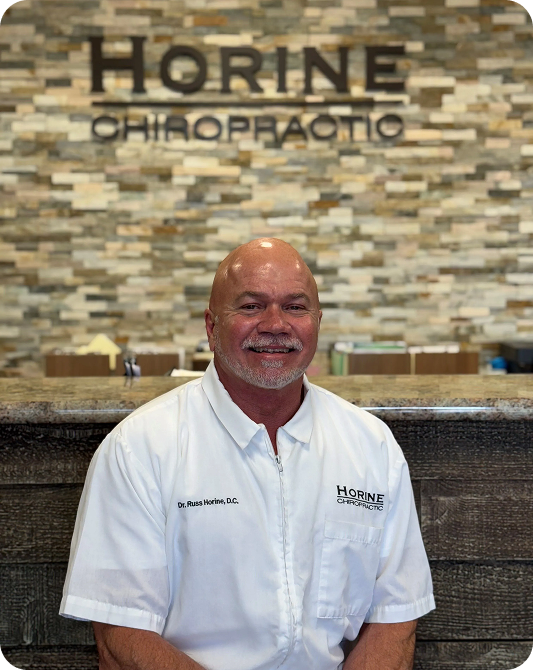
Dr. Russell Horine, DC Chiropractor
Horine Chiropractic has established a strong reputation for delivering exceptional results in treating complex back and neck pain cases. Their primary objective is to serve patients efficiently and compassionately, aiding them in their journey to wellness. Horine Chiropractic uses a comprehensive, groundbreaking approach to treating stubborn back and neck pain. They have been helping Visalia’s backs, necks, and everything in between for a combined 45 years. They create a comprehensive approach to help their patients meet their health needs. Horine Chiropractic customizes treatment plans to meet each patient's unique health needs. The clinic is accepting new patients and providing compassionate care to those in need.
Medical Disclaimer
This content is provided for general educational and informational purposes only and is not intended as medical advice, diagnosis, or treatment. Individual conditions and treatment needs vary. Please consult a qualified healthcare professional regarding your specific symptoms and treatment options.